What’s in a Name? Nantwich Streets Explored: Pillory Street
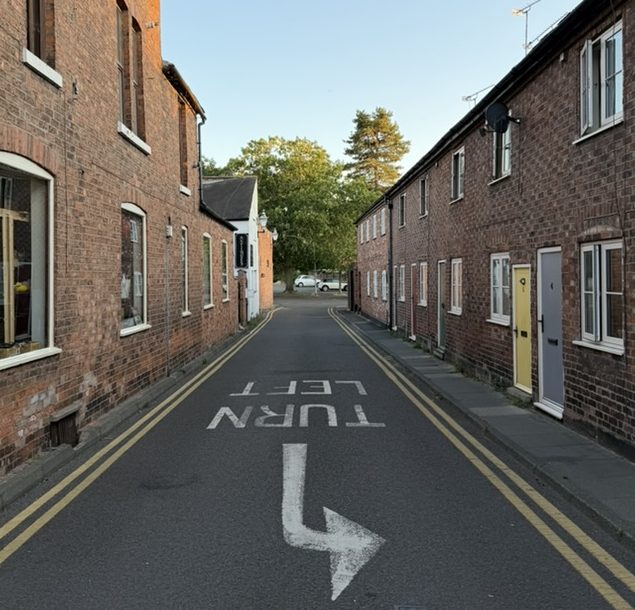
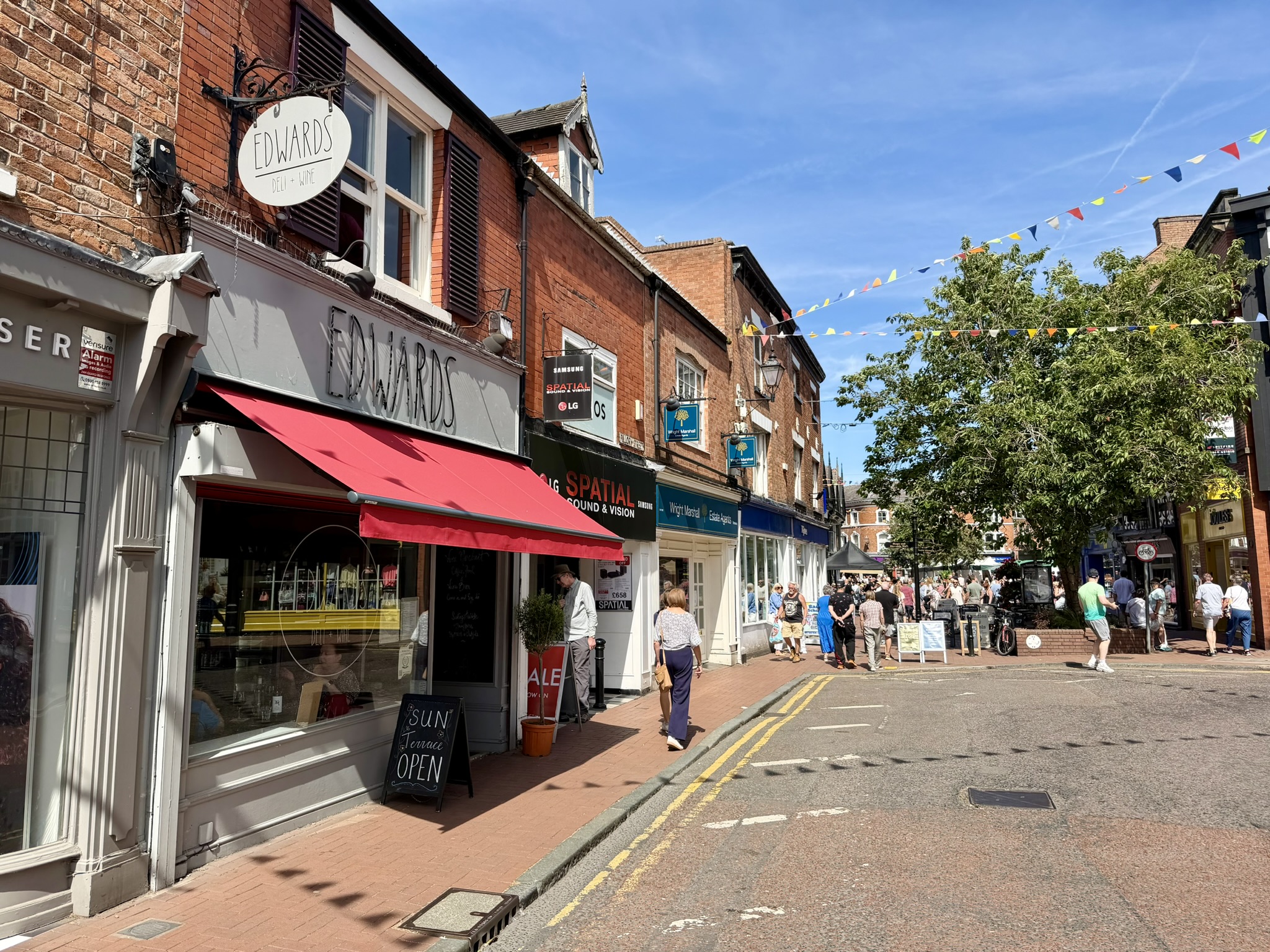
Shaped by fire, justice and commerce, Pillory Street has proved to be very versatile over the centuries. From ancient lane to modern retail the road has seen much in between. Its name proves to be a little bit of a mystery though, as we shall discover.
Nantwich was booming in the late Middle Ages. The first half of the 14th Century saw a rapid expansion of the town. In 1340, A huge construction project was started to build St. Mary’s Church that we see today. Several new streets were laid out including Pillory Street (recorded as Pillorestrete) in 1314 which was extended into the newly formed Broad Lane in 1383, linking Nantwich with settlements to the south such as Audlem. The Black Death put a stop to all of this though around 1348. Nantwich’s population would halve in just two years.
We need to clear something up. What is the difference between a pillory and stocks? Well, stocks were used as a punishment for criminals which secured their feet in holes created between two pieces of wood. A pillory would secure the head and arms as the criminal stood in an upright position. In both cases, the aim was humiliation. Passers by would jeer and throw through rotten food, stones or anything else they could lay their hands on to show their displeasure towards those sentenced to these punishments. It seems as though the pillory was considered to be the worst punishment of the two, you couldn’t dodge projectiles thrown at you when your head is fixed in place!
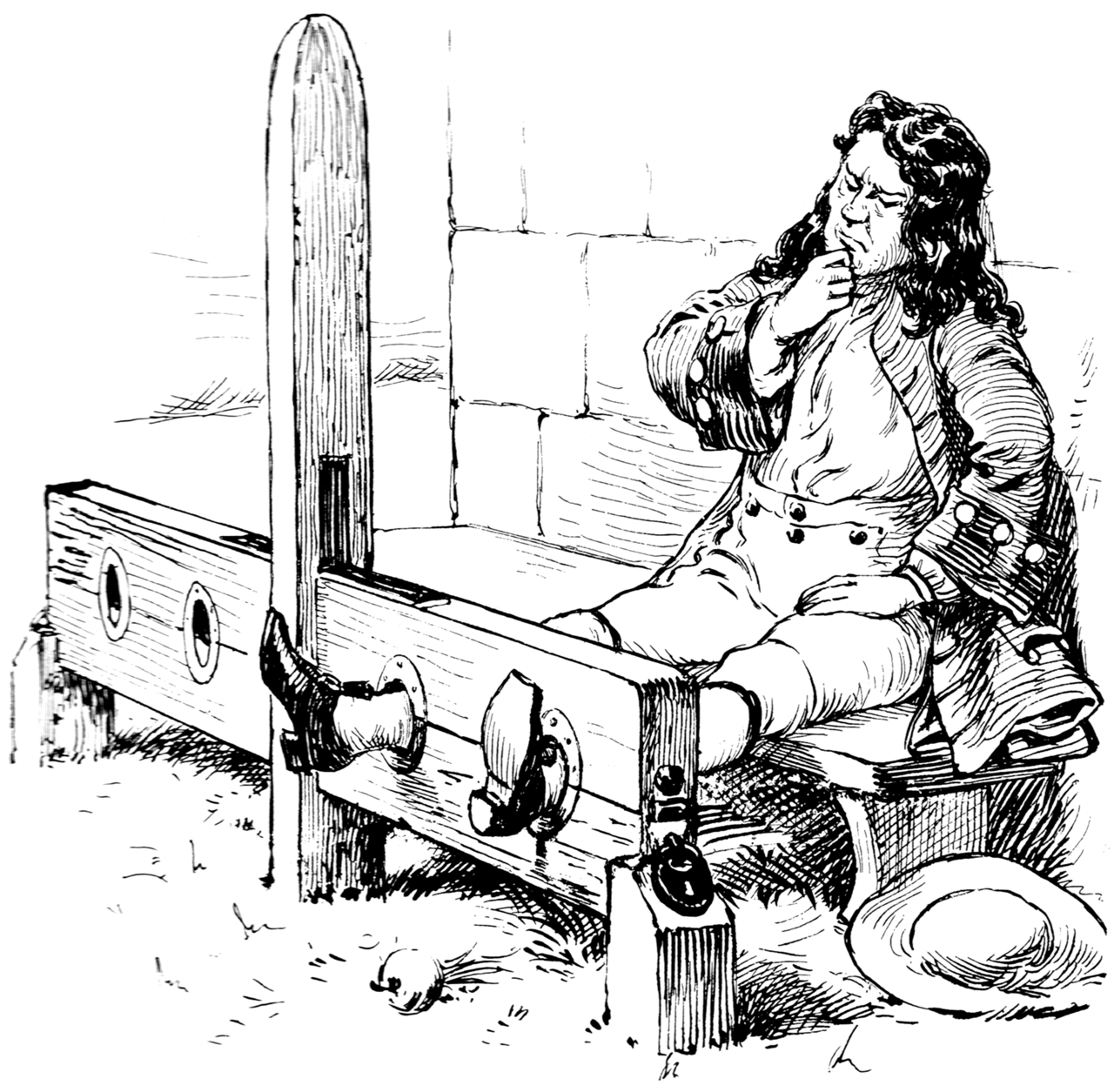
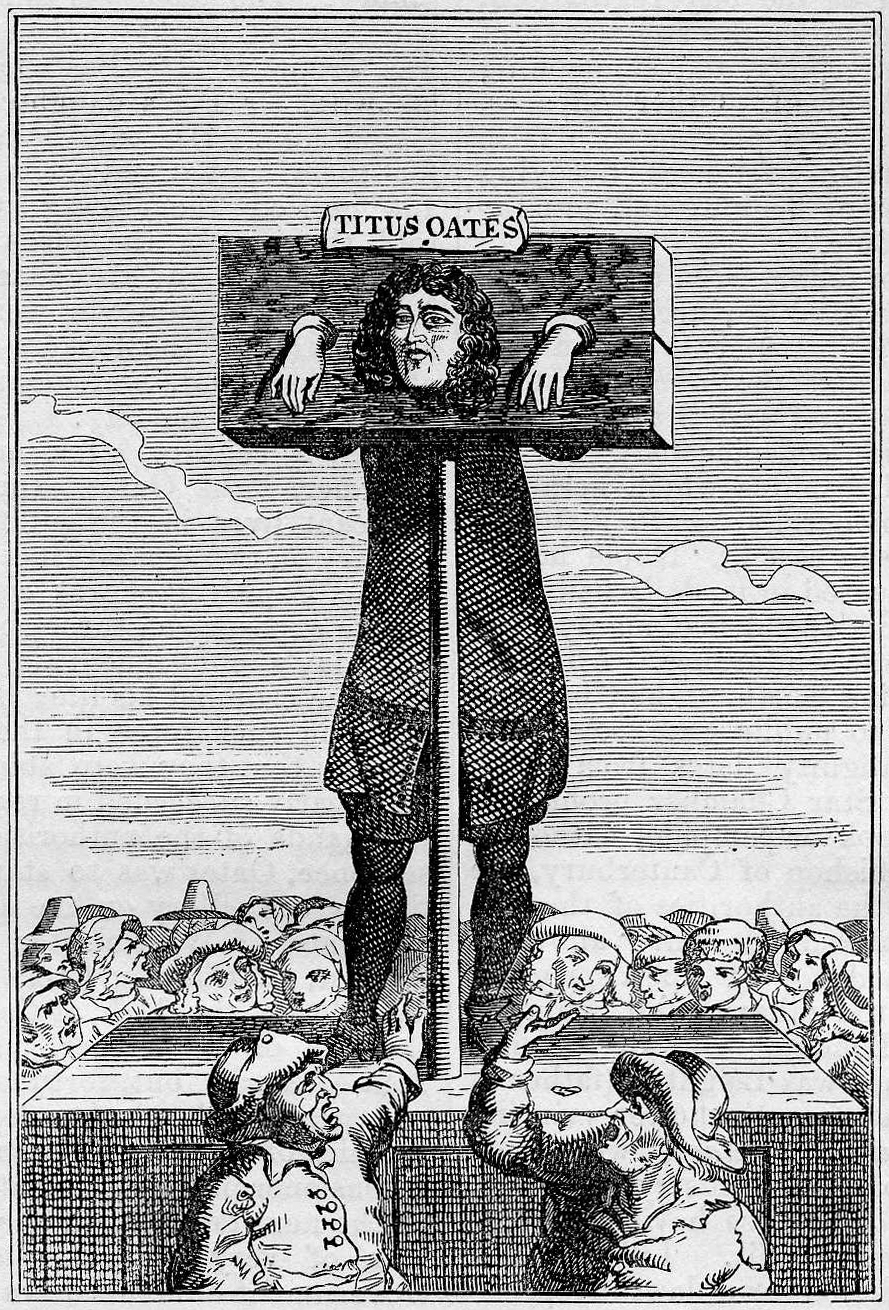
There is no clear record of whether a pillory was here at all, although the street’s name strongly suggests it. James Hall records the following note in his famous work on the history of Nantwich:
Pillory Street is suggestive of another kind of punishment in days long ago. According to the tradition of the town, James Kirkham, for a rape, was the last person to be pilloried, not, however, in this street, but in the High Town…
– James Hall. 1883.
It is known however that Pillory Street has some history in the pursuit of justice. The ‘new’ town goal (jail) was built here, locally referred to as “‘The Round House”, in 1782. It replaced an earlier gaol perhaps also sited on Pillory Street but its location and appearance are not recorded. A description of the new gaol is given by John Howard in 1784:
This prison (called the round house) was built by the county in 1782. Two rooms and a kitchen for the keeper. For prisoners, a room arched with brick (12 feet 3 inches by 19 feet 2 ), with a barrack-bedstead: no chimney: no court: down 12 steps two dungeons with apertures 12 inches by 9. The gentlemen seem to have overlooked a clause in 14th Geo. III. Cap. XLII.— “to prevent the prisoners from being kept under ground, whenever they can do it “conveniently.” The water has been 18 inches high, by the marks, in these dungeons. Only one fire-place, that in the keeper’s kitchen. 1782, Nov. 23, No prisoners.
– John Howard. 1784.
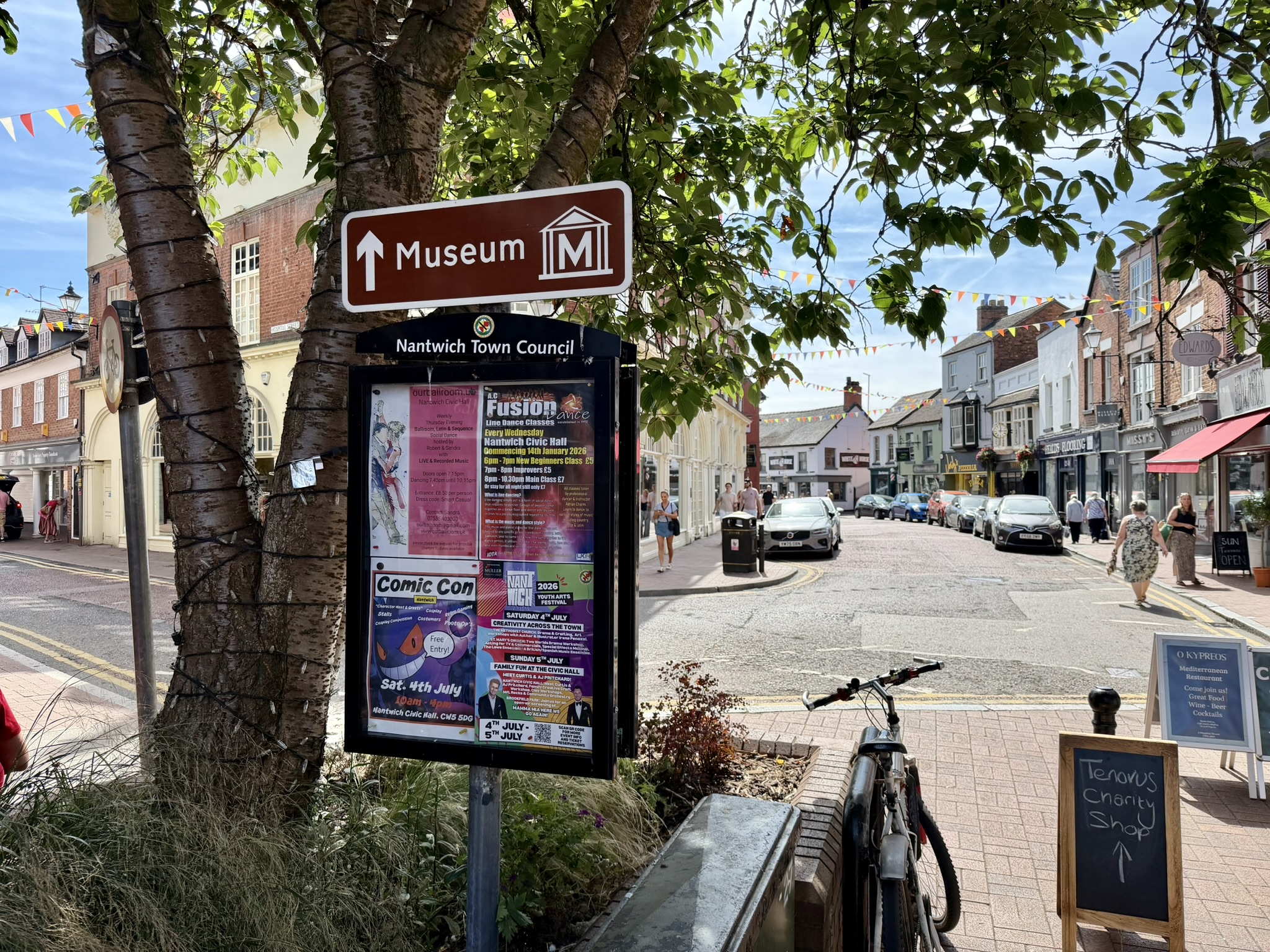
The Nantwich Free Library was built on the site of the gaol in 1888 which now houses Nantwich Museum,
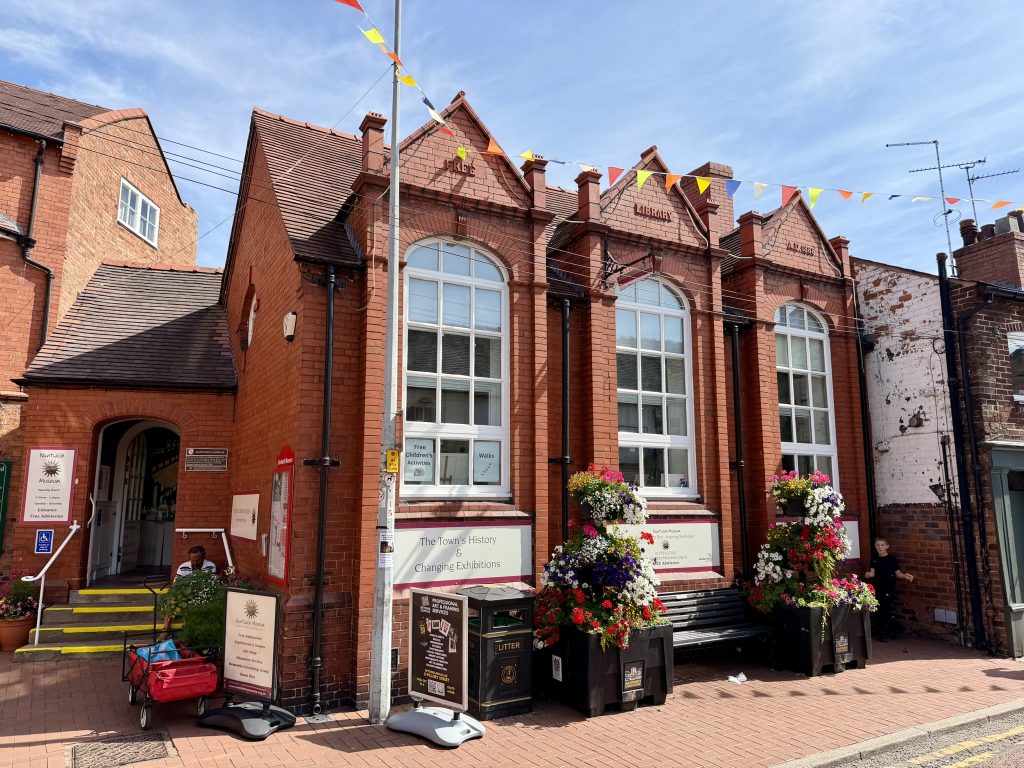
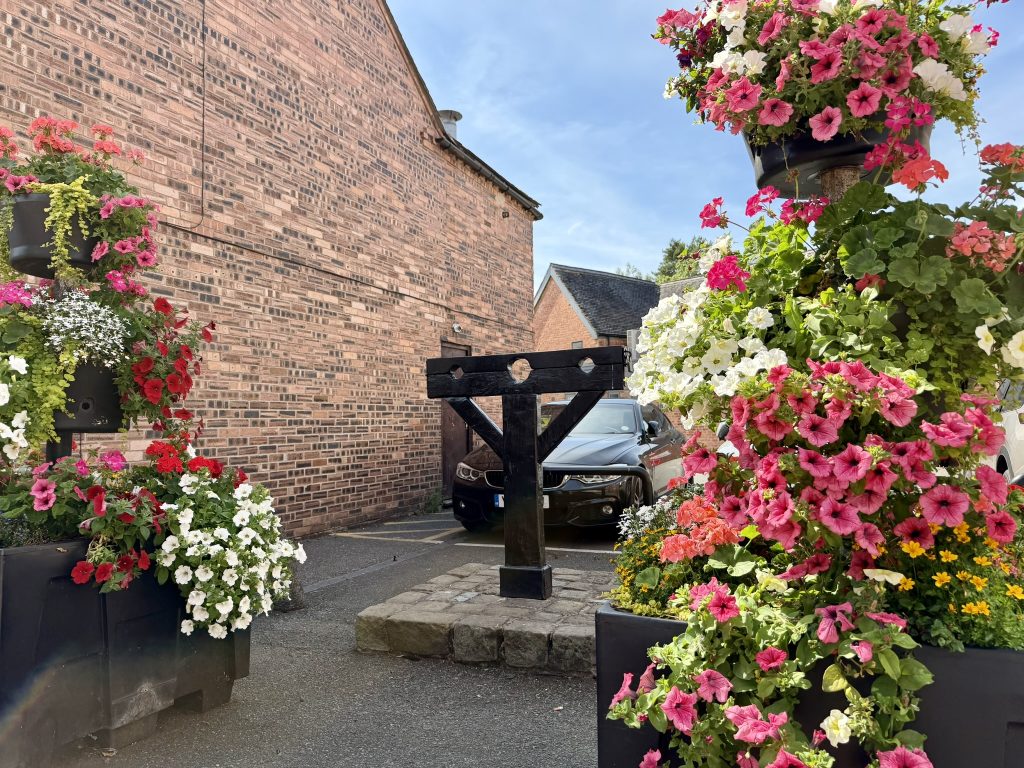
Opposite the museum stands a modern replica of a pillory made from railway sleepers in a nod to the street names presumed origins.
Like most of Nantwich on this side of the river, the fire of 1583 destroyed much of the medeival town. Contemporary accounts detail the devastation on Pillory street where buildings were destroyed on both sides. Today the street hosts notable buildings from several periods charting its subsequent development.
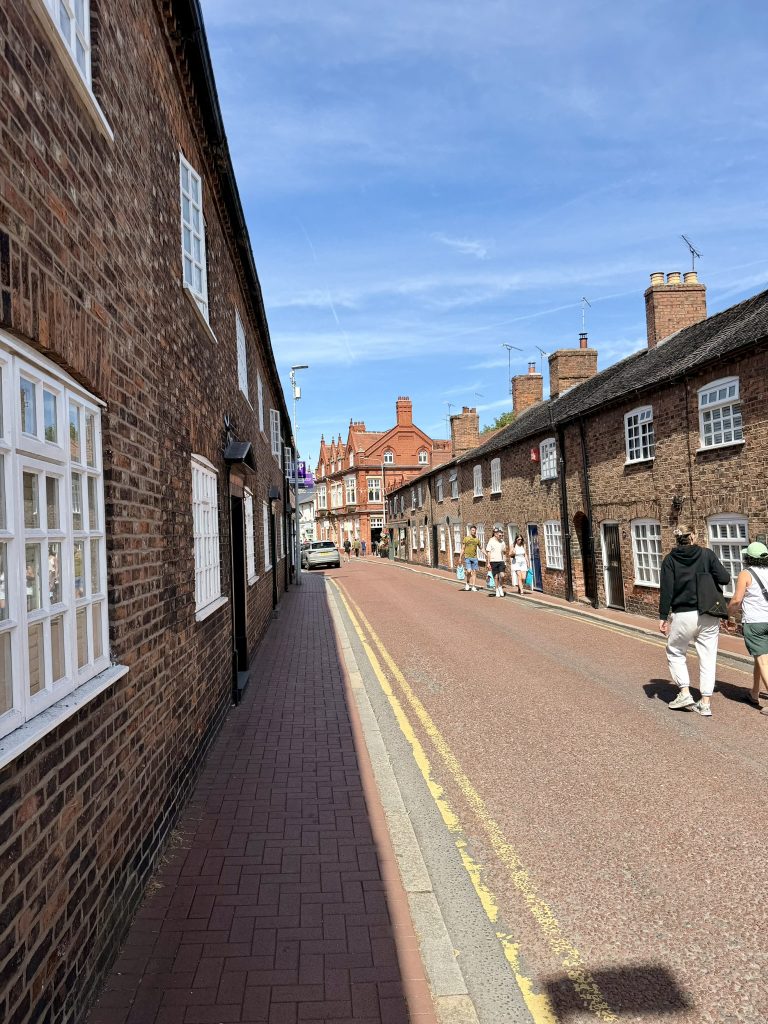
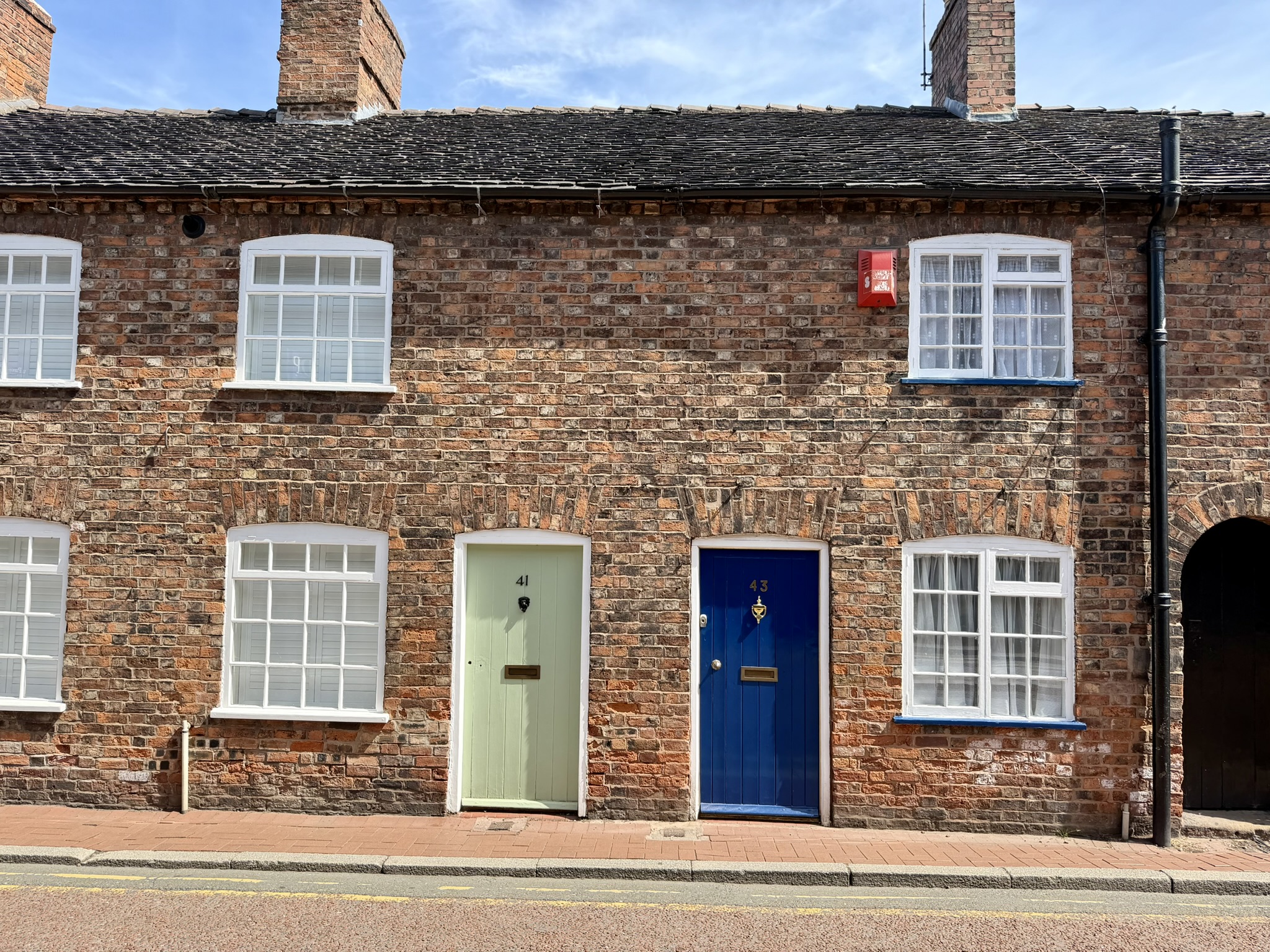
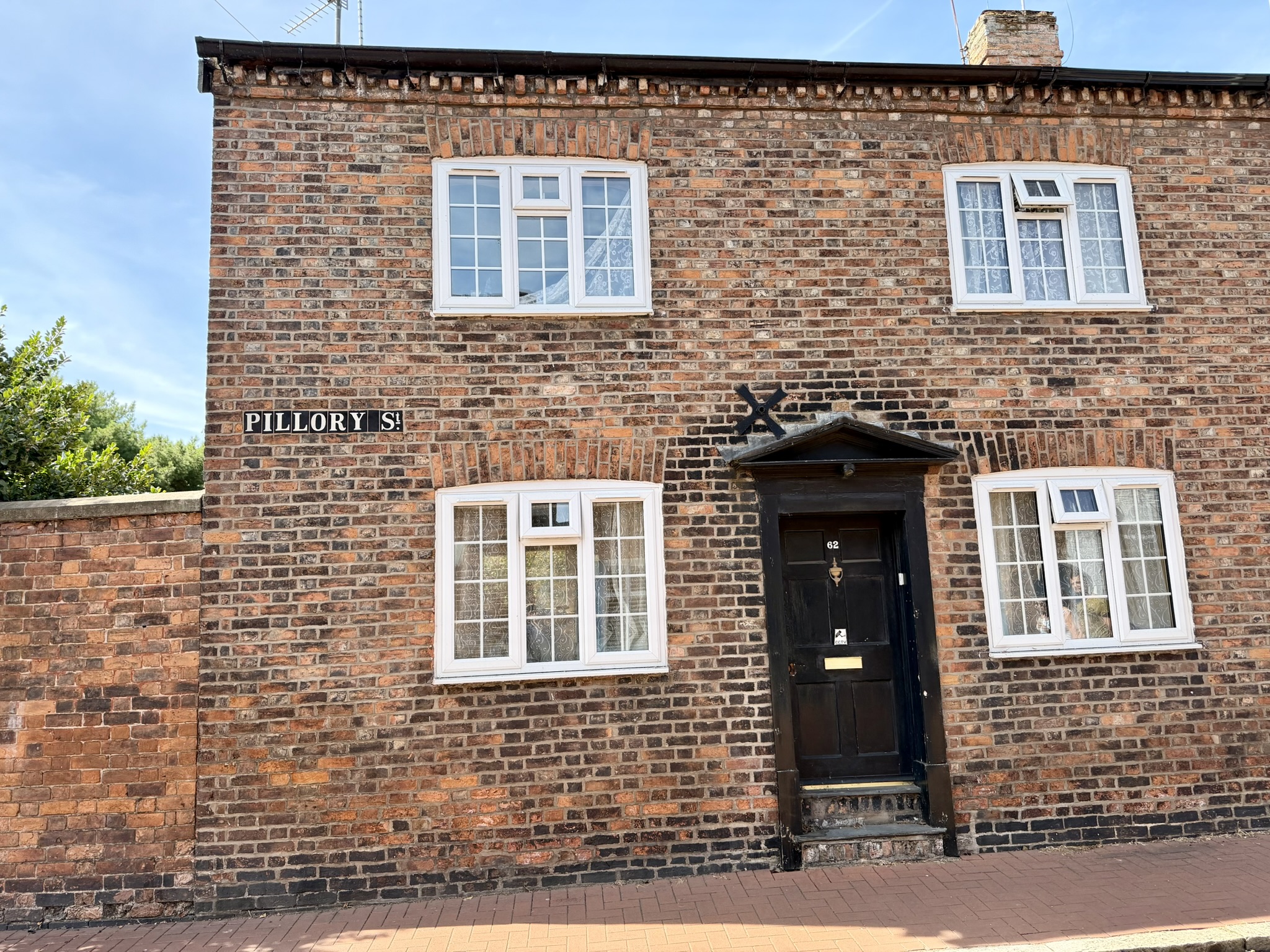
A row of grade II listed terraced cottages at numbers 52-62 are notable in their late 18th – early 19th century style.
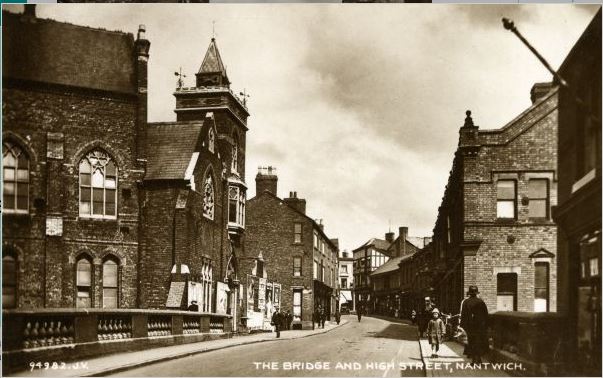
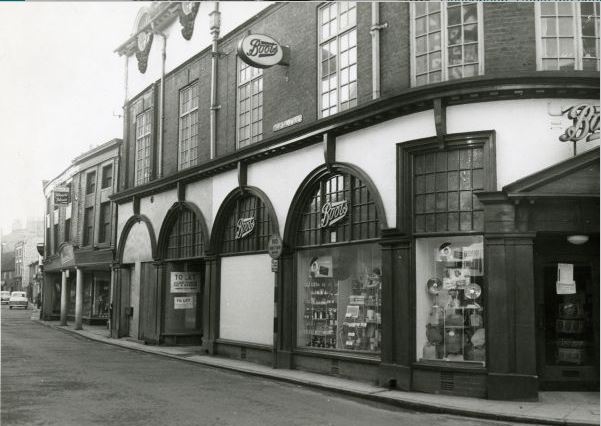
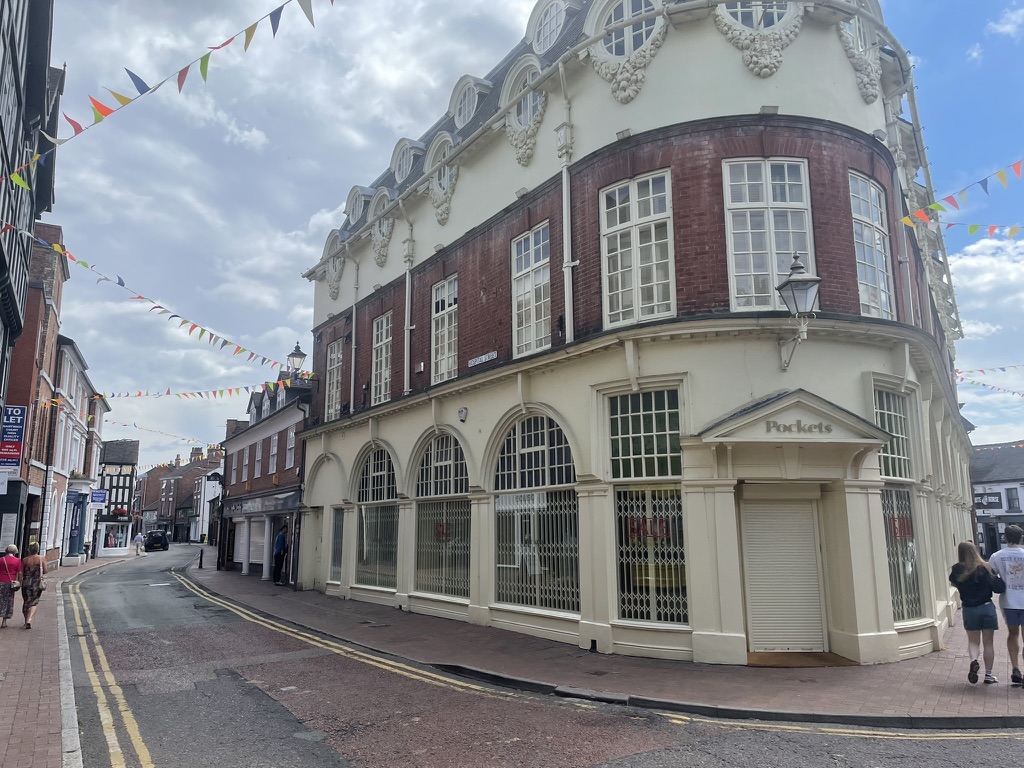
At the other end of the street stands one of the most flamboyant buildings in Nantwich which English Heritage describes as ‘unusual”. Built at the junction of Hospital Street and Pillory Street, the prominent curved building in the French Baroque style was originally constructed in 1911 for P H Chester grocers to capitalise on the success of their businesses in Nantwich. Their existing grocers shop was demolished along with other adjacent shops and pubs to clear way for the grand new building and the widening of the carriageway as it was very narrow at this part of Pillory Street.
1911. Architect, E H Edleston of Edleston & Bower. A corner block of unusual design with details of French late C17 derivation. Red brick; 2 storeys plus double attic; 4+3+8 windows, the 3 being in the rounded corner, all 4-light mullioned and transomed casements with keyblocks; double range of circular dormers with cornices, the lower range having heavy festooned stucco aprons with deep stuccoed band below; shop windows, divided by pilasters, have semi-circular heads containing small-paned glazing, those flanking entrance square-headed; entrance on corner with pilaster doorcase and shallow pediment; steep roof of small slates surmounted at corner by concave spirelet with ball-headed mast.
– English Heritage listing for the building.
Read more about Nantwich Street names here.
Bibliography
Bernie Strawson, 2022. -The Making of Nantwich in Six Maps. Nantwich Museum.
Jane Stevenson – Nantwich, A Brief History & Guide. Nantwich Museum.
Andrew Lamberton & Robin Gray, 2005. Lost Houses in Nantwich.
James Hall, 1883 – A history of the town and parish of Nantwich, or Wich-Malbank, in the county palatine of Chester.
https://en.wikipedia.org/wiki/1–5_Pillory_Street,_Nantwich
https://en.wikipedia.org/wiki/Stocks
https://en.wikipedia.org/wiki/Pillory
https://historicengland.org.uk/listing/the-list/list-entry/1373915?section=official-list-entry
https://www.theprison.org.uk/NantwichTG/