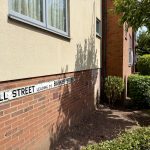
What’s in a Name? Nantwich Streets Explored: Mill Street
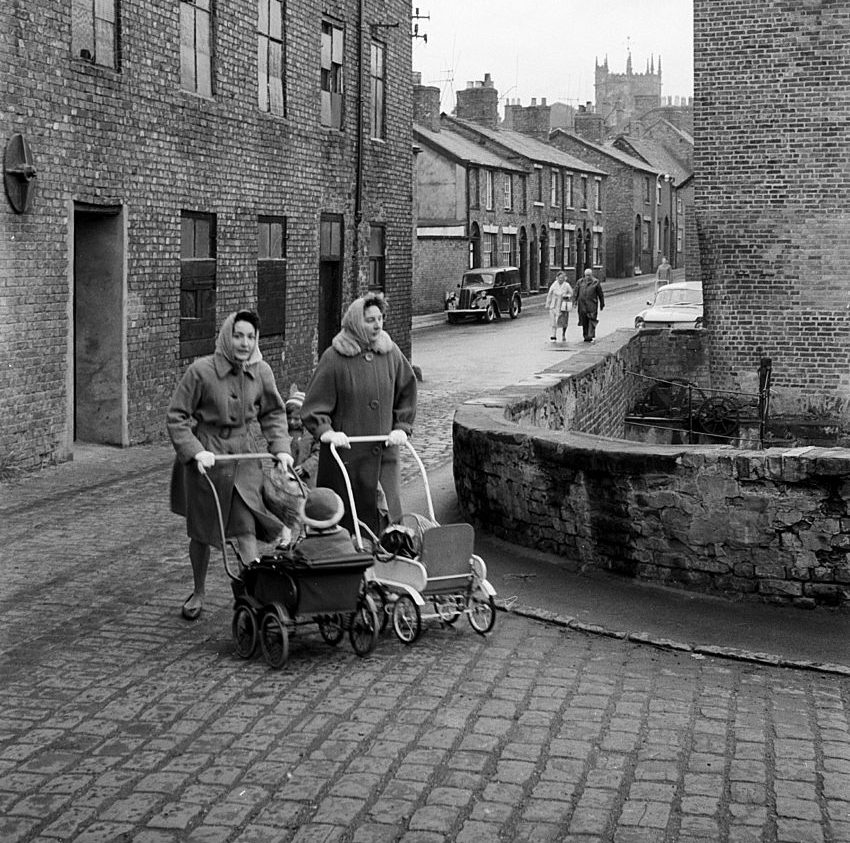
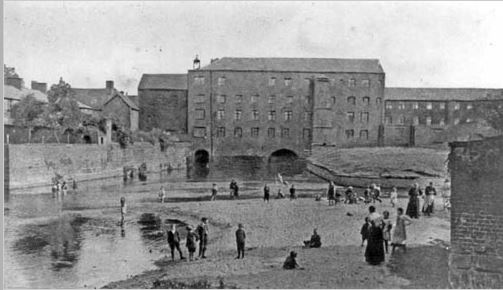
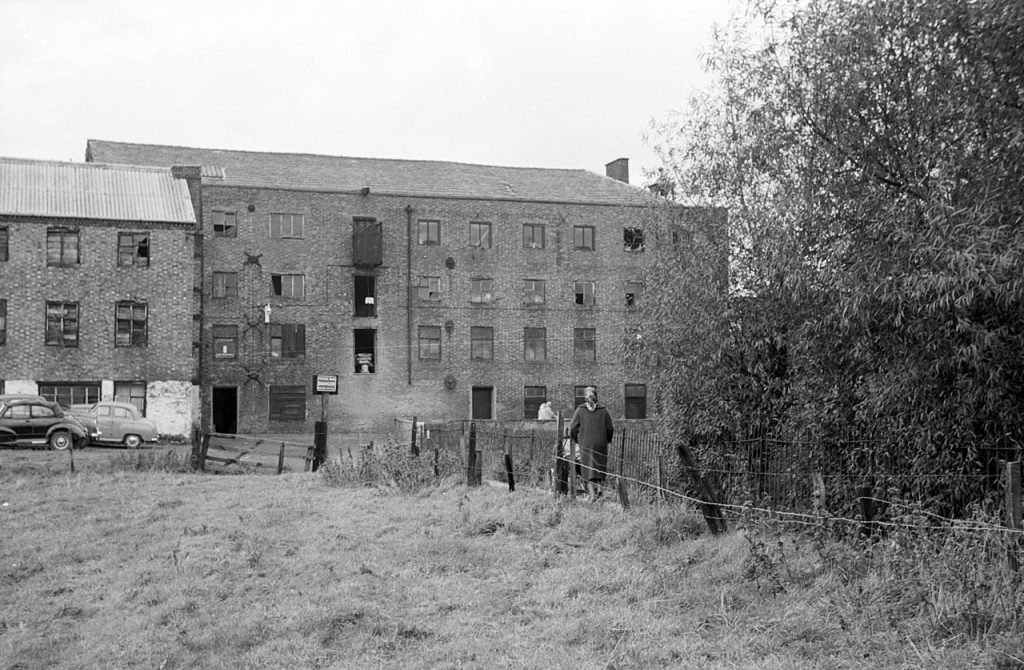
Some readers will remember the relic of Nantwich’s industrial past straddling the Weaver at the end of Mill Street and perhaps even the fire that destroyed it. Nantwich Mill was a huge 18th century building constructed here to harness the power of the river. It’s a scene repeated across the region, invoking images of the Industrial Revolution and a proud working class heritage. As interesting as this is, the story of Mill Street goes back further…much further!
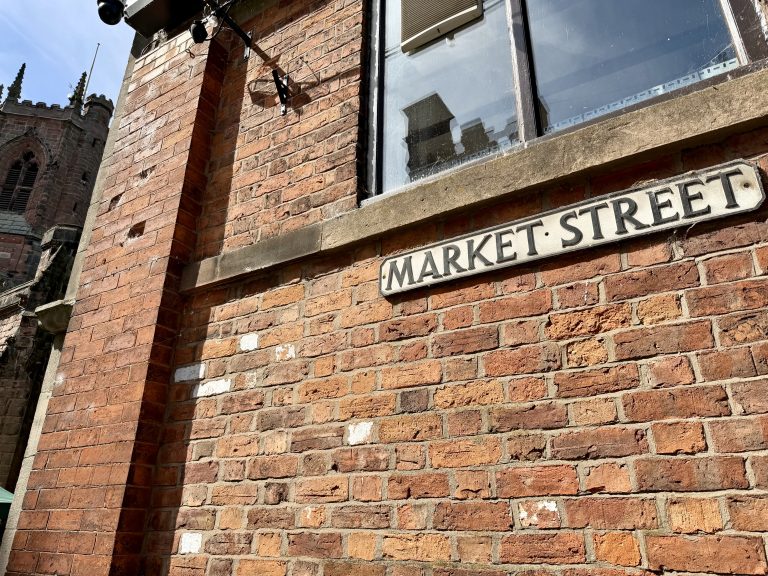
The origins of modern day Mill Street can be traced back as far as the construction of Nantwich Castle around the year 1100. Built as a seat of power for the ruling Norman nobility, the castle was intended to guard the important ford crossing the Weaver. Modern day High Street and Market street still follow the course of the roads which were laid out around the eastern and southern castle walls. The road that we know as Mill Street would have been the main road in and out of Nantwich when crossing the river,
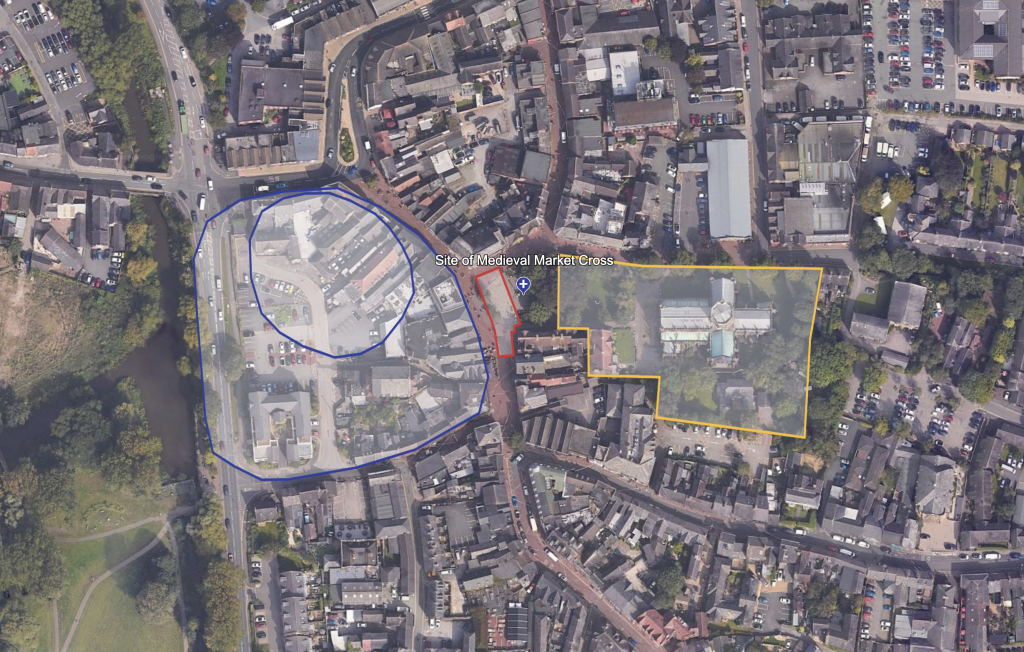
James Hall (Local Historian writing in 19th century) records that in 1355 a manuscript lists a road called “Meelstreete”. Immediately after that Hall refers to a charter which mentions a mill at Nantwich dated 1228. It’s not clear whether the “Meelstreete” that Hall talks about is the precursor to Mill Street or whether it is another place entirely which was perhaps to do with the sale of cereal products. It is likely then, that the mill which gives its name to Mill Street is the original medieval corn mill and not the later mill of the Industrial Revolution.
The exact location of the 1228 mill is not known but it is thought that it would have been sited on the course of the Weaver to the south of the ford crossing. By about 1500, new plans were being made that would change the very landscape of Nantwich forever. A new mill would be constructed nearby to replace the old mill and to improve the flow of water, which had always been affected by the water levels in the river, a new channel would be dug and a weir built to divert the water. The resulting mill race would ensure a more even, controllable flow of water and a reliable power source for the mill. The island which was formed by digging the channel would become a lasting reminder of the industrial history of this part of Nantwich.
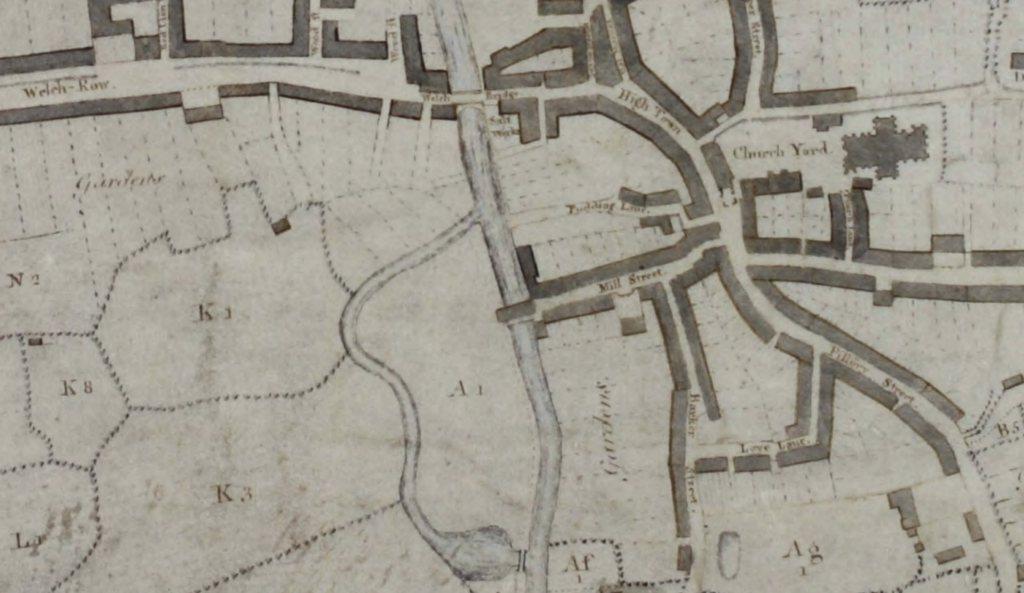
The corn mill was rebuilt in the 18th century and for a time was reconfigured to become a cotton mill. In 1797 new steam engines were installed and the mill extended. It became known at Bott’s Mill after its owner. The mill was expanded again in 1840 when new owners took over, adding another storey. The mill and the surrounding area became a general industrial zone with several businesses operating there over the years. The water wheel was replaced by a turbine in 1918 which was still in use until 1944.
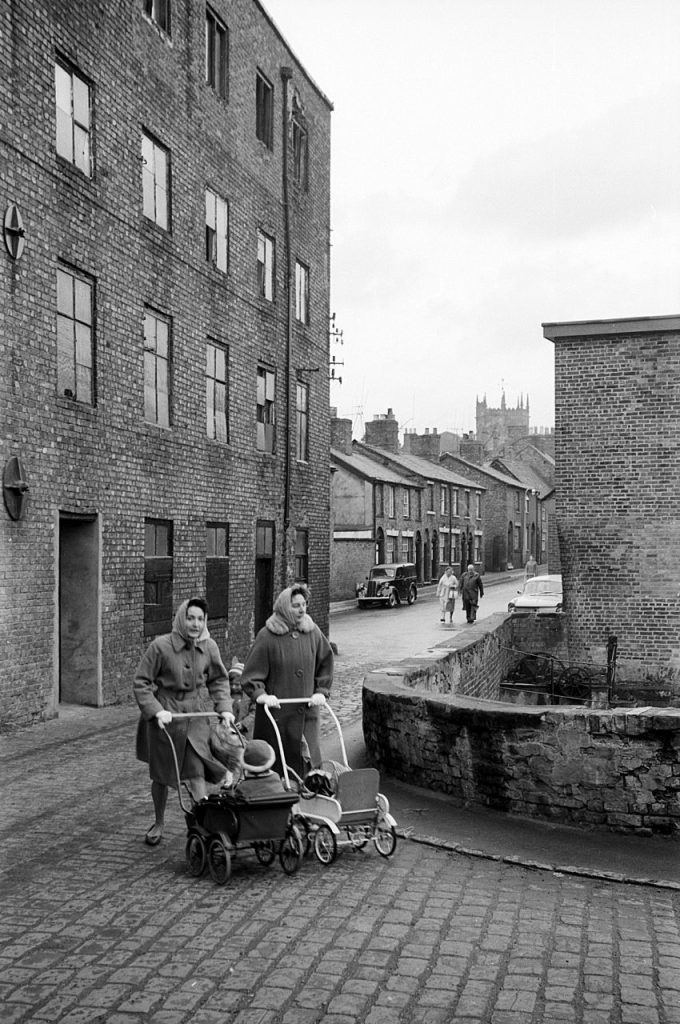
Boughey’s were operating from the mill in the 1950’s and part of the building was used as a billiards hall. The mill was destined for demolition in the 1960’s to make way for a new scheme of regeneration which never came to pass. In 1970 the building was mostly destroyed by fire and the remains were demolished in 1972.
The area around Mill Island is now opened up for recreational use as a park and hosts the annual Battle of Nantwich reenactment.
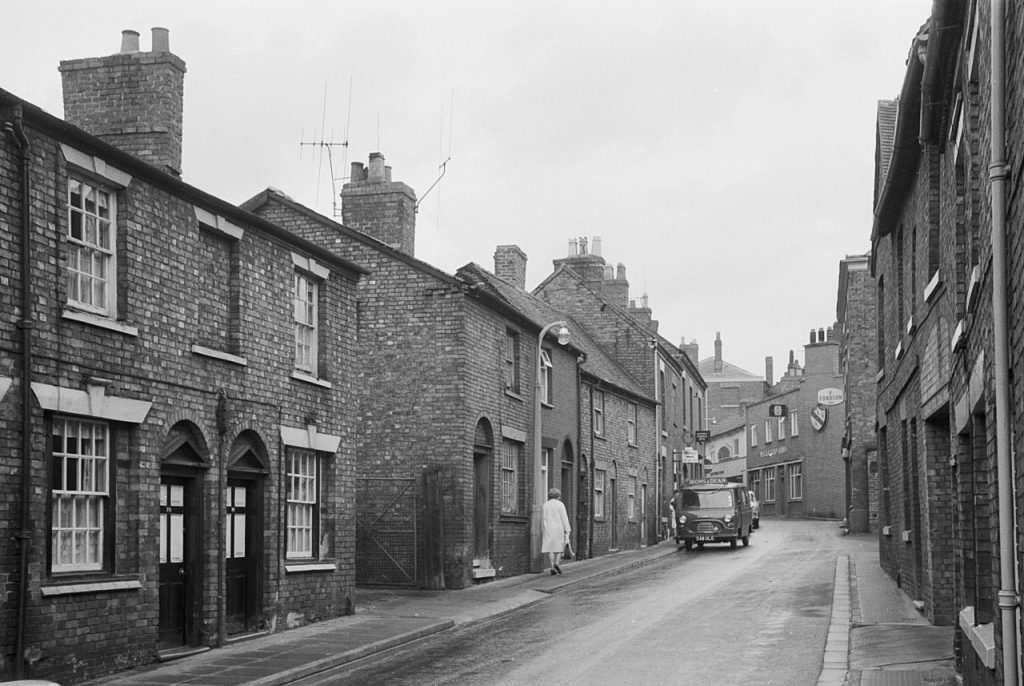
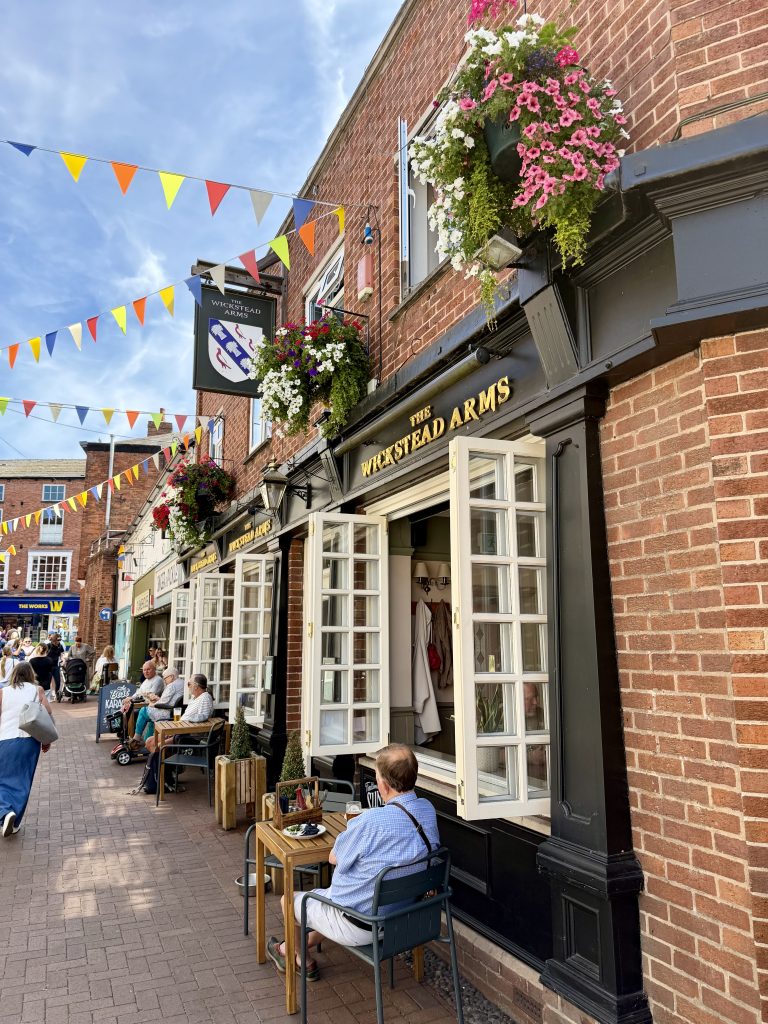
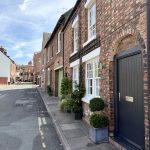
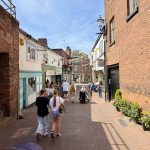
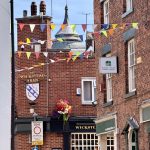
Aside from the Mill, the street has several interesting features such as No. 9, a large Georgian townhouse which was later used as a bank and then a Liberal Club. Later it became Pepper’s restaurant and is now operates as ‘9 Mill Street’ a bar and restaurant. The Wickstead Arms pub stands further up towards High Street. It has been known by several names over the years including The Royal Oak and The Blue Bell, becoming the name we know toady in 1822. The name is thought to be after the owner who was part of one of the oldest and well known Nantwich families.
Read more about Nantwich Street names here.
Bibliography
Bernie Strawson, 2022. -The Making of Nantwich in Six Maps. Nantwich Museum.
Jane Stevenson – Nantwich, A Brief History & Guide. Nantwich Museum.
Andrew Lamberton & Robin Gray, 2005. Lost Houses in Nantwich.
James Hall, 1883 – A history of the town and parish of Nantwich, or Wich-Malbank, in the county palatine of Chester.
Andrew Lamberton & Graham Dodd – Landscape with Mills – A Review of Local Mill. Nantwich Museum Journal 2017.
Bill Pearson & Andrew Lamberton – Nantwich Pubs. Nantwich Museum,