There’s something about ‘Hidden’ that captures the imagination, whether it’s a hidden space, hidden treasure or a hidden past, it induces a strong desire to uncover it. That’s what inspires this blog and my interest in the history of Nantwich and the nearby countryside. There’s a hidden place right in the heart of Nantwich that ticks these boxes and only a few know about it and even fewer know exactly where to find it.
The Walled Garden in Nantwich is the definition of hidden; lost in time and screened by decades of overgrowth, it lies mostly forgotten but the 21st Century is closing in and the never-ending demand for housing threatens it.
Part 1: “Lofty and Spacious”
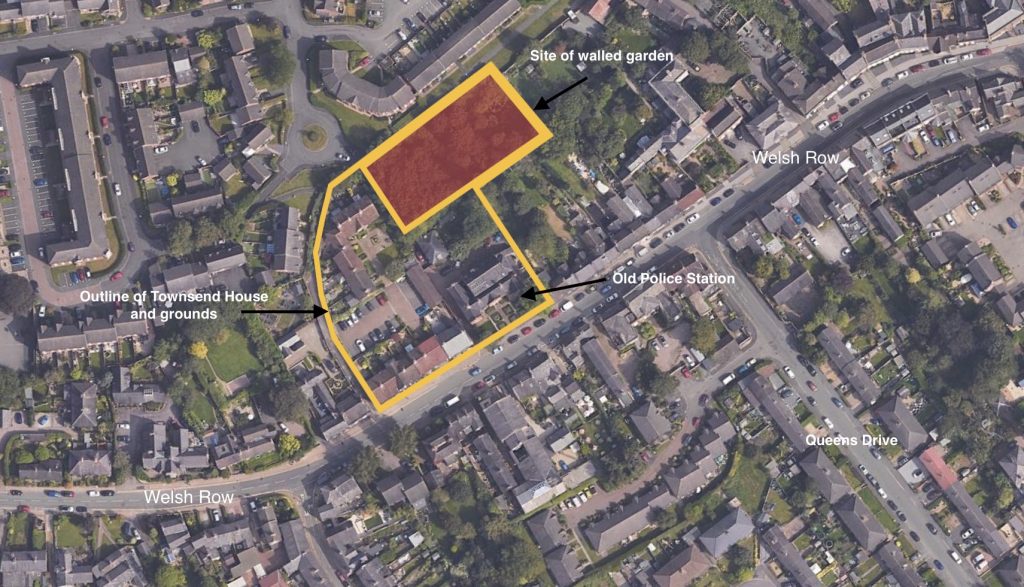
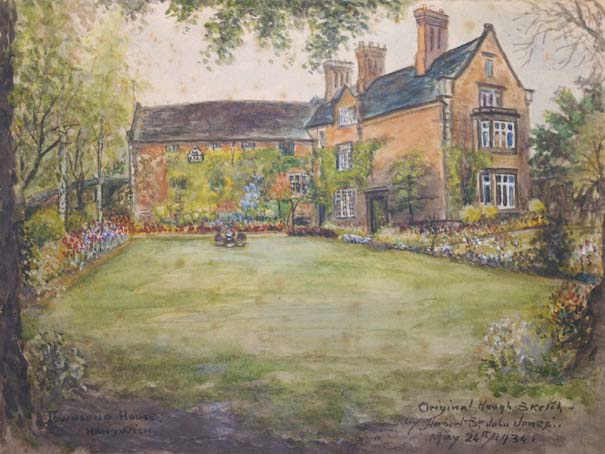
This part of Nantwich had long been the neighbourhood of choice for many of the most ancient and wealthy local families and perhaps one of the most prominent was the Wilbrahams. Richard Wilbraham began the construction of his impressive family seat here in 1575 and the family remained for the next two hundred years.
Writing many years later, with the house in a sad state of repair, a local historian wrote:
It appears from these remains to have been a lofty and spacious edifice of brick, with large bay windows, surrounded with numerous outbuildings of timber and plaster ; and gardens with high walls of brick, ornamented with stone carvings…
– Ormerod, 1819.
Townsend House became the base of operations for the Wilbrahams who held extensive lands in the town and surrounding area as well as interests in the salt making industry for which Nantwich was so well known. Members of the family held positions of high office both locally and nationally and in August 1617 entertained King James I and his entourage at Townsend House for the night as he made his way down from Scotland.
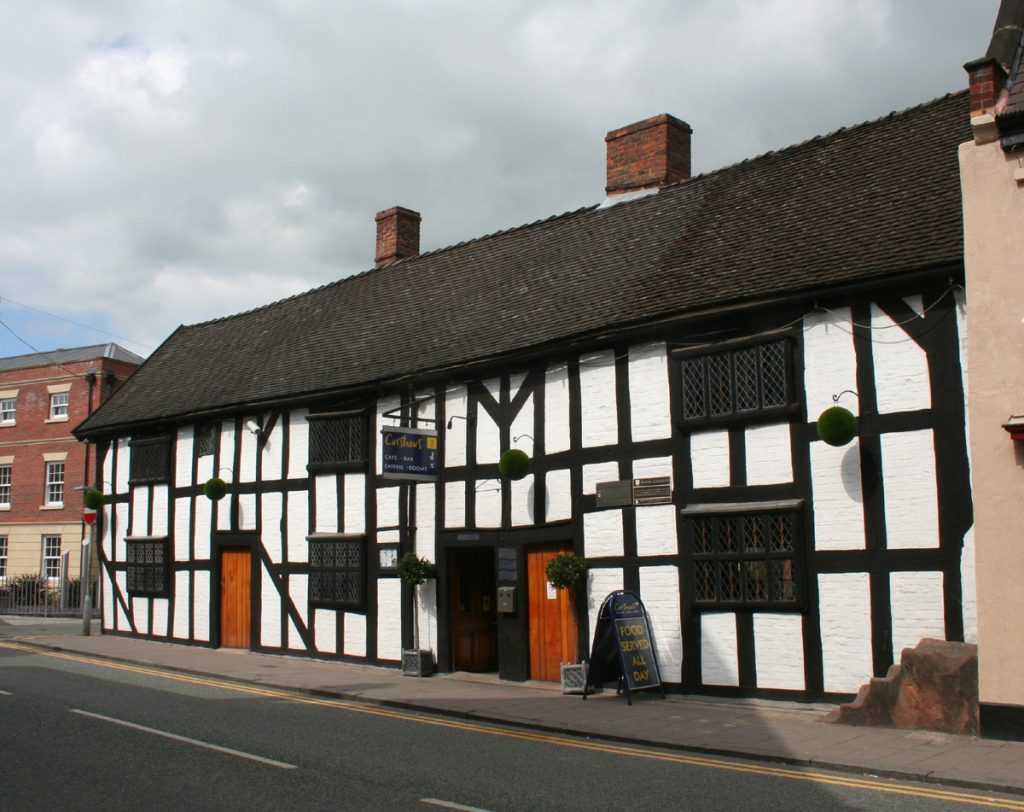
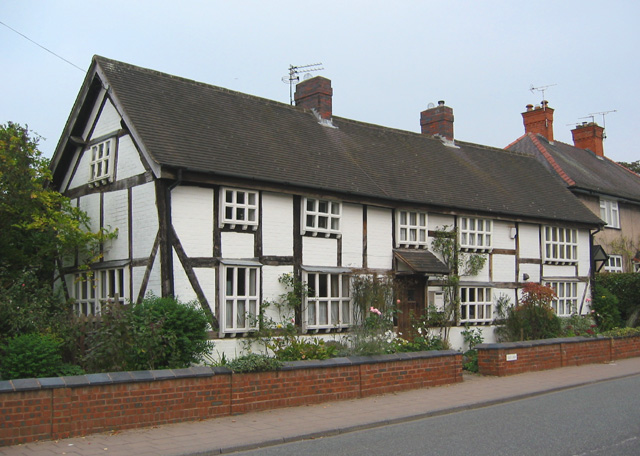
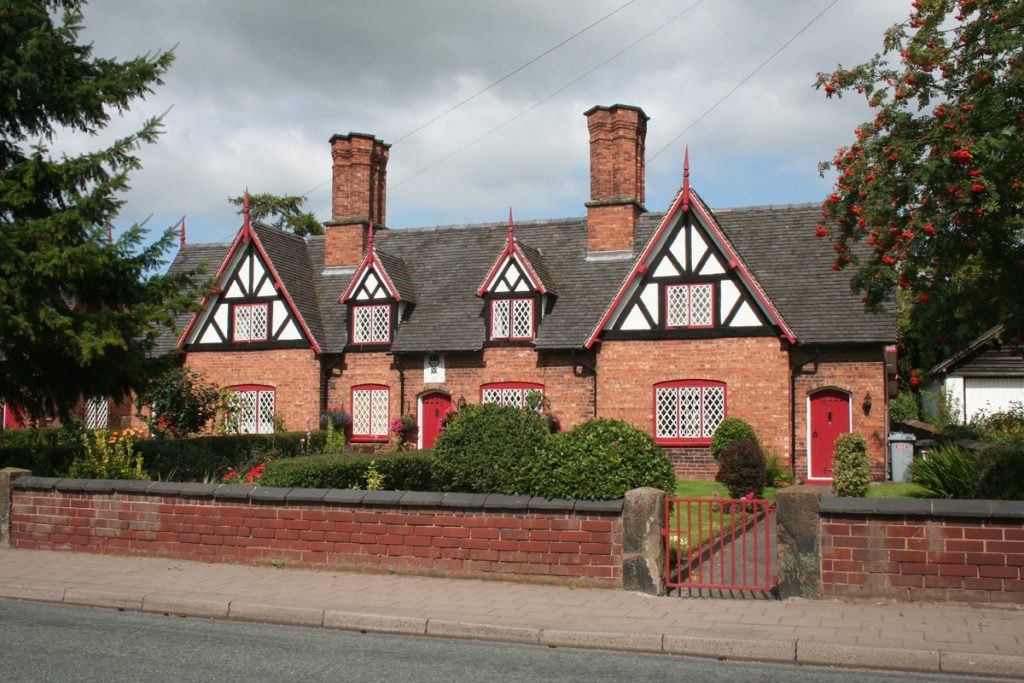
The family were also concerned with charitable causes in the town. Roger Wilbraham (Great-Grandson of Richard who built Townsend) founded almshouses (low cost housing for vulnerable people) to benefit local widows. The building still exists at The Cheshire Cat public house. Another almshouse was created in 1613 at what is now 112-116 Welsh Row by another Roger Wilbraham (Son of Richard) to benefit six poor men. Later replaced by Tollemache Almshouse next door (built by a Wilbraham descendant) in 1870, and still operated today by the amalgamated Nantwich Almshouses charity.
I thought of erecting a monument that might transmit the memory of my D.[ear] wife to posterity ; it came into my thoughts, that I had in our own Street, three well built houses, under a roof, with convenient apartments, that might easily be converted into an Almshouse, for haIf a dozen poor aged widows ; and thought better to devote something of this nature to the Honor of God and to her memory…
– Roger Wilbraham, writing in his journal about the death of his wife in 1676.
By the time Wilbrahams left Townsend in 1780 for their grand new country pile near Delamere, the house on Welsh Row was in a dilapidated state and in the early part of the 19th Century the house was replaced by a large Victorian construction. Over the years this new building and its grounds were used for various purposes including a brewery and later a clothing factory. Part of the grounds were sold off to become the magistrate courts and police station in 1876.
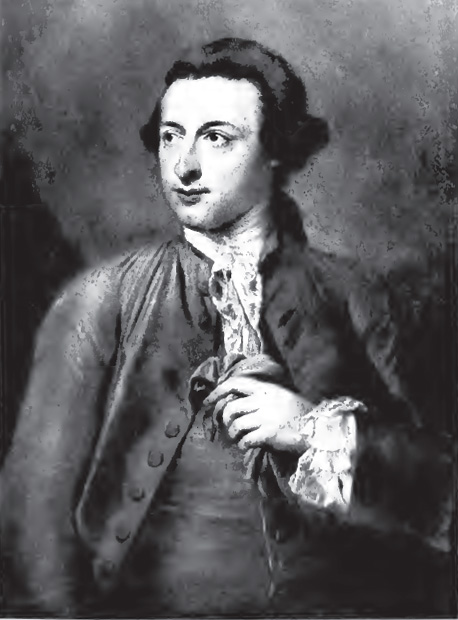
Eventually Townsend House became a private home again until it was demolished in the 1960s. Around this time, the grounds fronting Welsh Row were given over to become a garage and petrol station. This remained until 1997 when the site was cleared once again for a housing development – King’s Court.
Part 2: What Remains?
The only trace of Townsend House that exists today is the walled garden (not quite – there is something else mentioned shortly!). It was Richard’s Grandson, Thomas who was mainly responsible for the building of the walled garden to the West of the main house after he had inherited the property. Built in the 1620s the tall walls were constructed in brick with decorative sandstone coping on top. The garden was used to provide fruit for the family and also a place for relaxation with ornamental planting.
Built into the South wall and still extant today are three rare ‘Bee Boles’ – alcoves which would have been used to house a bee hive made from wicker or straw to provide honey for baking and brewing, for medicinal purposes as well as beeswax for candles.
There is one other known surviving part of Townsend House though. Historian James Hall records that:
A stone gateway, with the original ornaments (carved lionesses) which formerly stood in this garden, now adorns the grounds of Dorfold Hall, having been purchased many years ago by Wilbraham S. Tollemache, Esq., who has since added thereto busts of King James and his Consort.
– Hall, 1883.
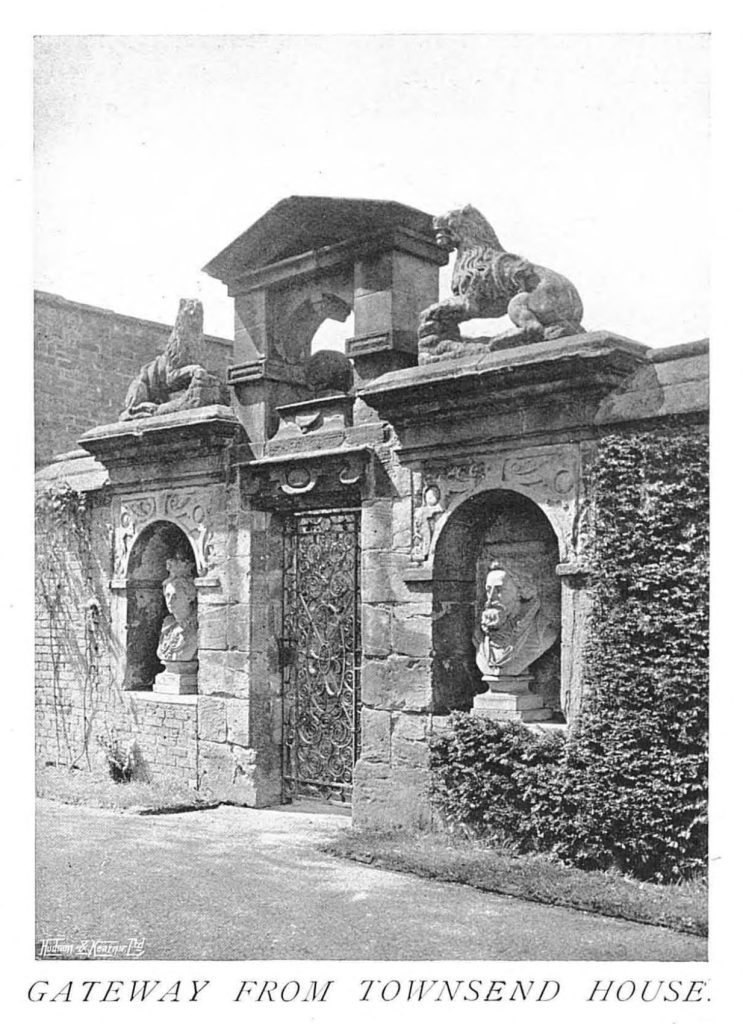
It’s not known exactly where in the garden of Townsend House this arch was located but it’s possible that it formed an entrance from Welsh Row itself. The stone busts of the King and Queen presumably added to commemorate their visit to Nantwich and overnight stay at Townsend House in 1617.
The garden, which is privately owned and not open to the public, is now overgrown and the walls in a poor state of repair, lying in its current, quiet state amongst the houses and the usual comings and goings of town life.
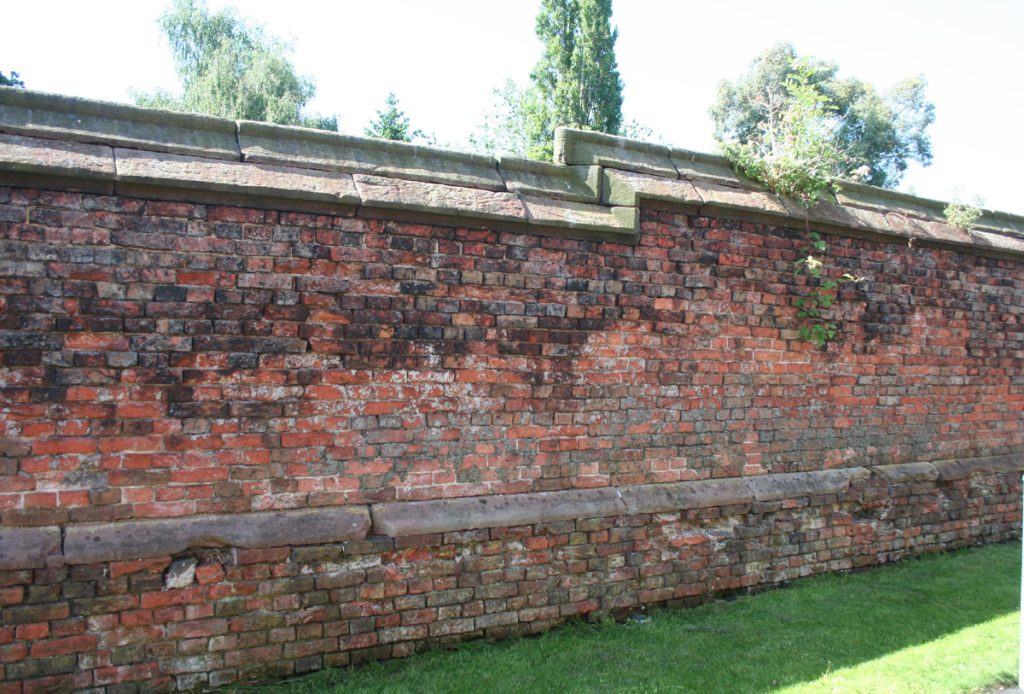
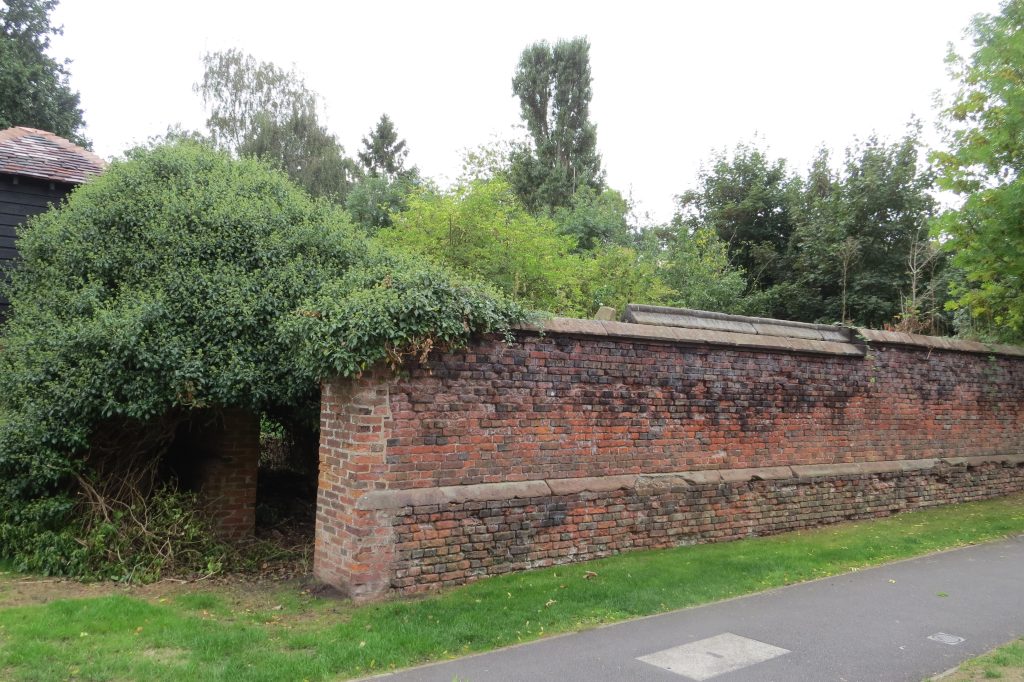
Historic England (The public body set up by the Government to protect and champion ancient monuments, historic buildings, and conservation areas) considers the garden and its walls to be a rare example of its type. Partly due to its location and its age, with most walled gardens being attached to large houses out in the countryside and originating from a later period.
Part 3: The future of the walled garden
After being Grade II listed in 1986, the fields to the North of the walled garden known as ‘Kingsley Fields’ were developed into a housing estate but the garden itself was untouched. Since then several attempts have been made by developers to gain planning permission for houses or flats on this plot of land with, so far, no luck.
The Nantwich Walled Garden Society has long campaigned for the garden to be retained for the benefit of locals and visitors alike. They aim to negotiate the purchase of the site and to raise funds to enable its restoration, eventually operating as a community project and visitor attraction enabling education and to offer a tranquil place for locals to relax.
As of 2026, the most recent planning applications for four terraced houses and two apartments originally submitted in 2019 have been withdrawn. Apart from that, no one really knows what the future holds for this hidden gem.
Perhaps one day we will be able to raise a glass in the restored walled garden to those who were responsible for its creation some 400 years ago…
Bibliography
Nantwich Walled Garden Society – https://nantwichwalledgarden.org.uk/
James Hall, 1883 – A history of the town and parish of Nantwich, or Wich-Malbank, in the county palatine of Chester
George Ormerod 1819 – The History of the County Palatine and City of Chester
Linda Briggs, Helen Cooke & Catherine Meehan – Nantwich Walled Garden and Townsend House (Nantwich Museum)
Andrew Lamberton & Robin Gray – Lost Houses in Nantwich (Nantwich Museum)
https://en.wikipedia.org/wiki/Wilbraham’s_Almshouses,_Nantwich