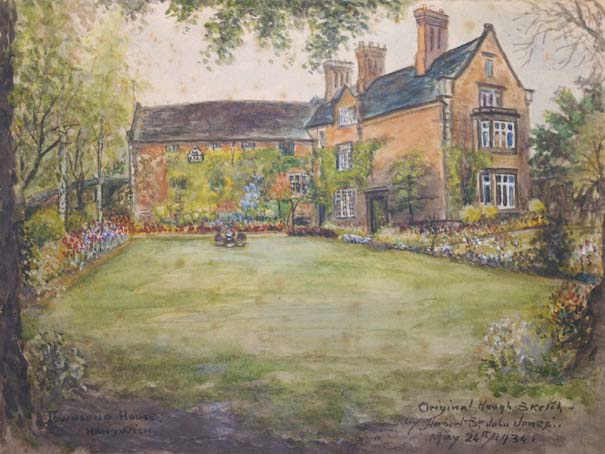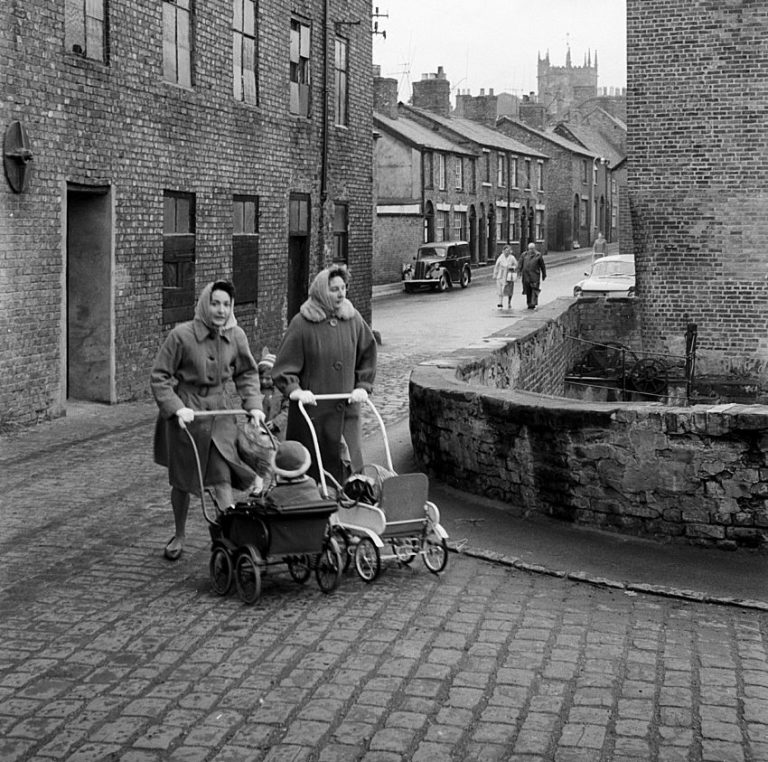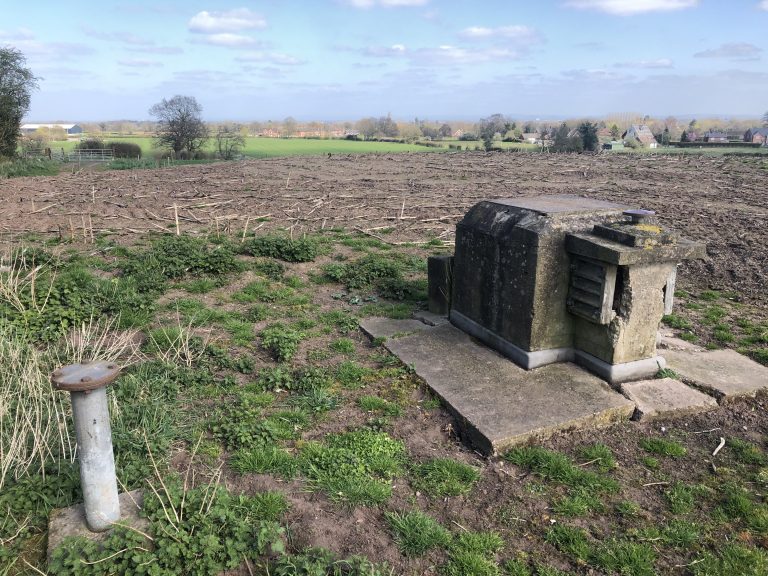
Take a drive South East from Nantwich and you are soon into the rolling Cheshire countryside, dairy cows on either side of you and miles and miles of open fields. Eventually you will come to Hack Green, a tiny hamlet on the way to Audlem. Just a collection of farms and houses really, and not much more. Something will draw the eye of the more perceptive; A small collection of houses just off Coole Lane stands out in its typically mid-twentieth century style. They just look a bit out of place here. Then you see the famous brown signs leading you down a narrow lane which read “Secret Bunker” and you can’t help but wonder what went on here..
This four part series of articles will explore the hidden 20th century history of this quiet corner of South Cheshire, taking us from the imminent threat of Nazi invasion and a terrifying new kind of aerial warfare all the way to the fall of the Berlin Wall in 1989 and the thawing of The Cold War.
This is the third part of a four part series looking at the defence history of Hack Green in Cheshire.
Part 1 – Deception: Operation Starfish can be found here.
Part 2 – Detection: Watching The Skies can be found here
An Emerging Threat
The Second World War ended with an Allied victory over the Axis powers and Britons breathed a collective sigh of relief. In the aftermath of the riotous celebrations, a new threat emerges in the east. Relations are quickly souring with fellow wartime victor and one-time ally, The Soviet Union leading to a decades long stand off and the next chapter of Hack Green’s role in Britain’s defence.
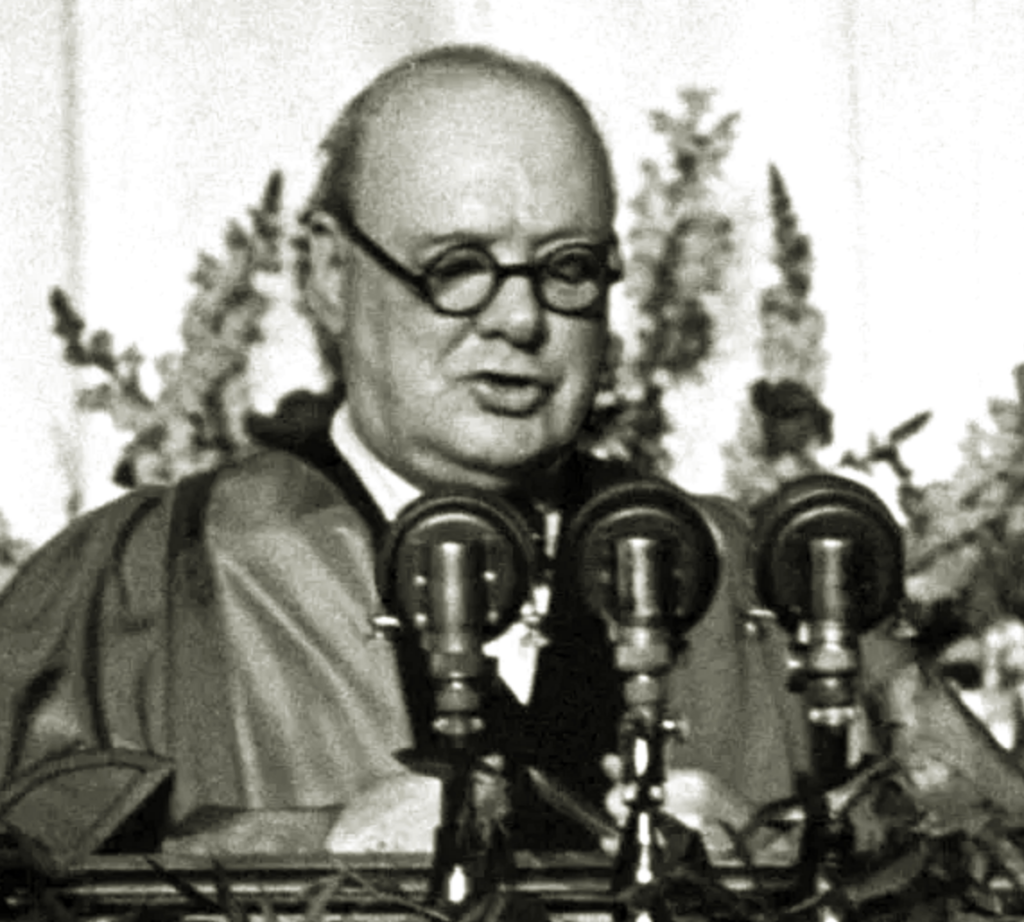
From Stettin in the Baltic to Trieste in the Adriatic, an iron curtain has descended across the Continent. Behind that line lie all the capitals of the ancient states of Central and Eastern Europe. Warsaw, Berlin, Prague, Vienna, Budapest, Belgrade, Bucharest and Sofia, all these famous cities and the populations around them lie in what I must call the Soviet sphere, and all are subject in one form or another, not only to Soviet influence but to a very high and, in many cases, increasing measure of control from Moscow.
– Winston Churchill. From “The Sinews of Peace” Speech 1946
A gargantuan national effort has left the country in a sorry state. More than 450,000 were dead. Millions of buildings had been destroyed or damaged by enemy bombs. The economy was in tatters with Billions of Pounds in debts to pay off. Rationing would still be in place for several more years. It’s in these austere times that we revisit Hack Green. The remains of the deception site (PROJECT STARFISH) are few with the site closed by 1943 and the radars (MORE HERE) no longer keeping watch, no longer turning. Many places like Hack Green which had played such a vital role in the war effort were enthusiastically mothballed towards the end of the war as the focus switched from defence to offence and the amphibious landings in Normandy and the advance on Berlin.
As east and west eyed each other suspiciously, It wasn’t long before thoughts turned to the next war. Technology had moved so fast in the previous few decades, who could possibly imagine how the next war would be fought and how the UK might be defended? What was known however, was that radar still had a big part to play.
Codename ROTOR
Building on wartime experience of radar operations, plans were made for a new tracking system which would be able to deal with the introduction of jet powered aircraft flying at ever increasing speeds. New radar sets would be needed with ranges up to 250 miles, which would be a huge improvement on the existing kit with its range of just 90 miles. Other improvements would also be required to make the most of this extended range: New display equipment, upgraded electronics and new control centres to collate the data and coordinate the interceptors. Codenamed project ROTOR, it was one of the largest defence schemes ever conceived in the United Kingdom
Officials at the time thought that a war was probably unlikely within, say, the next decade or so. This meant that with the evolution of radar systems still continuing at a rapid pace, that they could make do with the kit left over from the last war by making tweaks to improve its performance whilst they made plans for a more modern replacement which became known as ‘Microwave Early Warning’ (MEW).
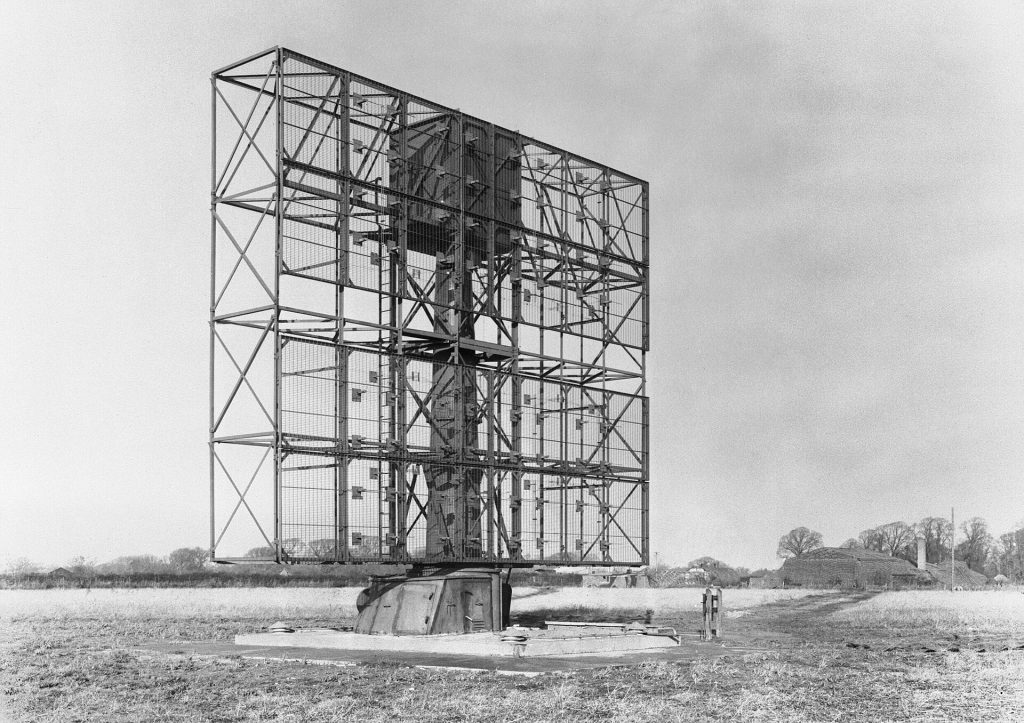
All of this would take time, of course, MEW was hoped to be available by about 1957 but set against rapidly deteriorating relations with the now nuclear armed USSR, it was clear that these plans would need to be acted on… and fast.
A huge construction programme was started in 1951 which would see some of the radar sites improved and the new control centres hardened against attack whilst work continued on the development of the more capable MEW system. These fortified control centres (I’ll use ‘bunker’ from now on) would be completely underground on the east coast where attack was considered to be more likely. In other areas, the bunkers would be built ‘semi-sunken’, partly above and partly below the ground, like here at Hack Green.
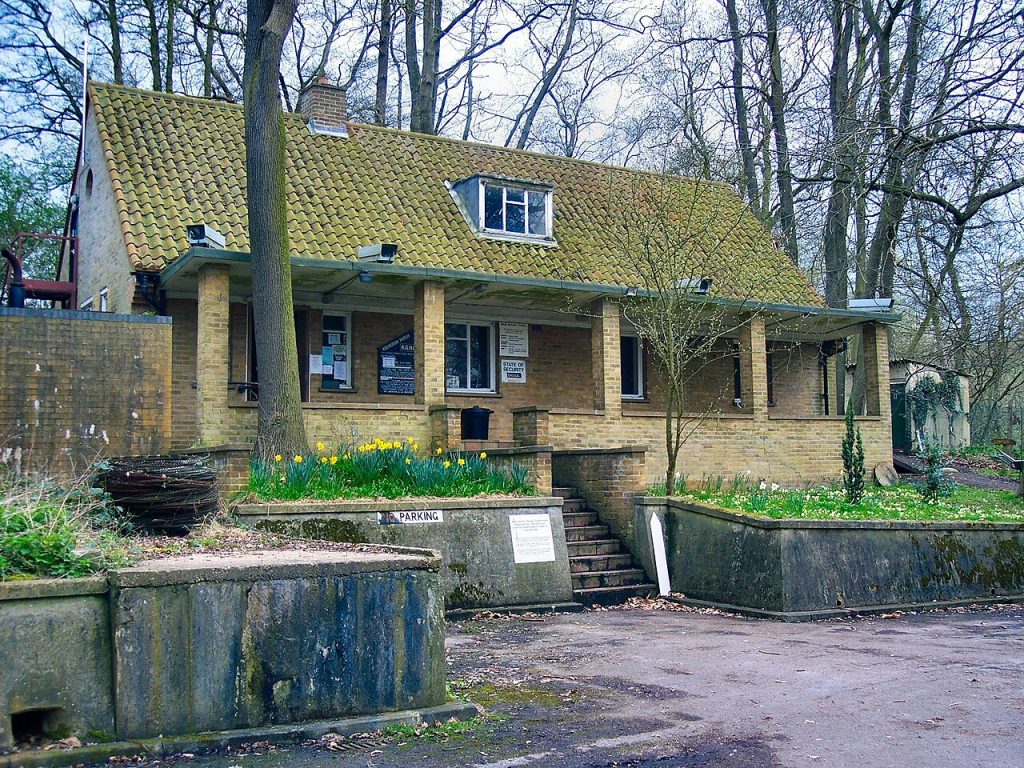
By Genesisman26 at English Wikipedia – Transferred from en.wikipedia to Commons by Oxyman using CommonsHelper., Public Domain.
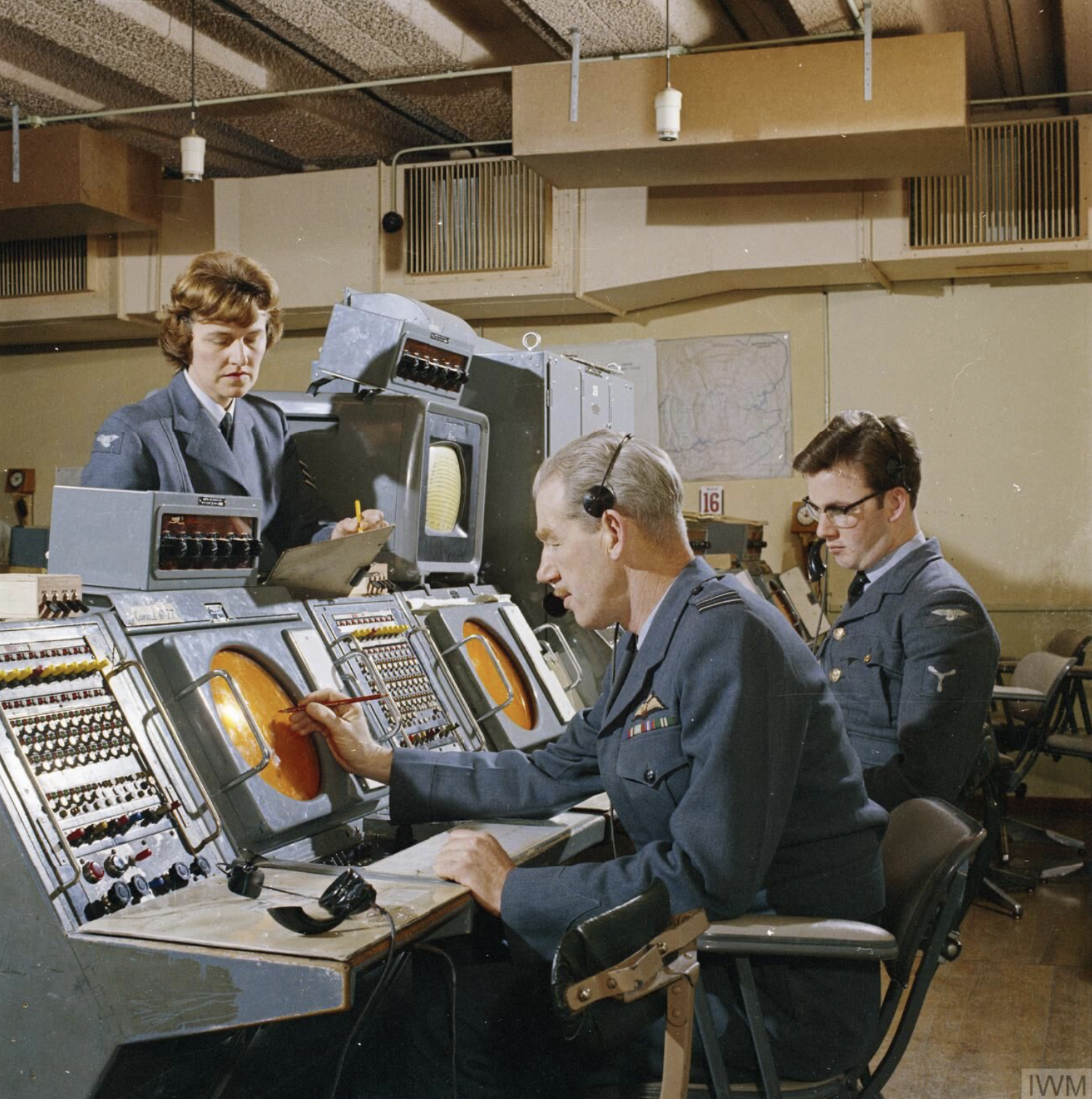
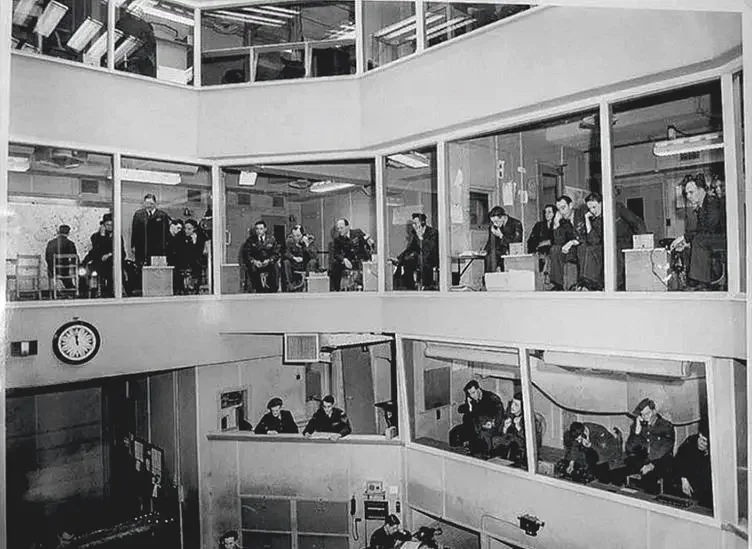
The radars could now be controlled remotely from the bunker feeding data back to the operators who were able to interpret the information, plot the wider picture of aerial activity on a map and direct intercepting aircraft towards enemy bombers, each site reporting to a larger regional bunker. The ‘Sector Operations Centre’ (SOC) was able to filter the information coming in from the various radar sites to create a ‘Recognised Air Picture’: a comprehensive view of the skies above and around the UK as well as passing on information form the early warning radars to Ground Control Intercept sites, like Hack Green.
The bunkers, which were built from a variety of standard designs. were intended to provide protection for those working inside operating the radar equipment and organising the interception of enemy nuclear armed bombers. In the east, the fully underground bunkers were built with 10ft thick reinforced concrete designed to withstand the blast from near miss from a 20 kiloton atomic bomb. The fallout would be dealt with by filtered air conditioning and water drawn from a borehole below. The sites built above ground were built to similar standards but would provide significantly less protection due to their (mostly) above ground construction.
The main bunker variants were:
R1 – Underground single level early warning (CEW)
R2 – Underground single level early warning (CHEL)
R3 – Underground double level ground control intercept (GCI)
R4 – Underground triple level sector operations centre (SOC)
R6 – Semi-sunken double level ground control intercept (GCI)
R10 – Surface single level early warning (CEW)
R11 – Surface single level early warning (CHEL)
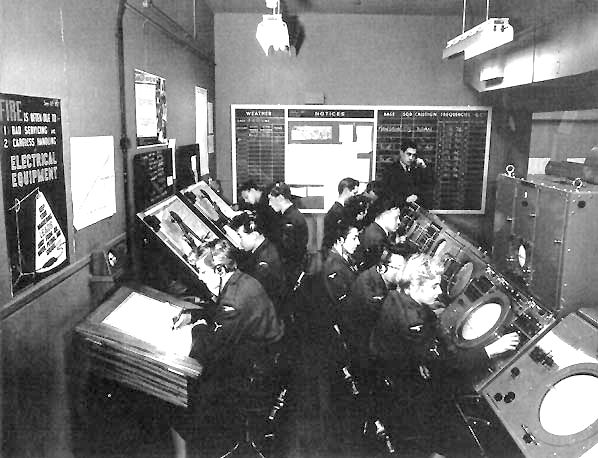
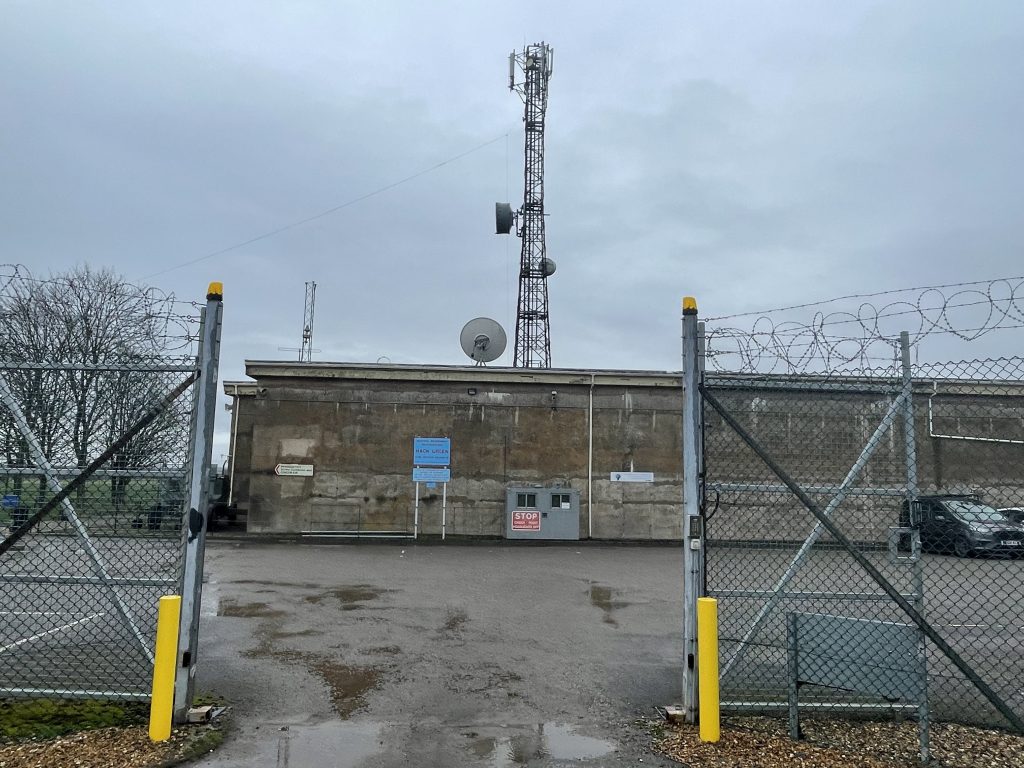
At Hack Green it was decided to build an R6 variant, one of five of this kind, consisting of a large two story structure approximately 50 metres (164 ft) by 31 metres (102 ft) with reinforced concrete walls up to 2 metres (6 ½ ft) thick. The ground floor was mainly below ground level with the upper floor above ground. It still stands today, though heavily modified from its 1950’s origins (more on this another time).
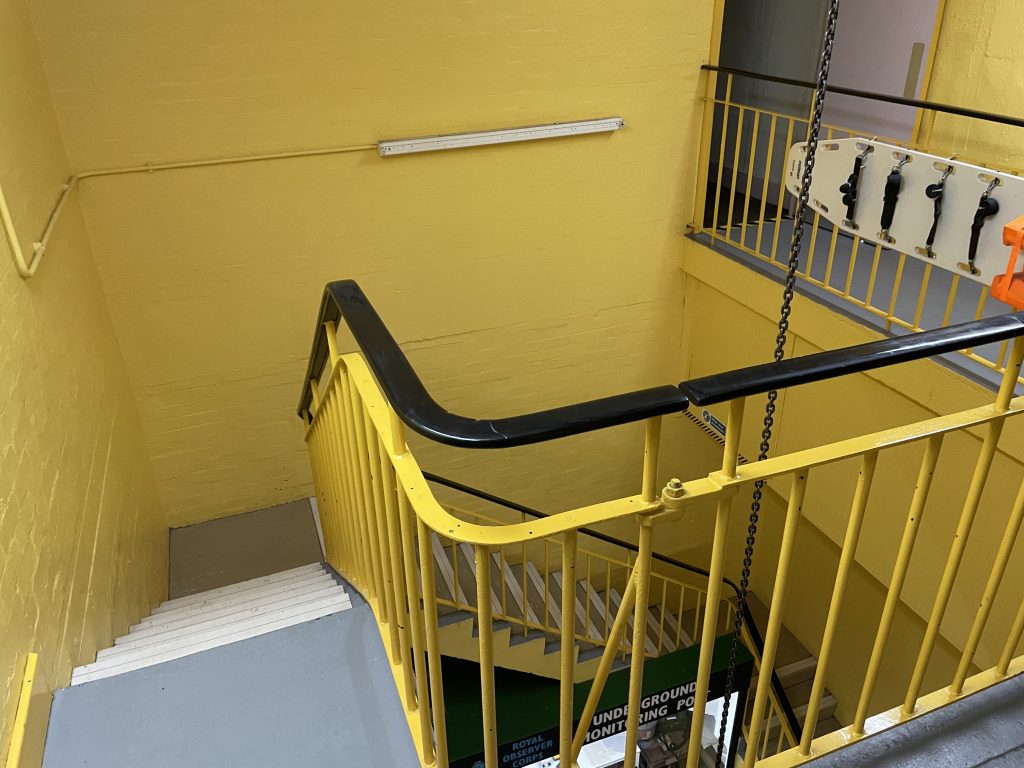
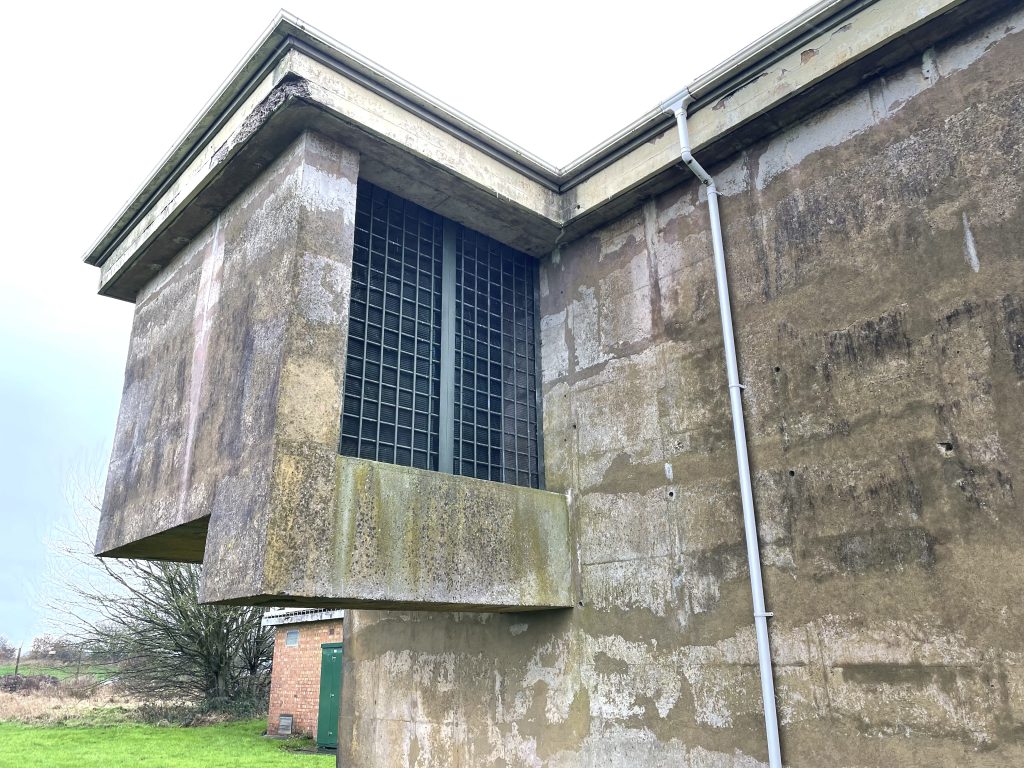
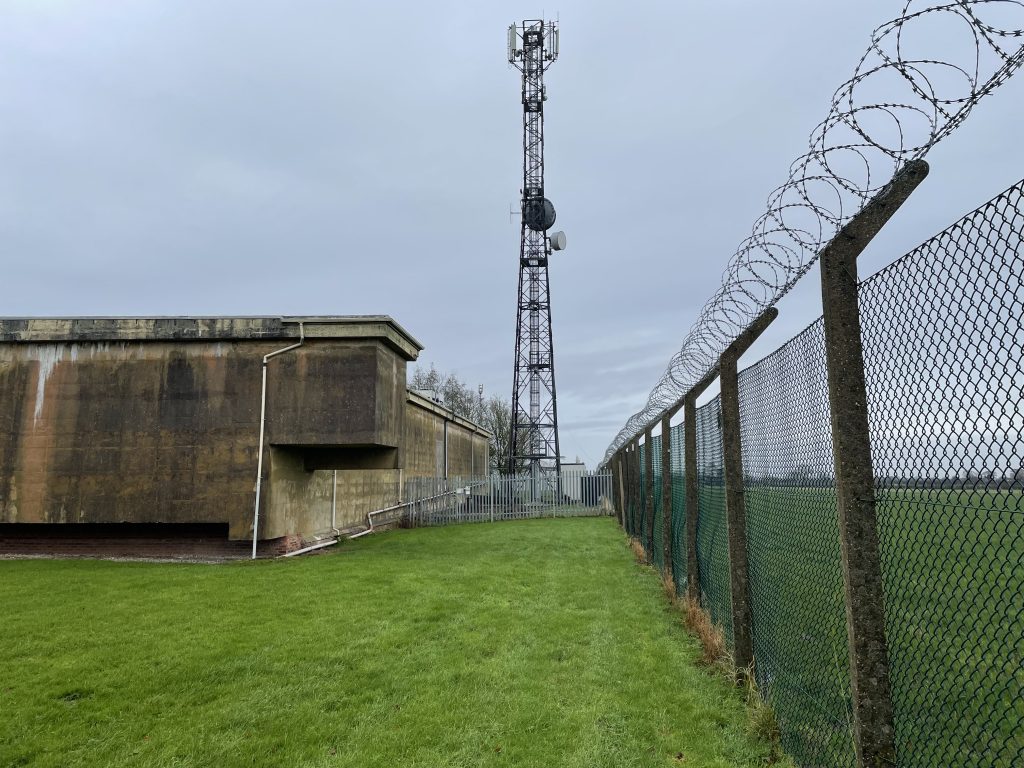
The entrance was at ground level with an enclosed, guarded staircase leading to the upper floor and the main spine corridor. The main staircase was on the right hand side leading down below ground. A winch fixed to a beam above the stairwell allowed large items of equipment to be lowered down. and moved into position The private telephone exchange was just off the landing providing a vital link to the rest of the ROTOR network and the outside world. Further along on the right of the passage were the WC facilities, kitchen and rest rooms. On the left, offices for the higher ranks are placed close to the heart of the building, the double height operations room. Perspex walls would allow senior staff to view the action below as it was plotted on large maps. At the end of the corridor was the air conditioning plant and filters providing fresh air, temperature control and if the worst were to happen, protection from fallout to those inside. A second staircase led down to the subterranean level.
The lower level also has a main spine corridor. To the left, several rooms filled with the essentials for life, fans to circulate the filtered air, water tanks and generators to produce the electricity needed to keep everything running if the grid went down. The lower part of the operations room is on the right, with more rooms surrounding it offering views of the main floor. Further along the corridor was the area which was used for radar operations together with communications equipment. Various cables were routed through the walls to link to the radar sets a short distance away in the nearby field.
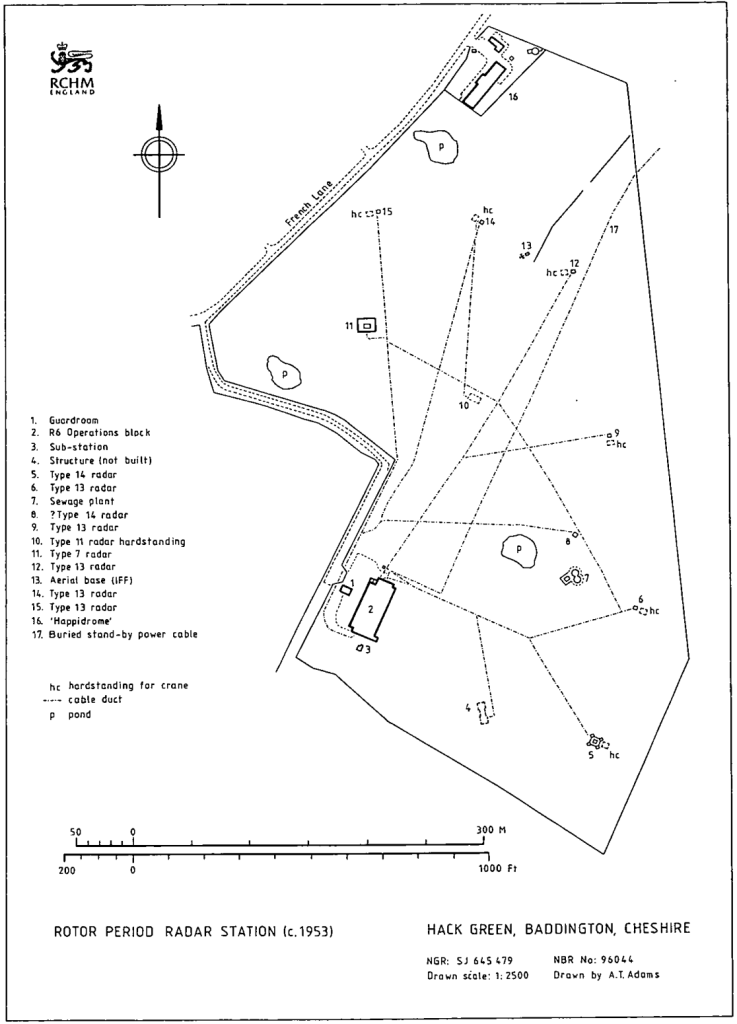
The full complement of staff for Hack Green in the ROTOR era was 18 officers, 26 senior non-commissioned officers, and 244 corporals and aircraftmen. They would all need to be housed nearby and so a domestic camp was established off Coole Lane, just over a mile away from the bunker. At first this consisted of temporary Nissen style huts but soon a small housing estate was built to house servicemen and their families.
Women were also recruited from Nantwich and surrounding villages as Assistant Controllers. Under the ‘Local Service Scheme’ they would be full members of the Women’s Royal Air Force (WRAF) which allowed them to stay living at home and they could not be posted elsewhere unless they agreed.
Breakthrough
The ROTOR plan was in a constant state of flux. World events and technological advances would mean that the plan would need to be updated several times in the early 1950’s.
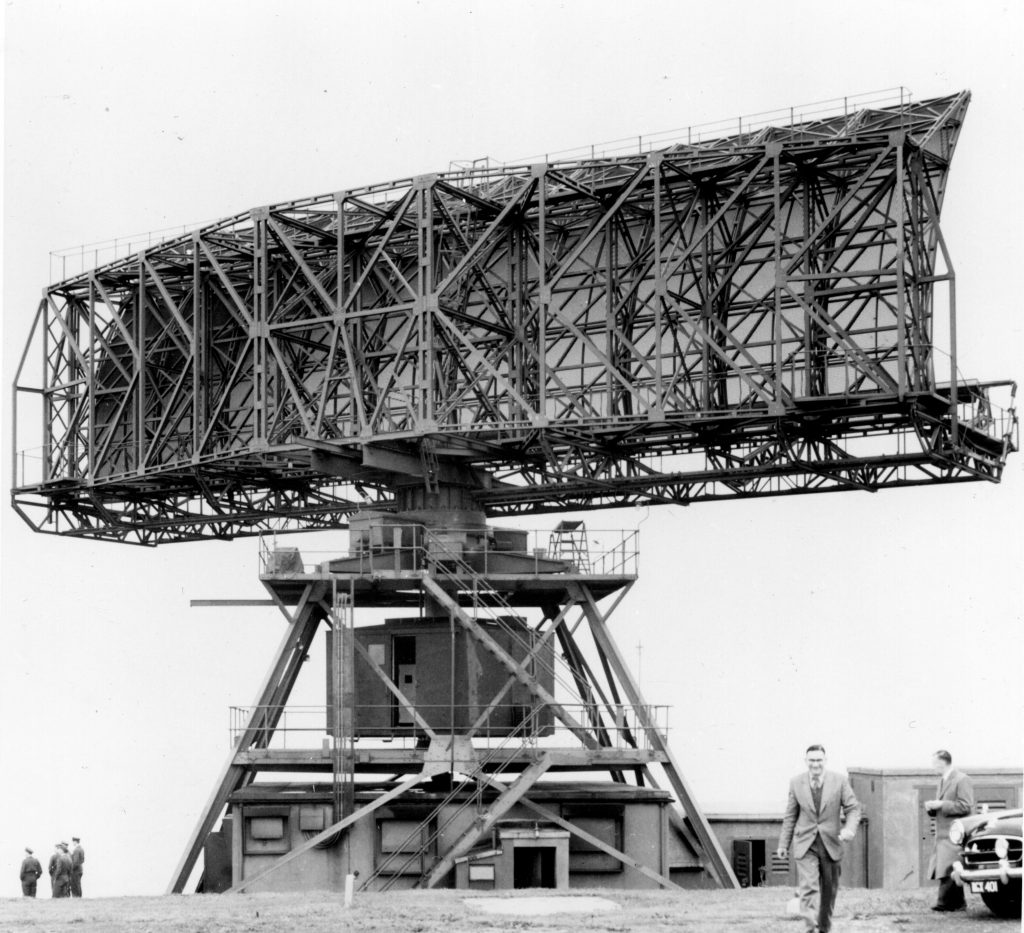
As development of the planned MEW radar was beginning, a breakthrough was made by researchers who were looking into another area of the now rapidly advancing radar technology. The resulting prototype dubbed ‘Green Garlic’ could fulfill most of the criteria set for MEW and several years earlier. In fact this new radar would enable the ROTOR network to be reduced significantly. It would enter service as AMES Type 80.
At the same time, the balance of power was shifting. The strategic thinking that led to the ROTOR programme was based on the experiences of the war, The Battle of Britain and The Blitz. An Atomic bomb, whilst terrifying, was comparable to some of the massive raids carried out by the Luftwaffe only a few years before. Britain was able to survive that and win, why not again?
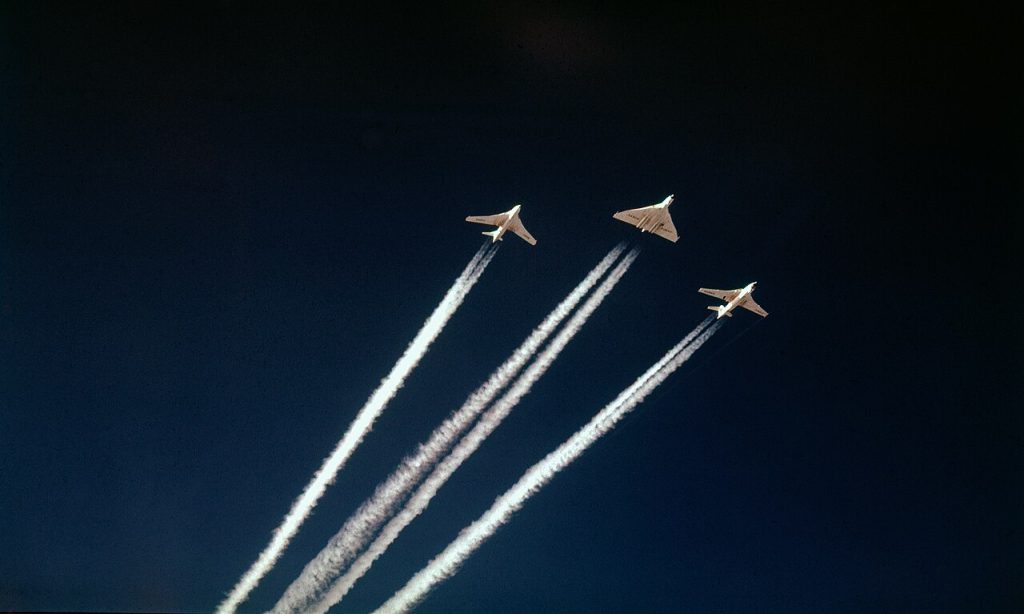
This thinking would be upturned though when the Soviets tested their first hydrogen bomb. Much more powerful, the ‘H-bomb’ would not need to be accurately dropped on its target. Its massive destructive power meant that it could be dropped some way off its intended target or even many miles away with the use of stand-off missiles fired from an enemy bomber. The concept of air defence across the whole country seemed unrealistic and attention turned to providing air cover for the V-force, the RAFs rapid reaction bombers who provided the nuclear deterrent at the time, so that they could scramble to get off the ground in the few minutes before an enemy attack occurred.
By 1956 the first phase of ROTOR was complete but the introduction of the Type 80 and a changing international picture meant that the plans would need updating. ‘The 1958 Plan’ laid out a new vision for air defence. The Type 80 with its increased range and accuracy meant that fewer radar sites were needed. Paired with computerised control systems to reduce the complexity of the command and reporting systems, the network could cope with fewer operations centres. GCI sites, like Hack Green, were placed inland in areas to provide the best possible environment for the radar to operate. Green Garlic could perform the same role from the coast and so could be combined with the early warning radar sites.
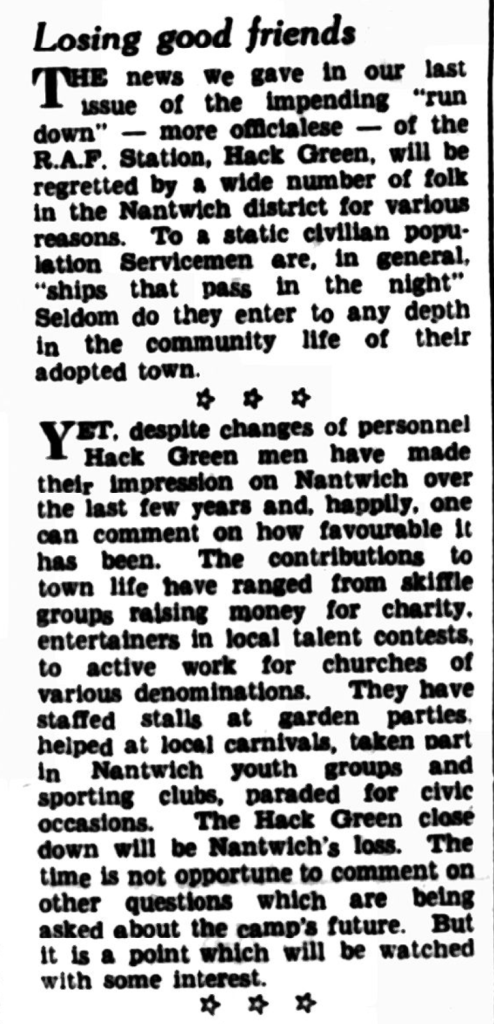
RAF Hack Green along with several other ROTOR establishments were stood down as an active site and a scheme of a ‘care and maintenance’ was introduced. In August 1958, just a few short years after being declared operational, the final entry was made into the log book of No. 17 Signal Unit at Hack Green.
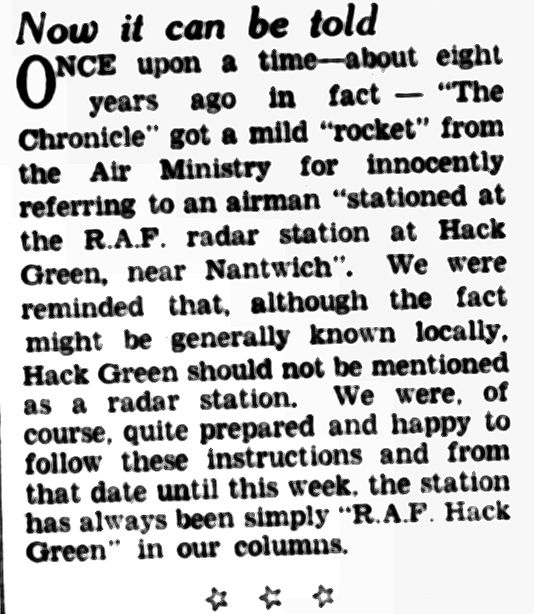
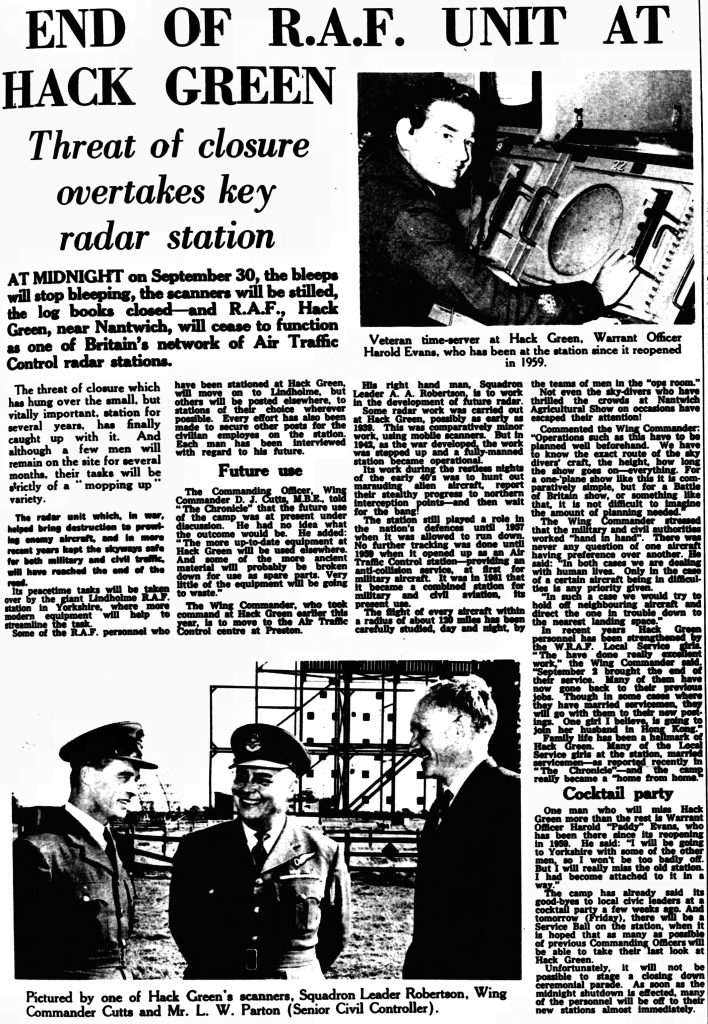
A selection of newspaper articles can be read below regarding Hack Green around the time of its closure:
A Fresh Start
The inactivity at RAF Hack Green didn’t last long though. The existing radars and bunker were quickly identified as an ideal base for one of four ‘Joint Air Traffic Control Radar Units’ (JATCRU). It would also become known by another name: ‘Mersey Radar’ and would play a vital role in a new system of combined civil and military air traffic control.
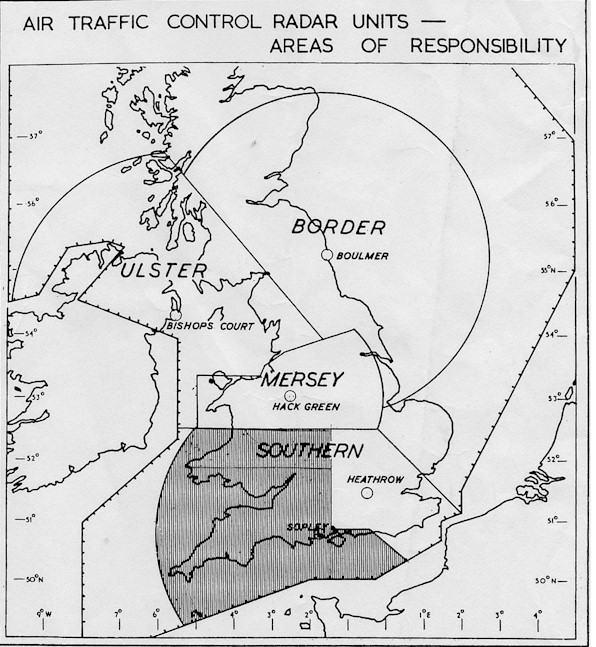
This new system was desperately needed and the general increase in traffic meant that coordination would need to be a priority. Starting in 1959 RAF Hack Green would provide a service to military aircraft wanting to cross the busy civilian air routes in the Mersey sector.
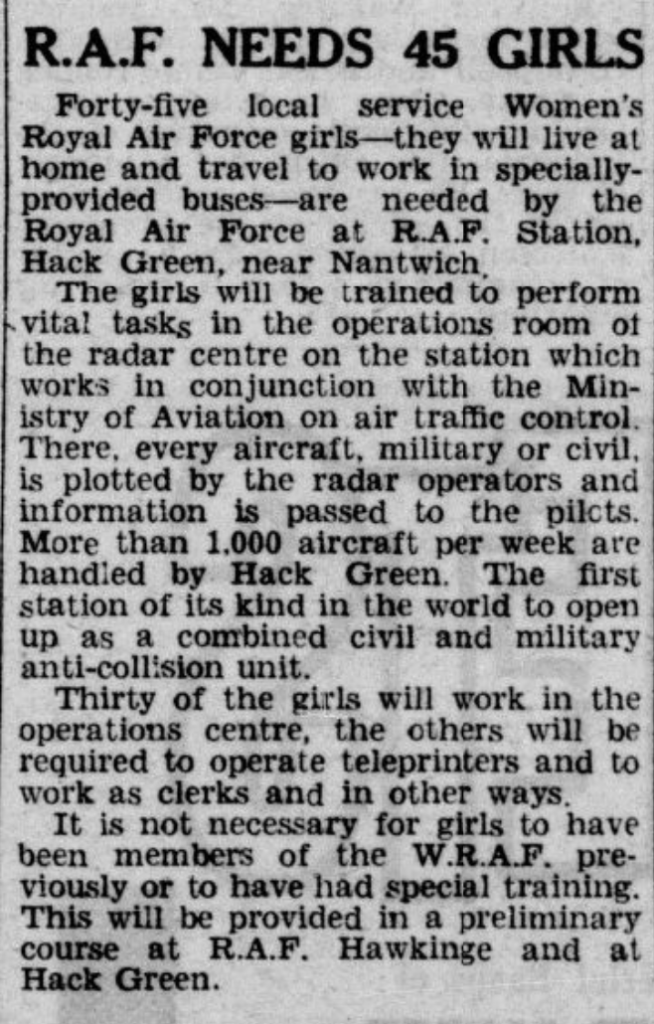
From 1961 RAF Hack Green became a joint RAF and civil air traffic control station, coordinating the needs of commercial aircraft and military operations. This was particularly important as the military had until now enjoyed sole use of the upper airspace where civil aircraft weren’t able to operate but the introduction of jetliners which could fly at higher altitudes meant that this was no longer the case.
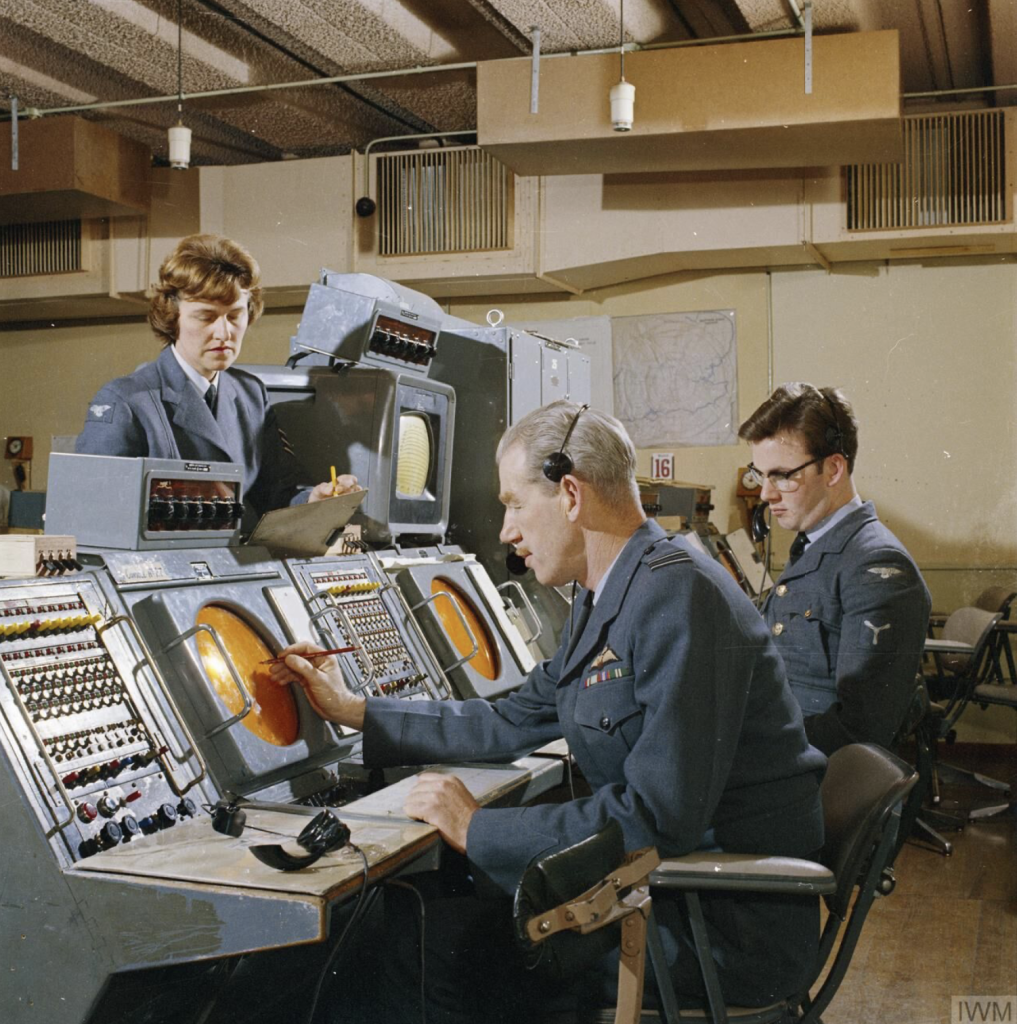
The Operations Room at Hack Green would be an ideal place for air traffic controllers from both the RAF and the civil Air Traffic Control Service to provide an around the clock service to aircraft in the area. This close coordination would also have wider defence implications. It was clearly very beneficial for the RAF to know exactly where commercial traffic was so that it could be easily differentiated from any enemy attackers – Hack Green was still contributing to the defence of Britain even then.
The end of an era (again!)
Even this new use was short-lived. A reorganisation of air traffic control saw the responsibilities of RAF Hack Green shared out between other stations and in September 1966 the staff were redeployed elsewhere, the domestic housing abandoned and the whole site closed, again.
Hack Green had now been involved in the air defence of the United Kingdom since 1940, playing host to countless men and women as they did their bit for their country.
Unused and unloved, the R6 bunker would fall into a state of disrepair, that is until, eventually, Hack Green would once again be called upon to play its part in the defence of the nation. This time the stakes were higher than ever and as the cold war intensified, the British Government made secret plans for the end of the world as we know it.
Bibliography
Wayne D Cocroft, 1998. RAF Hack Green Survey Report (Cold War Project). English Heritage.
Wayne D Cocroft, Roger C Thomas, P S Barnwell, 2005. Cold War: Building for nuclear confrontation 1946-1989. English Heritage.
https://en.wikipedia.org/wiki/Air_Ministry_Experimental_Station
https://www.subbrit.org.uk/features/anti-aircraft-operations-rooms
https://en.wikipedia.org/wiki/AMES_Type_80
https://en.wikipedia.org/wiki/ROTOR
https://atchistory.wordpress.com/wp-content/uploads/2015/12/hack-green-1966-revised.pdf