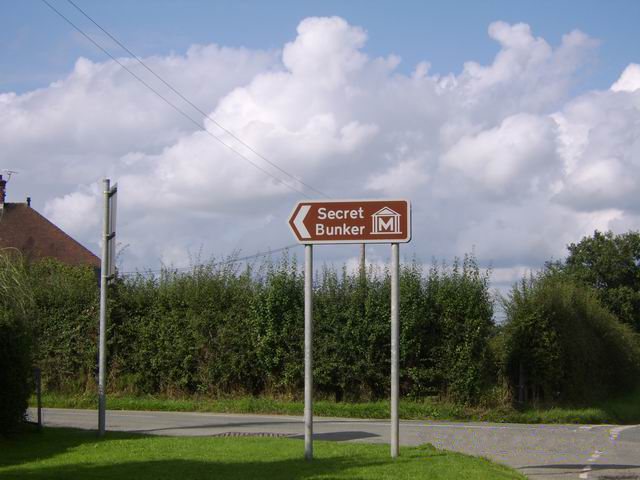
Take a drive South East from Nantwich and you are soon into the rolling Cheshire countryside, dairy cows on either side of you and miles and miles of open fields. Eventually you will come to Hack Green, a tiny hamlet on the way to Audlem. Just a collection of farms and houses really, and not much more. Something will draw the eye of the more perceptive; A small collection of houses just off Coole Lane stands out in its typically mid-twentieth century style. They just look a bit out of place here. Then you see the famous brown signs leading you down a narrow lane which read “Secret Bunker” and you can’t help but wonder what went on here..
This four part series of articles will explore the hidden 20th century history of this quiet corner of South Cheshire, taking us from the imminent threat of Nazi invasion and a terrifying new kind of aerial warfare all the way to the fall of the Berlin Wall in 1989 and the thawing of The Cold War.
This is the final part of a four part series looking at the defence history of Hack Green in Cheshire.
Part 1 – Deception: Operation Starfish
Part 2 – Detection: Watching The Skies
Part 3 – Deterrence: The New Enemy
Part 4 – Doomsday: What If? – You are here
A Struggle for Survival
Large tracts would be devastated and many more rendered uninhabitable. Essential services and communications would suffer widespread disruption. In the target areas, central and local government would be put out of action partially or wholly… There would be serious problems of control, feeding and shelter. Public morale would be most severely tested. It would be a struggle for survival of the grimmest kind.
- Statement on Defence, 1955, Cmd. 9391, Part VIII, para. 101, p.19.
By 1966, Hack Green’s Cold War was seemingly over. The bunker and its radars were no longer needed for the ROTOR project (see part three), advances in technology had seen to that and a short lived stint as an air traffic control radar station had now ended. The radar screens were turned off and the equipment moved out. For almost a decade, the bunker was essentially redundant.
That is until the mid 1970s when The Home Office quietly acquired the site and started to plan an altogether different purpose for Hack Green’s bunker. Instead of working to detect an enemy attack, Hack Green would be substantially reconfigured to deal with what might come after it: A nuclear strike on Britain and the collapse of society.
Towards the end of the 1930s planners had to face up to the new threat posed by devastating air raids which were expected in the coming conflict with Germany. The country was divided into twelve defence regions headed by a regional commissioner who would be tasked with coordinating the civil defence efforts needed in the aftermath of a dire national emergency and ultimately to take on the full powers of government should it become necessary. Whilst this plan was never fully needed during the war, these were the plans which civil servants inherited in the turbulent times of the early 1950s. Building on the experiences of the second world war, the government looked to update its civil defence plans for the atomic age.
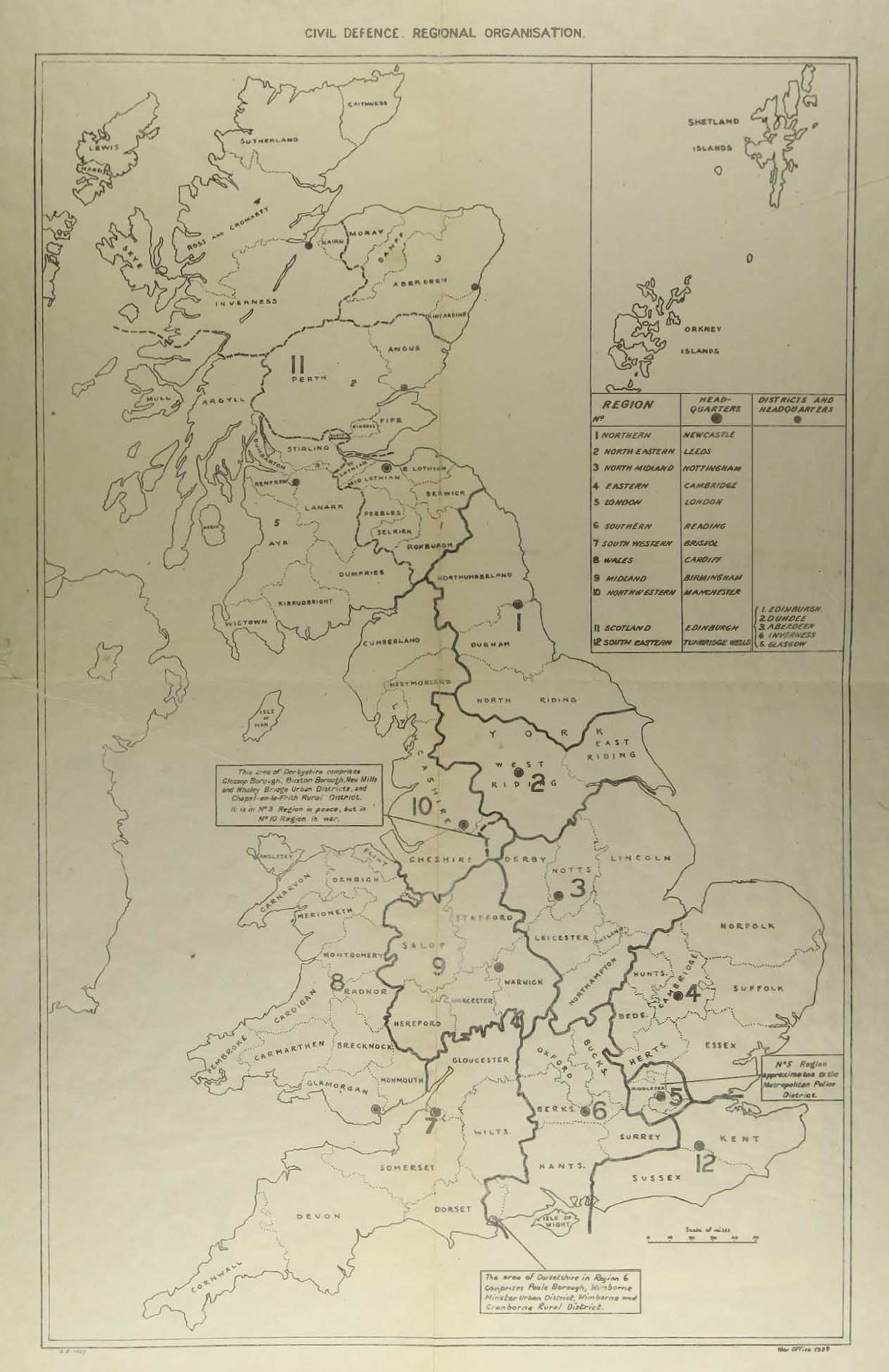
Each defence region would be provided with a war room – a protected building which would enable the regional commissioner and their staff of about fifty to work in relative safety should the United Kingdom be attacked with conventional or atomic weapons. The reinforced concrete bunkers, some above ground, some semi-sunken, were designed to protect its occupants from the worst effects of a nuclear bomb: the initial blast and the radioactive fallout which followed.
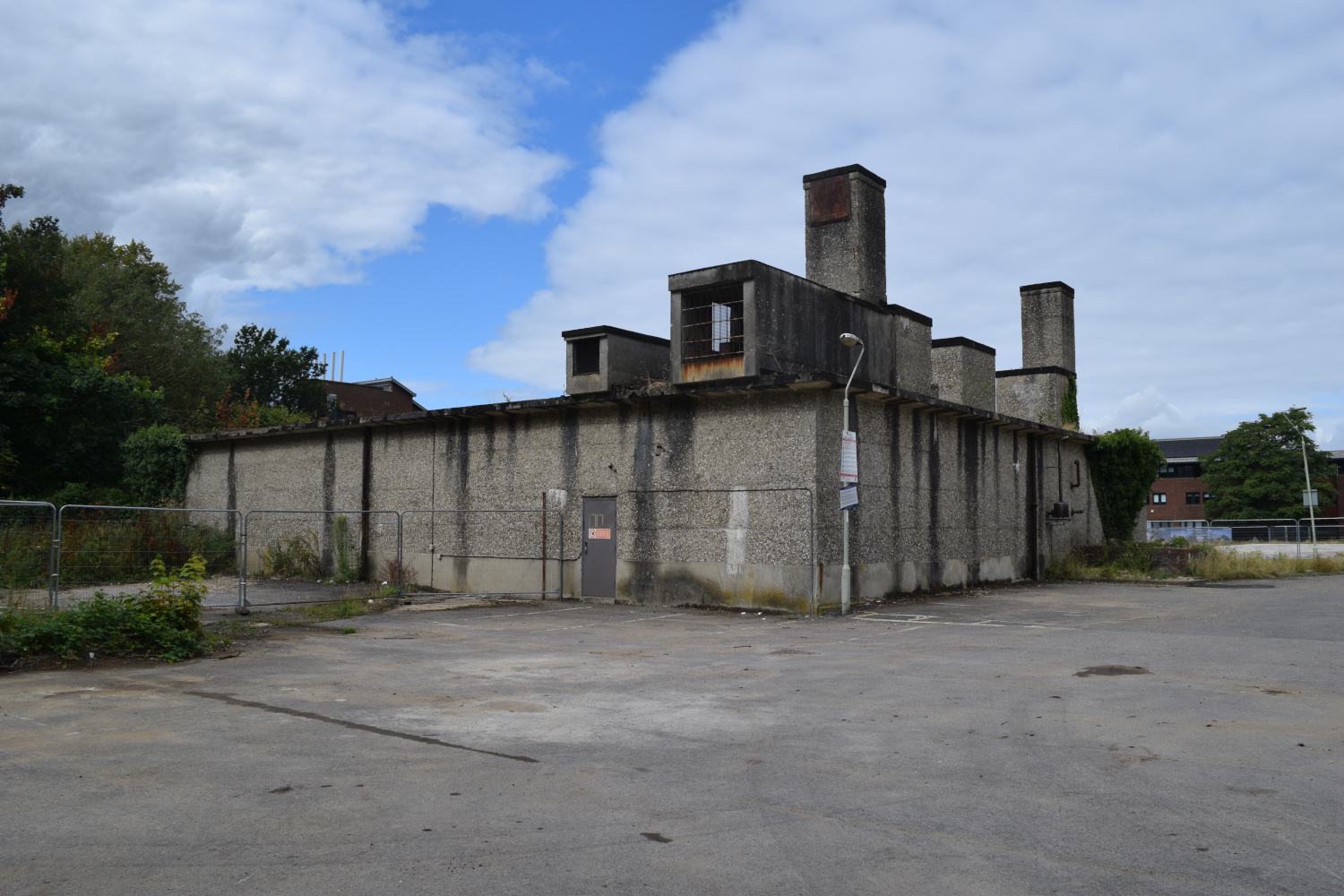
Keith Edkins, (2024) Region 6 War Room (geograph 7848541), CC BY-SA 2.0
Initially the regional commissioners would be responsible for coordinating the civil defence response to an attack including search and rescue, firefighting, first aid and issuing food rations to survivors as well as communicating with central government. Before the network of regional war rooms was complete and the plans put into place, the Russians tested a hydrogen bomb, a weapon with even greater devastating effects which was capable of levelling an entire city.
This change in the balance of cold war power caused defence planners to have a rethink. It was previously thought that any future war would be a long conventional conflict like the previous one, perhaps including the use of atomic weapons. Instead their attention eventually turned to planning for a short conventional war followed by a devastating nuclear exchange including the targeting of population centres. Central government would clearly be a major target in such a war and would likely cease to exist in any meaningful sense. What little remained would be mainly engaged in executing the war and focusing on foreign affairs. This would leave the regions to deal with the aftermath of the attack and begin the long arduous process of rebuilding some semblance of normality as best they could.
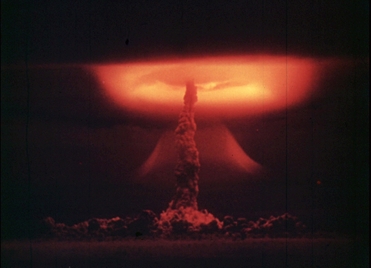
By Unknown – Original publication: https://www.atomicarchive.com/media/photographs/testing/soviet/rds-37-1.htmlImmediate source: https://www.atomicarchive.com/media/photographs/testing/soviet/rds-37-1.html, Fair use, Link
This new thinking meant that some of the recently constructed war rooms which were situated close to cities or other potential targets would now need to be relocated and replaced with larger bunkers to accommodate an increased number of officials that would be needed to govern a shattered post-strike Britain. Existing bunkers in more remote locations would need to be remodelled and extended to provide more space inside. This ad hoc approach to civil defence planning would be repeated throughout the cold war as plans were adapted to changing threats and budgets were increased and decreased in line with the economic fortunes of the country.
By the early 1960s, having kept these plans secret from the public, the press and parliament, the government had made some progress in its network of what were now known as Regional Seats of Government (RSG). The original plans had been scaled back due to the dire state of the country’s finances and the rag-tag list of RSGs bore little resemblance to what was envisaged in the 1950s. Several of the original regional war rooms were retained and extended, another was located in an old WW2 underground aircraft factory. In region 10 (North West) the RSG was at Fullwood Barracks near Preston where no protected accommodation was provided but plans for a purpose built RSG were made with the hope that funds would become available in the future. A fully operational RSG would need to be staffed with up to 430 people and in some bunkers sufficient space was not available. In these cases, nearby buildings were earmarked for use but these would offer little protection from fallout, assuming that the buildings were even usable after the initial attack at all.
New ambitious plans were set out which included another series of twenty nine bunkers called Sub Regional Controls (SRC) which would operate under the leadership of the RSGs to provide better communication with local councils who were responsible for actually carrying out many of the activities which would stem from policies enacted by the regional commissioner at the RSG.
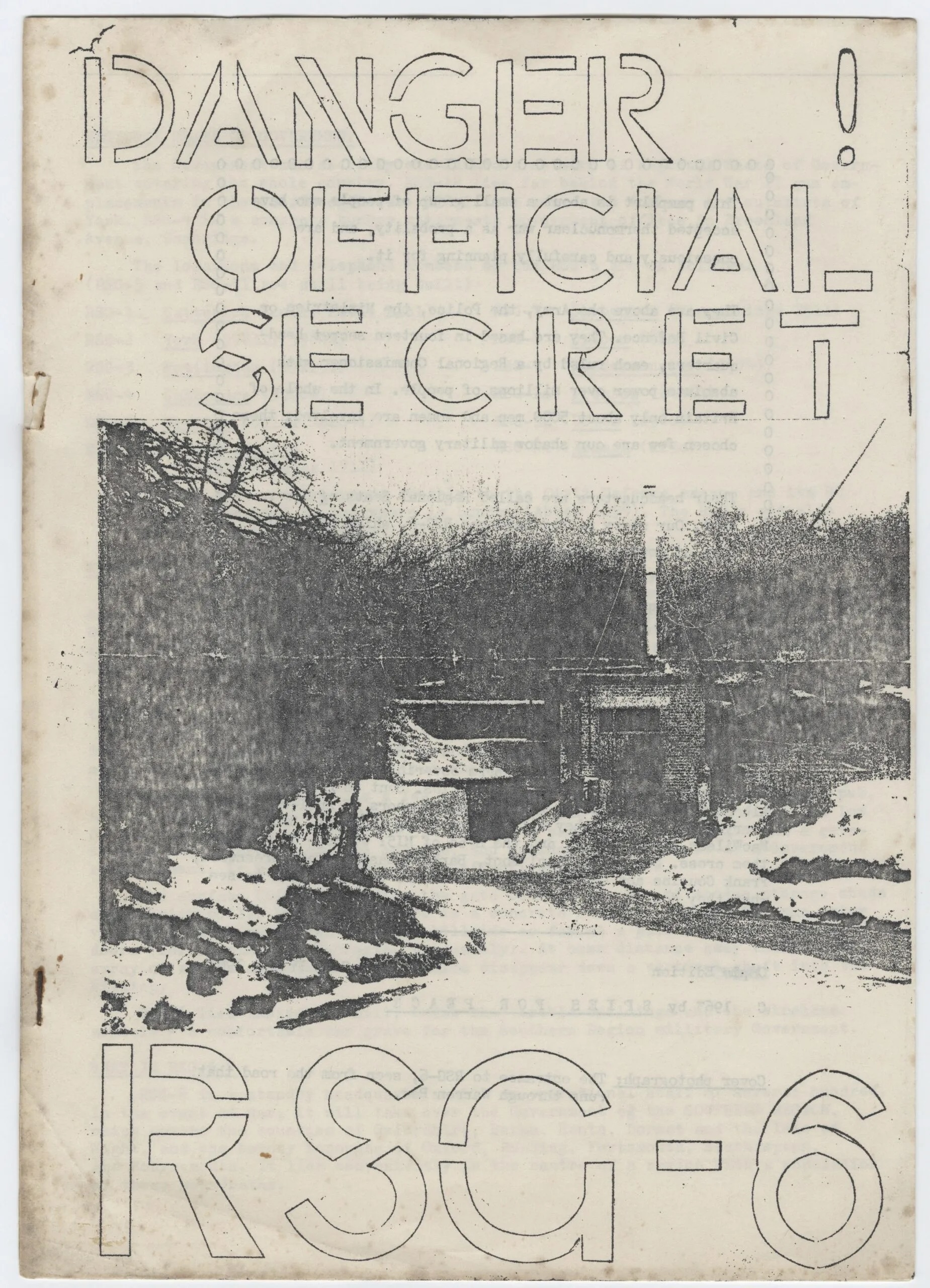
In 1963, a group calling themselves ‘Spies for Peace’ broke into ‘Warren Row’, the RSG for region 6 (Southern) and reported what they found in a pamphlet. This was the first time that the public became aware of what was being done in their name and with their money. The political fallout from the revelation that the state was planning for its own survival without providing any protection for the public caused a huge headache for the government.
By 1964, Harold Wilson was in Downing Street and as part of a wider review of civil defence preparations he put a stop to any further work on the RSG network meaning that plans would have to change again. Now RSGs would only be organised after an attack had taken place and in buildings without any protection which were selected beforehand to act as their HQ. Their previous locations were, after all, now widely known and would surely appear on the list of potential Soviet targets. Only the SRCs, later renamed Sub Regional Headquarters (SRHQ) would be manned in the lead up to an attack and they would take on a greater role in what was coined ‘The survival phase’: the weeks and months following a devastating nuclear attack. Civil defence was moving further away from the 1950s plans to facilitate evacuations from the big cities, fire fighting and rescuing civilians from their wrecked homes to focusing on maintaining some form of governance with which to try to and direct the scant resources that would be available post-attack.
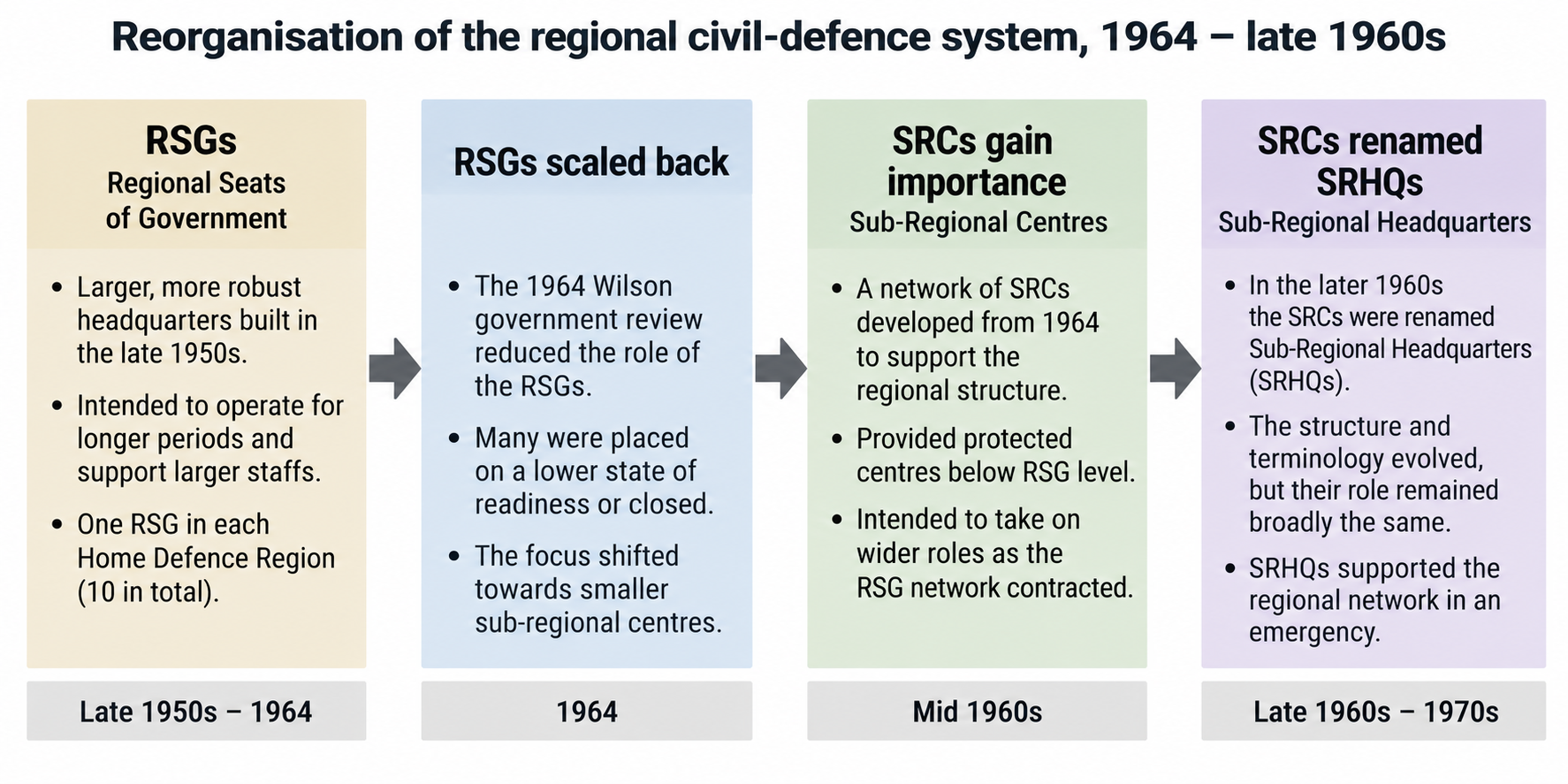
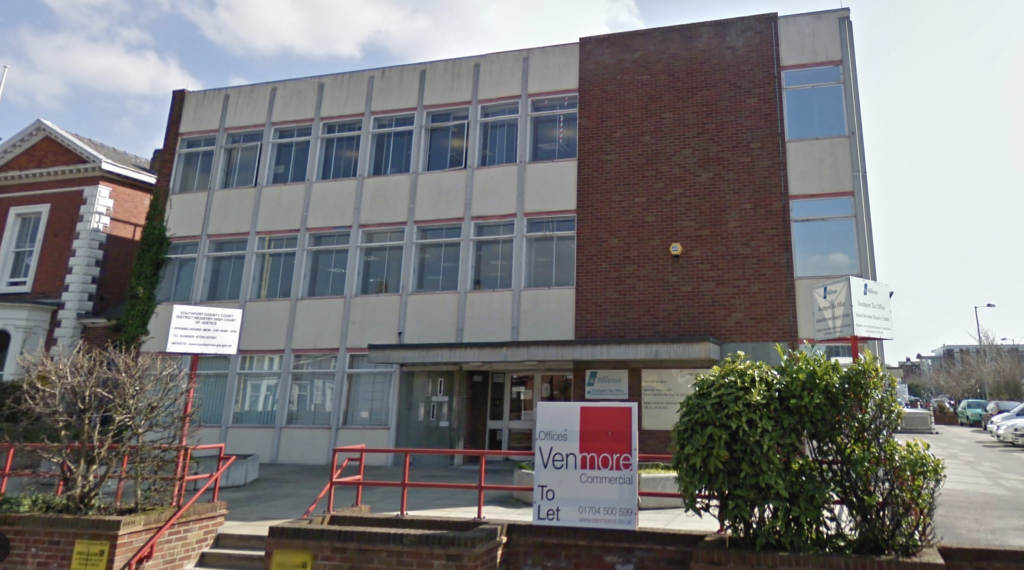
In laying out the various plans here which were made in the 1950s and 1960s it’s clear that whilst it was intended to build a robust system of regional government and the associated bunkers, many of the plans only existed on paper and none of the various schemes were ever fully realised. The money and the political will to enact a fully functioning system of civil defence was never really at the required level. By the late 1960s two thirds of the civil defence budget was cut and the RSGs were placed on a ‘care and maintenance’ basis. One of the few projects to escape the axe and to be given the green light was a new purpose built SRHQ in the basement of a government office block in Southport to serve region 10 (North West).
Hack Green Reborn
By the 1970s, the new Conservative government ordered yet another review of civil defence preparations and found that they were severely lacking. Money was still tight but a small increase in the budget for civil defence planning enabled a tentative revival of the SRHQ network. The report concluded that the full complement of SRHQs should be completed by 1977 at the latest. Region 10 (North West) was a particular concern as only Southport SRHQ 10.1 was currently available and even this had been plagued with terrible problems with damp from the start.
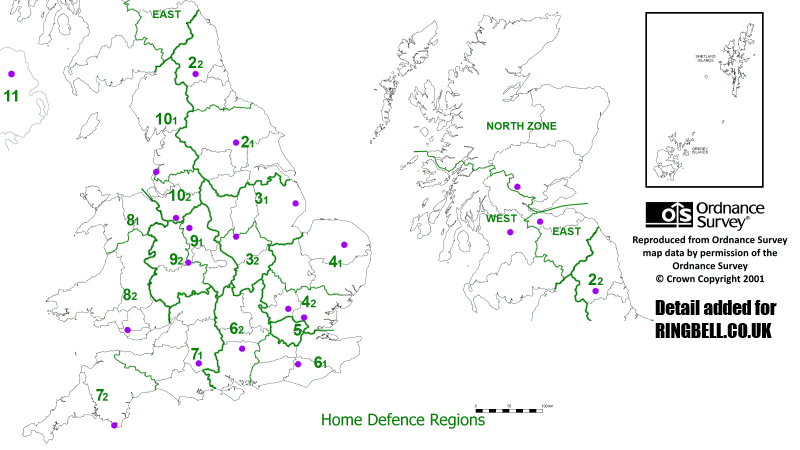
Hack Green was identified some time in the mid 1970s as a good candidate for SRHQ 10.2. Its two level, semi-sunken bunker, which was constructed as part of the ROTOR project in the 1950s, could provide a good level of protection and its location away from large centres of population would also be an advantage. A complete renovation would be required to bring it up to modern standards – it had after all been essentially abandoned for almost a decade by this point. Hack Green 10.2 would cover the southern part of region 10 covering Cheshire, Greater Manchester and Merseyside. Southport 10.1 would cover Cumbria, Isle of Man and Lancashire.
Despite this initial flurry of planning following the civil defence review, conversion works would not start at Hack Green until around 1980. The scope of the works was huge. Almost the entire internal structure of the 1950s building was stripped out and reconfigured. A new mezzanine level was squeezed in between the upper and lower floors to provide more space. Other internal works included upgrading the ventilation and filtration systems and adding decontamination facilities.
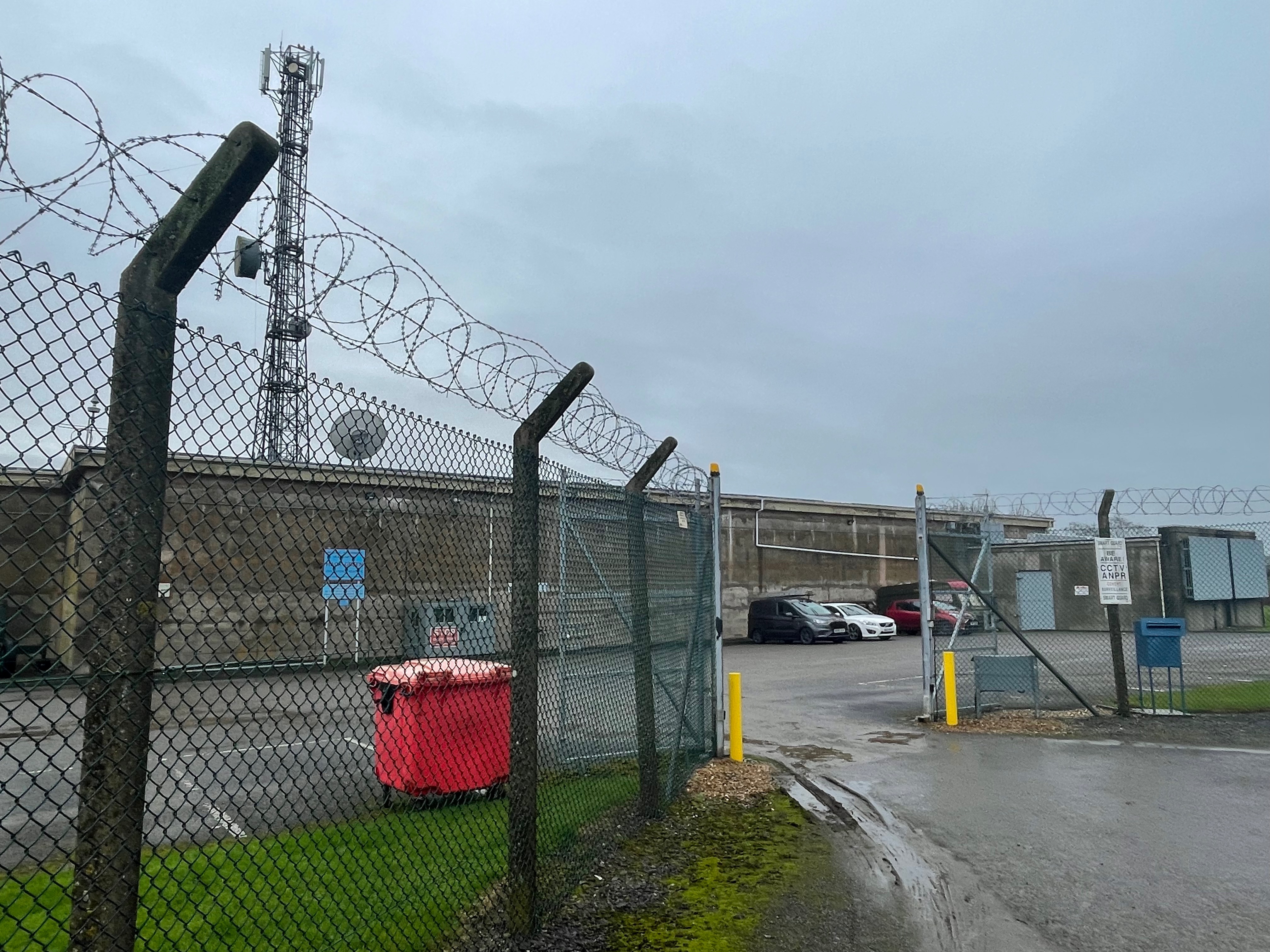
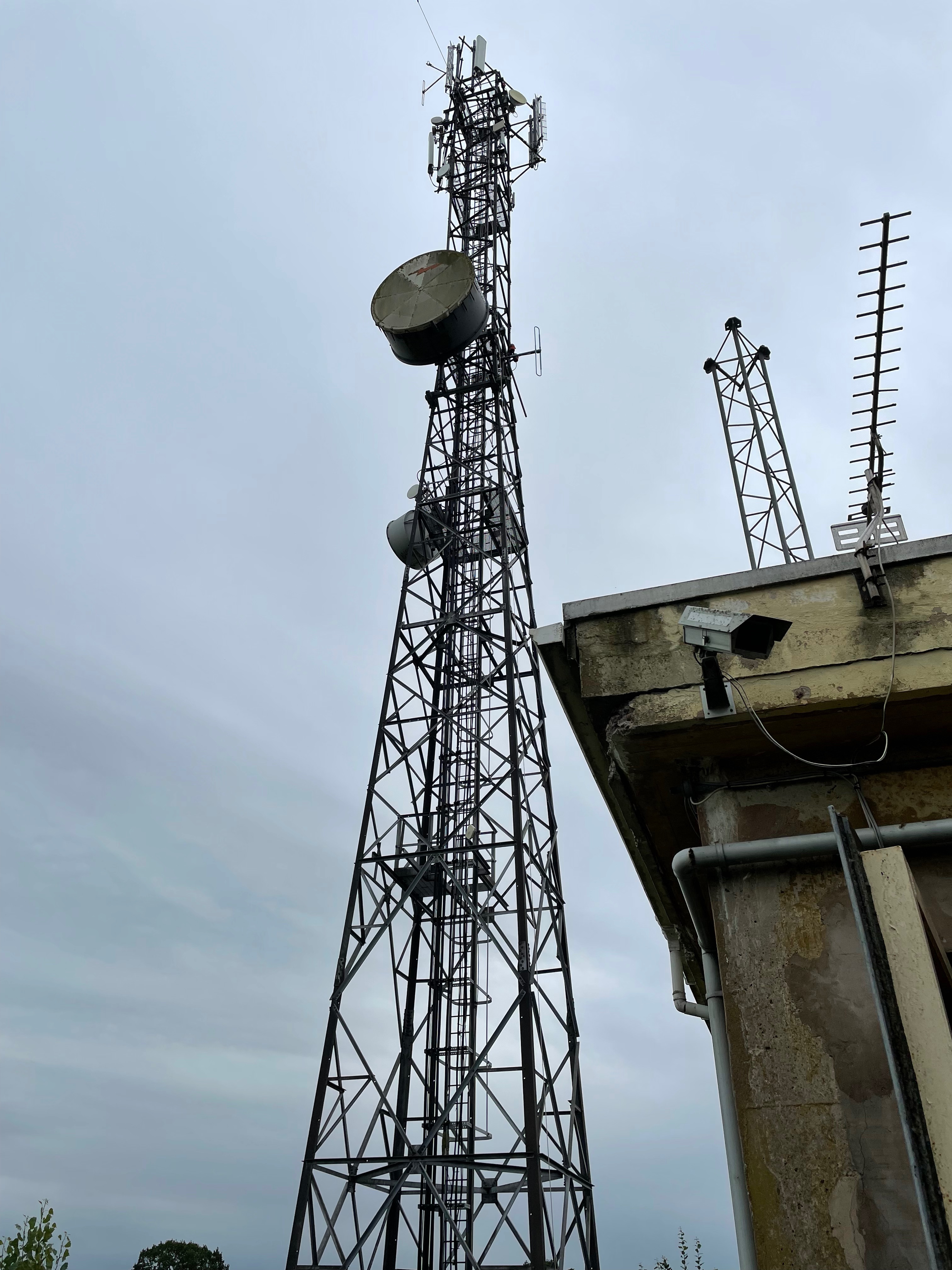
Externally the bunker would look much the same as it always had done although new blast doors were added as well as a large steel communications tower. The most obvious change though was the addition of a generator room to the north-west elevation. This would house two large diesel generators to power the bunker if the grid went down. Huge steel blast plates cover the air intakes and exhaust outlets. According to an English Heritage report it was necessary to install a large intake fan to increase airflow following an attack to help cool the generators when the air temperatures outside would be significantly higher than usual. This fan would move so much air that it would not be possible to work within the generator room and in fact there was no door between here and the bunker itself, access would only be possible from outside.
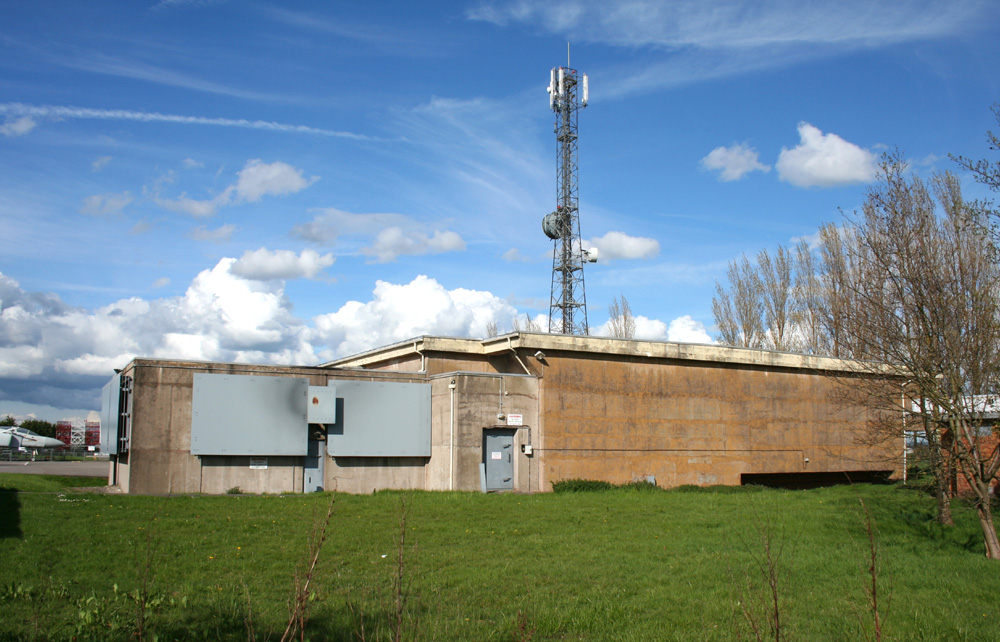
Espresso Addict, CC BY-SA 4.0 https://creativecommons.org/licenses/by-sa/4.0, via Wikimedia Commons
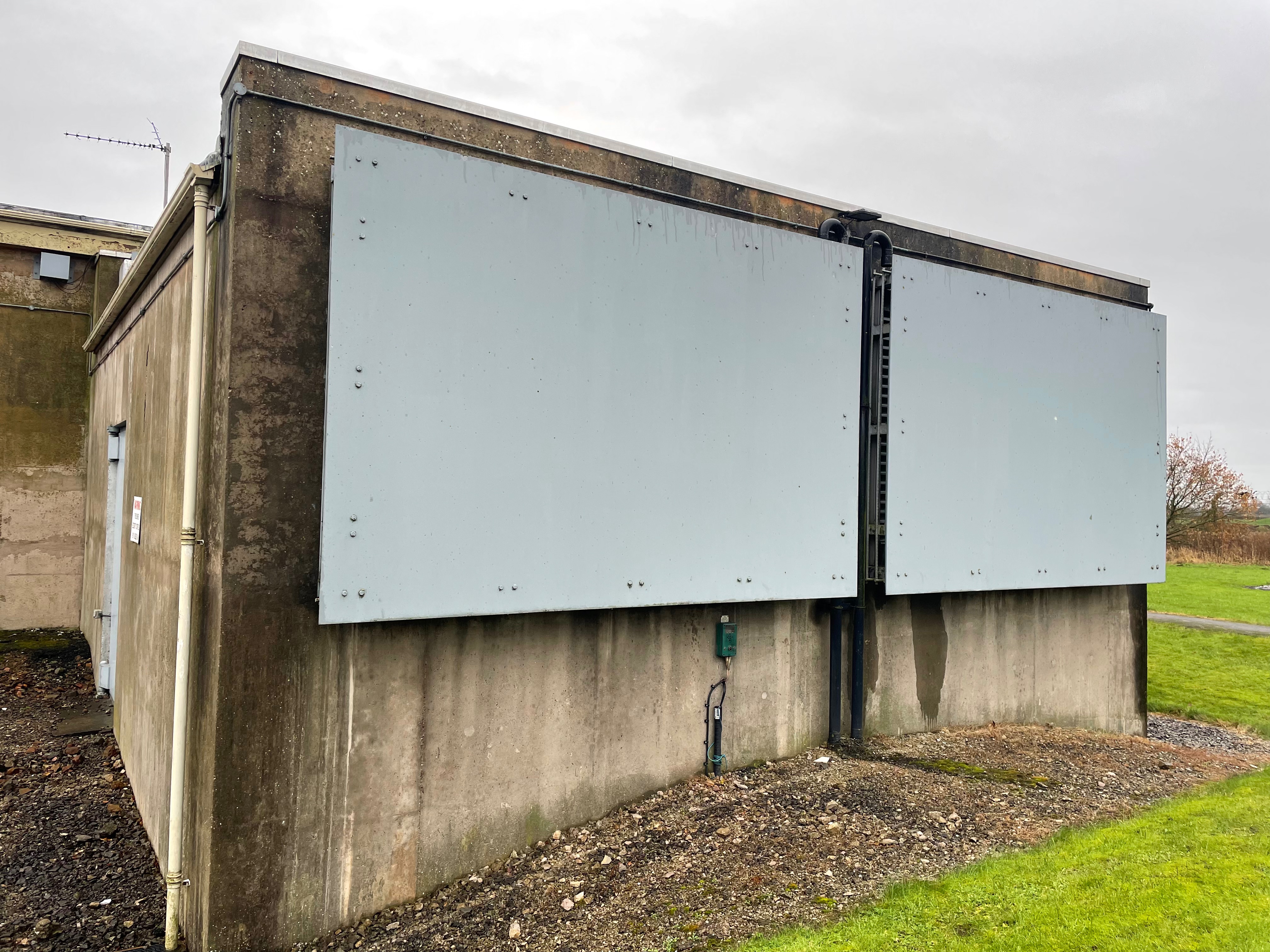
To give some idea of the protection which would be afforded to those sheltering at Hack Green, the refurbished building was designed to withstand all of the effects of a nuclear attack, namely blast, radiation, heat and electromagnetic pulse. Hack Green was designed to protect its occupants from a nearby nuclear explosion, but not from a direct hit. Let’s look at each of these threats in turn to see how the building was intended to perform:
Blast. In addition to the new steel blast plates covering the air intake and exhaust for the generator room, the semi-sunken structure and existing concrete walls would be able to withstand large forces acting upon them in the form of flying debris. English heritage states that the concrete walls were calculated to be able to withstand a 5KG steel ball being fired at them at 800m/s (approx. 1,800mph) without spalling dangerously on the inside. The wider pressure wave which is caused by a nearby nuclear explosion is more difficult to prepare for. Generally, bunkers like Hack Green were designed to withstand the pressure wave from a bomb detonating a few kilometers away. For example, the Hack Green area would suffer only light blast damage from a ground burst 500KT weapon aimed at the important transport infrastructure at Crewe.
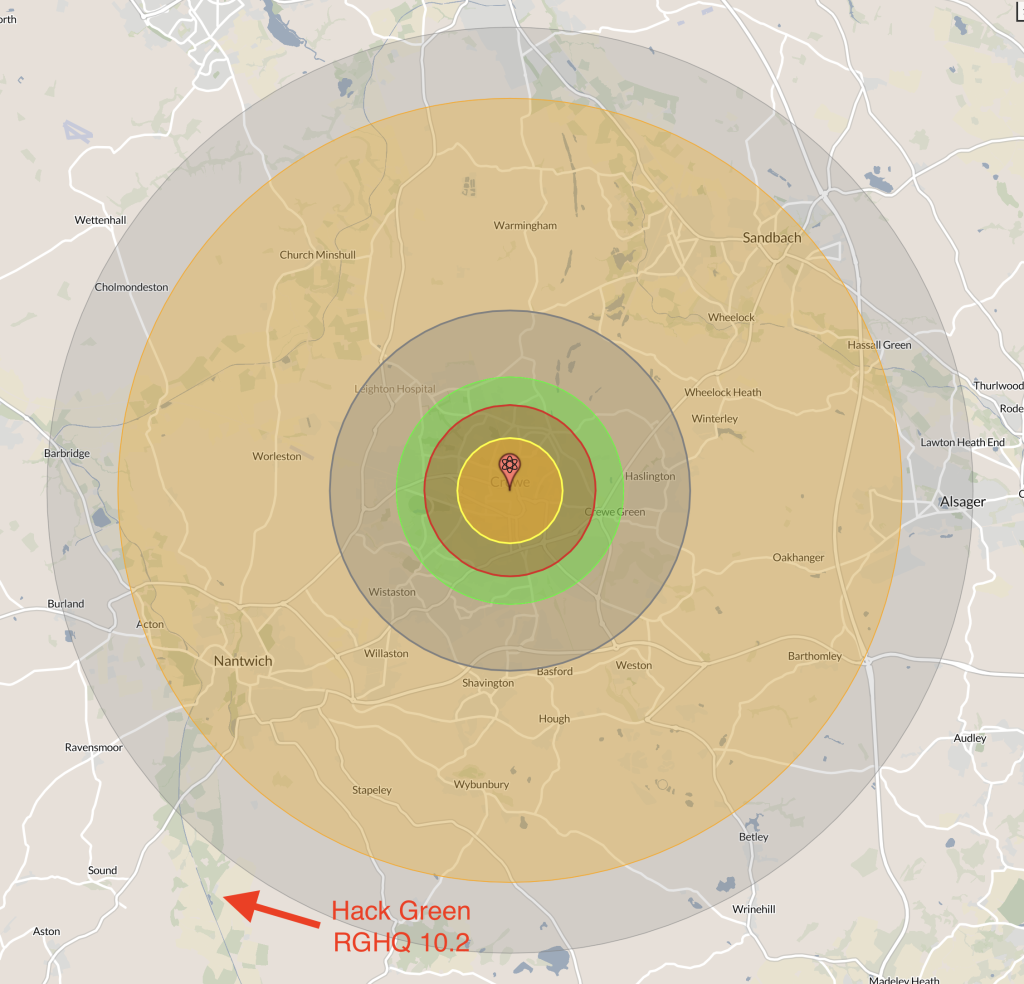
Outer blast ring: approximately 1 psi overpressure — enough to shatter windows and cause lighter structural damage over a wide area.
This is intended to be an illustrative modern simulation, not a historical government target assessment.
Courtesy of NUKEMAP.
(https://nuclearsecrecy.com/nukemap/?&kt=500&lat=53.099615&lng=-2.441463&airburst=0&hob_ft=0&zm=14)
Heat. The English Heritage report on Hack Green records that significant protection from heat was provided by the thick concrete walls. Theoretically, the external temperature could rise to 300C for 90 minutes but the internal temperature would only increase by 15C and this is before the effects of the air conditioning systems are taken into account.
Radiation. The concrete walls would give a good level of protection from the invisible radiation which is released in the initial nuclear explosion. Nuclear fallout, the dangerous radioactive particles which are expelled from the mushroom cloud, presents another threat. Air filtration was used to remove these harmful particles before air entered the building. The layout of the air intake and filtration rooms were retained from the 1950s design but the equipment was upgraded. The sole air intake for the bunker entered the building on the upper level where air was directed through ceramic air filters. Positive air pressure would be maintained in the bunker following an attack to prevent any contaminated air entering the building through door seals and the like. A decontamination room was created at the main entrance and near to the air intake and filter rooms including a shower and a place to dispose of clothing which was contaminated with radioactive material. A small entrance was installed under the filter room which connected to the decontamination facilities through an air-lock so that access was possible from outside when the bunker was operating under fallout conditions.
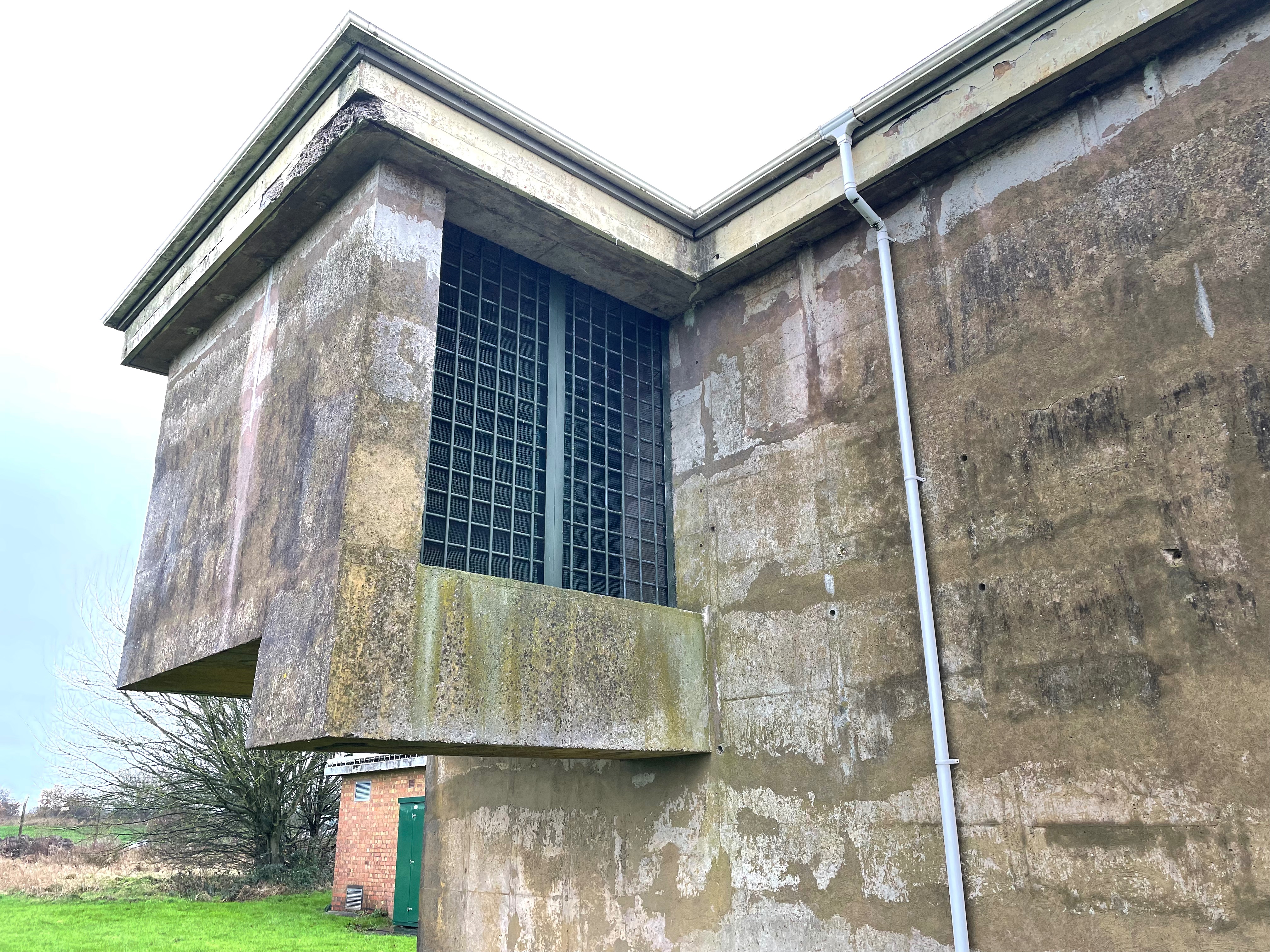
Electromagnetic Pulse. A nuclear explosion can cause damage to electrical equipment far beyond the area affected by blast through its electromagnetic pulse (EMP). Hack Green was therefore designed with protection for its delicate communications and electrical equipment. Sensitive equipment was shielded from EMP while cables and other routes into the bunker had to be filtered to protect the communications network. Redundancy was built into important systems so that the bunker could still function in the event that any damage occurred.
Power over Life and Death
The dire state of the country following an all out nuclear exchange cannot be understated. A densely populated country like the UK is particularly vulnerable to the effects of a nuclear war. Few places in the British Isles would be unaffected, even remote areas would be susceptible to fallout from destroyed cities many hundreds of miles away. It would be in these desperate times that Hack Green, sheltered from the worst of the attack, would be expected to lead the survivors (and there would be many survivors), to manage the meagre resources that remained and to restore some kind of governance over a shattered region.
In 1984, with the refurbishment completed, the essential function of Hack Green and the now newly named ‘Regional Government Headquarters’ (RGHQ) network (following yet another reorganisation!) was to provide protected accommodation for the Regional Commissioner and his staff to increase their chances of survival in the initial attack and should this be achieved, to act as a HQ in the aftermath which was capable of operating post-attack. The RGHQ would be Whitehall in miniature with many government departments and public bodies represented, all hastily converging on Hack Green and the other RGHQs in the final few days and hours before an attack, against the backdrop of a rapidly deteriorating international crisis.
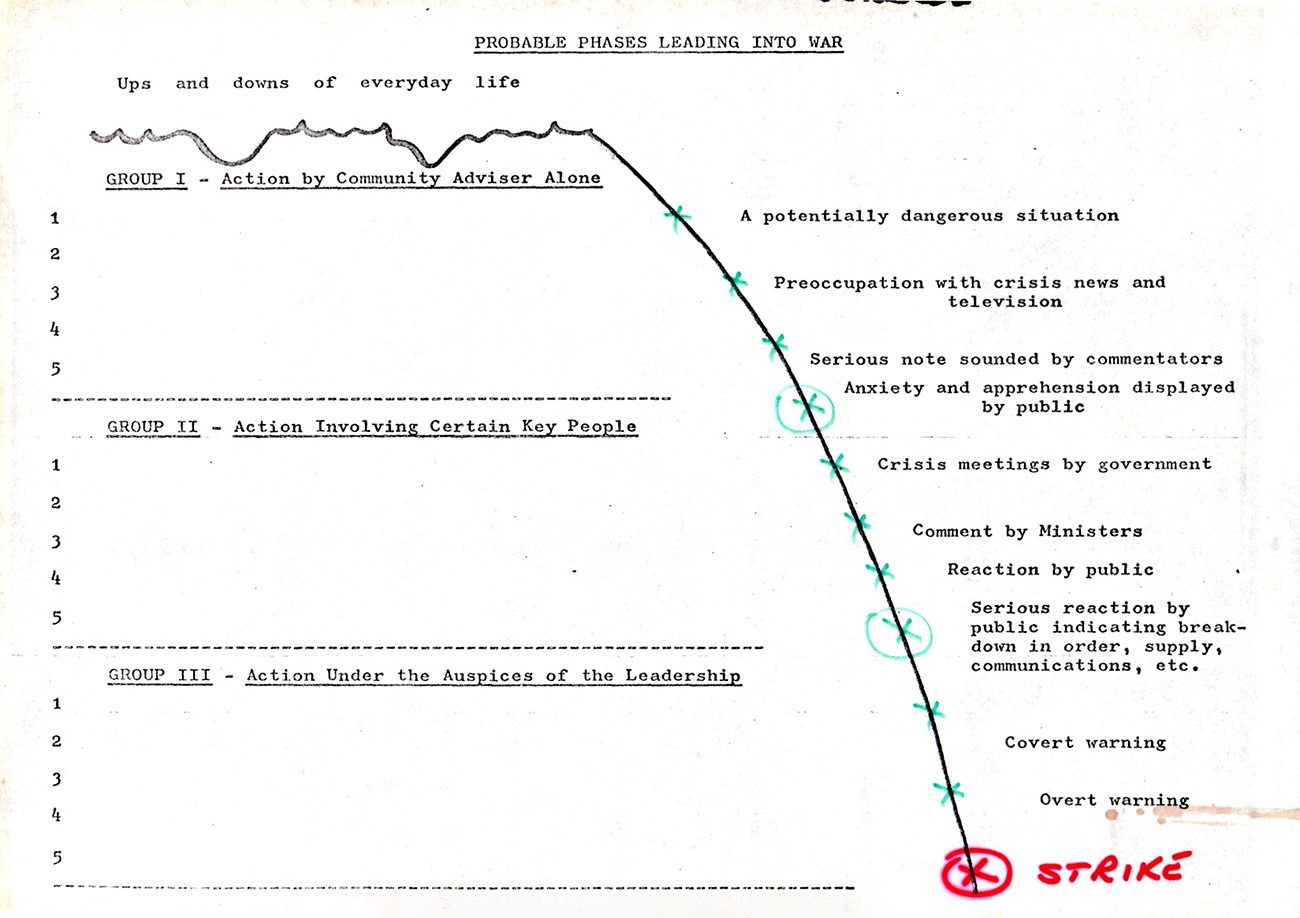
The powers and responsibilities that would be passed down to the regional commissioner from Westminster in a series of emergency laws rushed through parliament in the days leading up to a nuclear war, would be all encompassing. The regional commissioner would have very wide discretion over the administration of the region. There would be little to no interference from what remained of central government for weeks or months following an attack.
All of the aspects of modern life that we enjoy: supermarkets, law courts, clean water, transport, electricity etc etc would be in the large part, gone. In an attempt to retain some sort of governance during this societal breakdown, the Regional Commissioner would have exercised exceptionally wide emergency powers with little day-to-day direction from central government. He could direct what was left of public bodies such as local councils, the BBC and the emergency services as well as private enterprises like British Telecom which were deemed to be essential for survival.
The meagre supplies which were set aside before the attack were under his full control. Anything that could be gathered afterwards; food, water, fuel was his to command. Government civil defence planning assumed that households might have to fend for themselves for up to two weeks after an attack. Official advice was to stock enough food and water for 14 days and to remain under cover until told it was safe to emerge – assistance could not be assumed to arrive immediately. After a few weeks some supplies of food and water might be released perhaps as payment for work such as clearing debris from the roads or digging graves for the dead. After all, cash would be virtually worthless; wealth would be measured in tins of food and cans of water.
The Regional Commissioner at Hack Green would depend on a team of approximately 130 people, both men and women who were earmarked for their war time roles during peacetime. Whilst the RGHQ system was not routinely manned, they were used regularly for training exercises. Often, local junior civil servants were instructed to attend the RGHQ to test the equipment. They were not always informed however, that it was them who would be called upon should it need to be used for real. Others were fully aware that they had been allocated a place in a bunker and some received training for their particular speciality but this was not as common as you might expect. The reality would be a group of people who had likely never met, being brought together in a place that many had never been to, at an extremely frightening time and having left their families behind to their fates. Hardly a recipe for success!
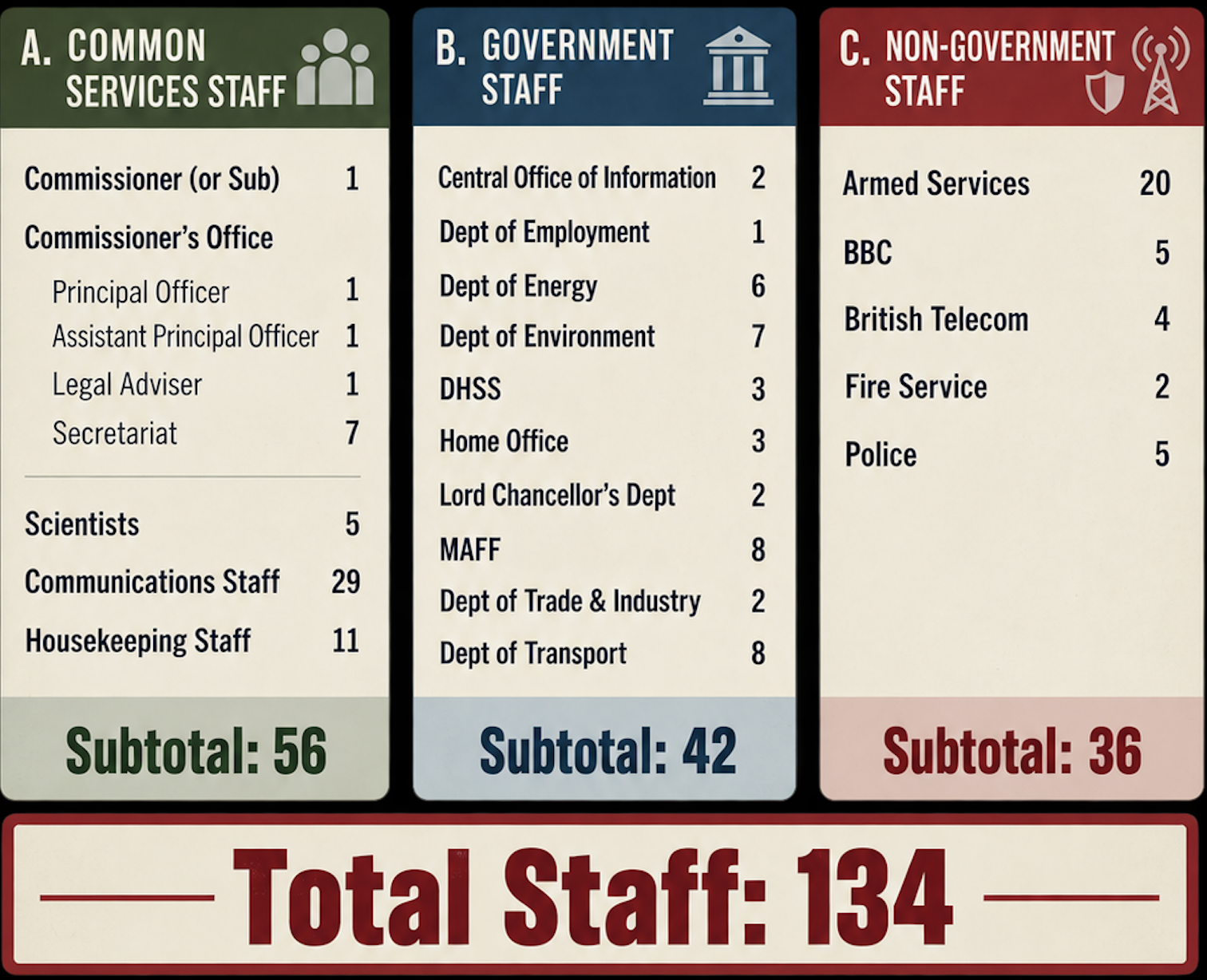
To keep a team of 130+ people at a basic level of comfort in the aftermath of a nuclear war would be no simple task. Aside from the technical aspects of power, water, communications and air filtration, more mundane aspects of bunker life would need to be carried out. After all, it might not sound quite so exciting but this ‘secret nuclear bunker’ is essentially a government office block with fewer windows! The graphic below shows how the team would have been split between the various departments. In the 1980s this meant that they would need typists, telephone operators and someone to keep on top of filing the papers. Domestic staff would be needed to do the cleaning with so many people living and working in such close proximity. The male and female dormitories would operate on a ‘hot bed’ system. As one person got out of bed to start their shift, another ending theirs would take your place.
Everyone would need to be fed of course using the rations which were set aside before the attack came. It was planned that the RGHQ would be stocked with food and other supplies in the period leading up to an attack. In such a time of national peril, everyone else would be trying to stock up on non-perishable food as well so it’s likely that basic army ration packs would have been the main bulk of the food stores. Initially it was expected that the RGHQ would need to be able to operate for up to 30 days without being resupplied.
A Tour of Hack Green RGHQ
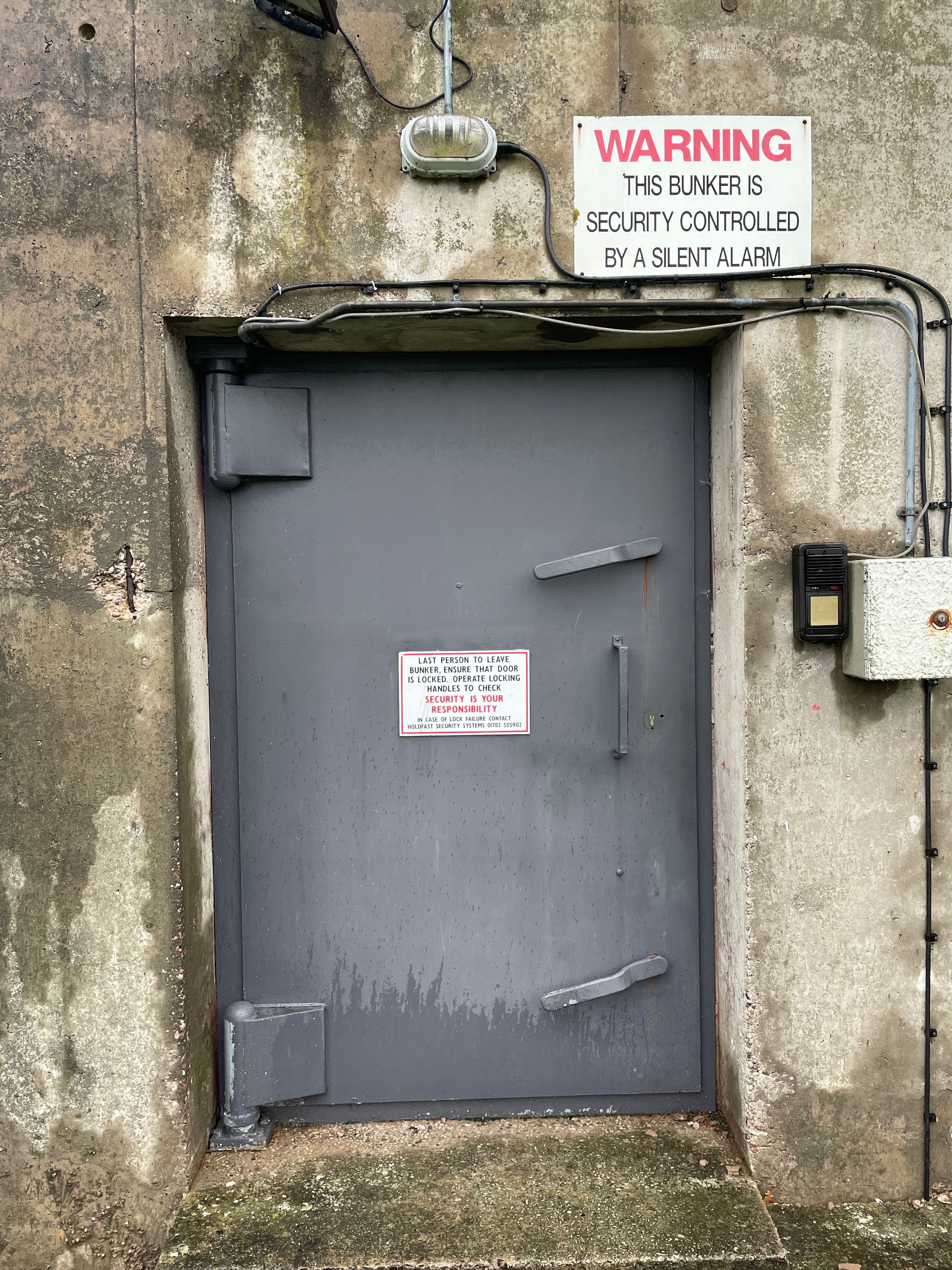
Assuming that you arrived at Hack Green before the attack, access would be via the main entrance on the south side. Through the heavy steel blast doors and up a short flight of stairs, you would pass the control room with a small window to monitor access into the bunker. Behind it, a set of stairs leading down to the lower underground floor. On the other side of the main corridor is the decontamination room leading through to the air filters and the alternative entrance as described above. Next door is the office for uniformed services; The Armed Forces, The Fire and Rescue Service and The Police.
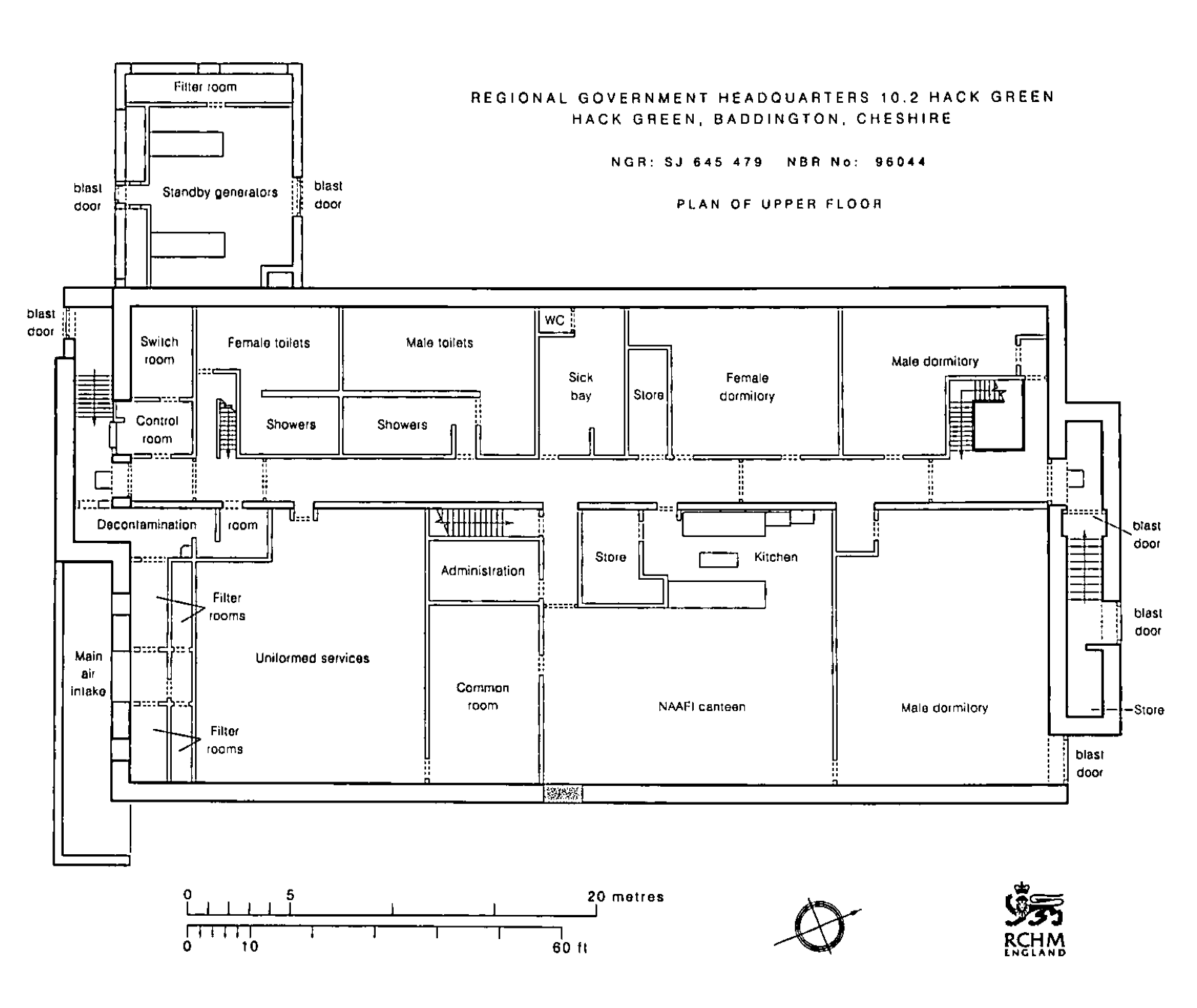
The rest of the upper floor is taken up by toilets and showers as well as male and female dormitories. The male dormitories are considerably larger than the female space, perhaps hinting at the intended split between the sexes in terms of staffing. This floor also hosts the canteen, kitchen, common room and a small sickbay.
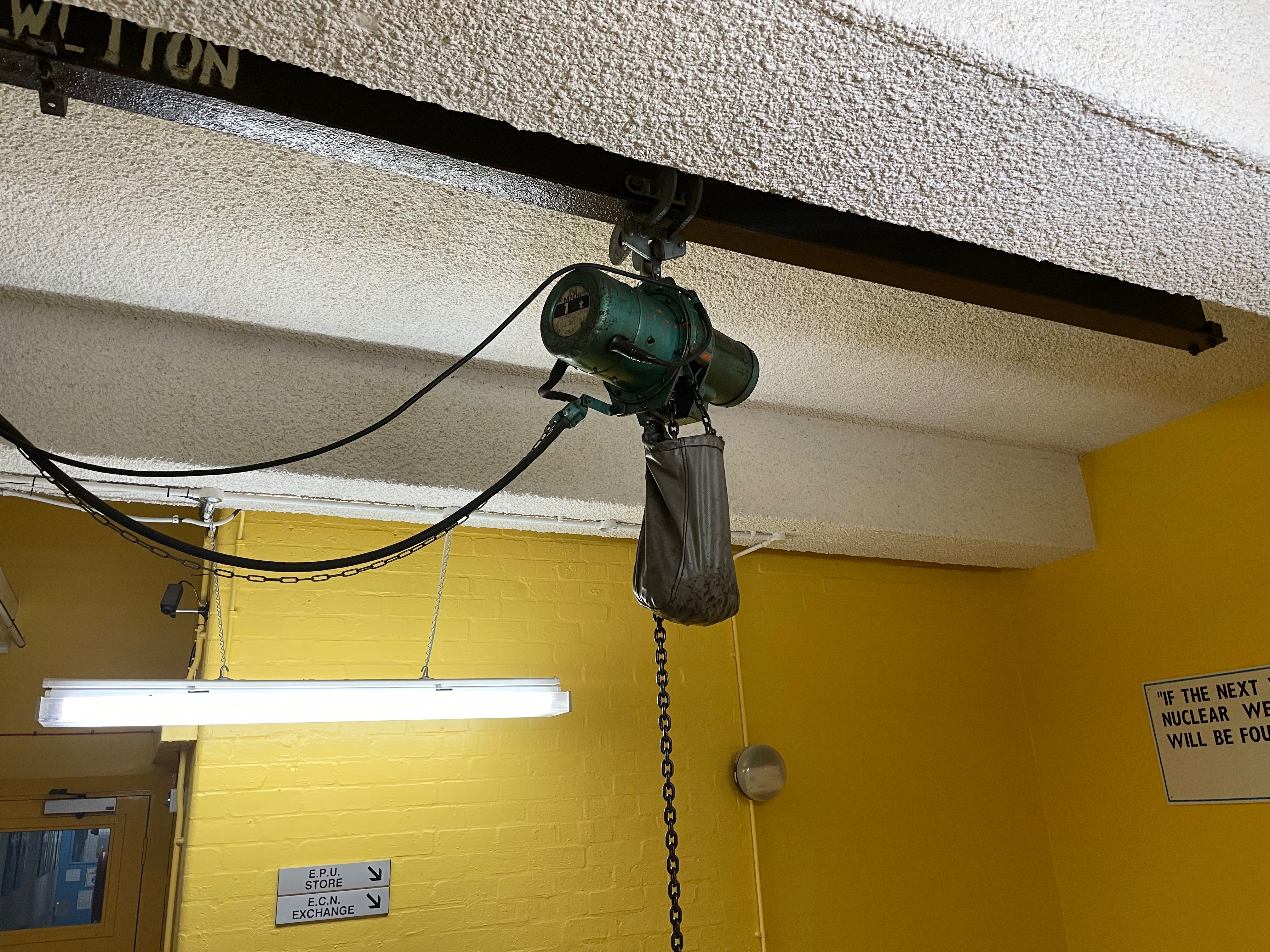
At the end of the corridor we find a larger staircase leading down to the lower level and the old main entrance from the 1950s ROTOR era which now serves as an alternative emergency exit. As we head down the staircase to the more sensitive part of the bunker we pass under the winch which was used to lower down the larger pieces of equipment.
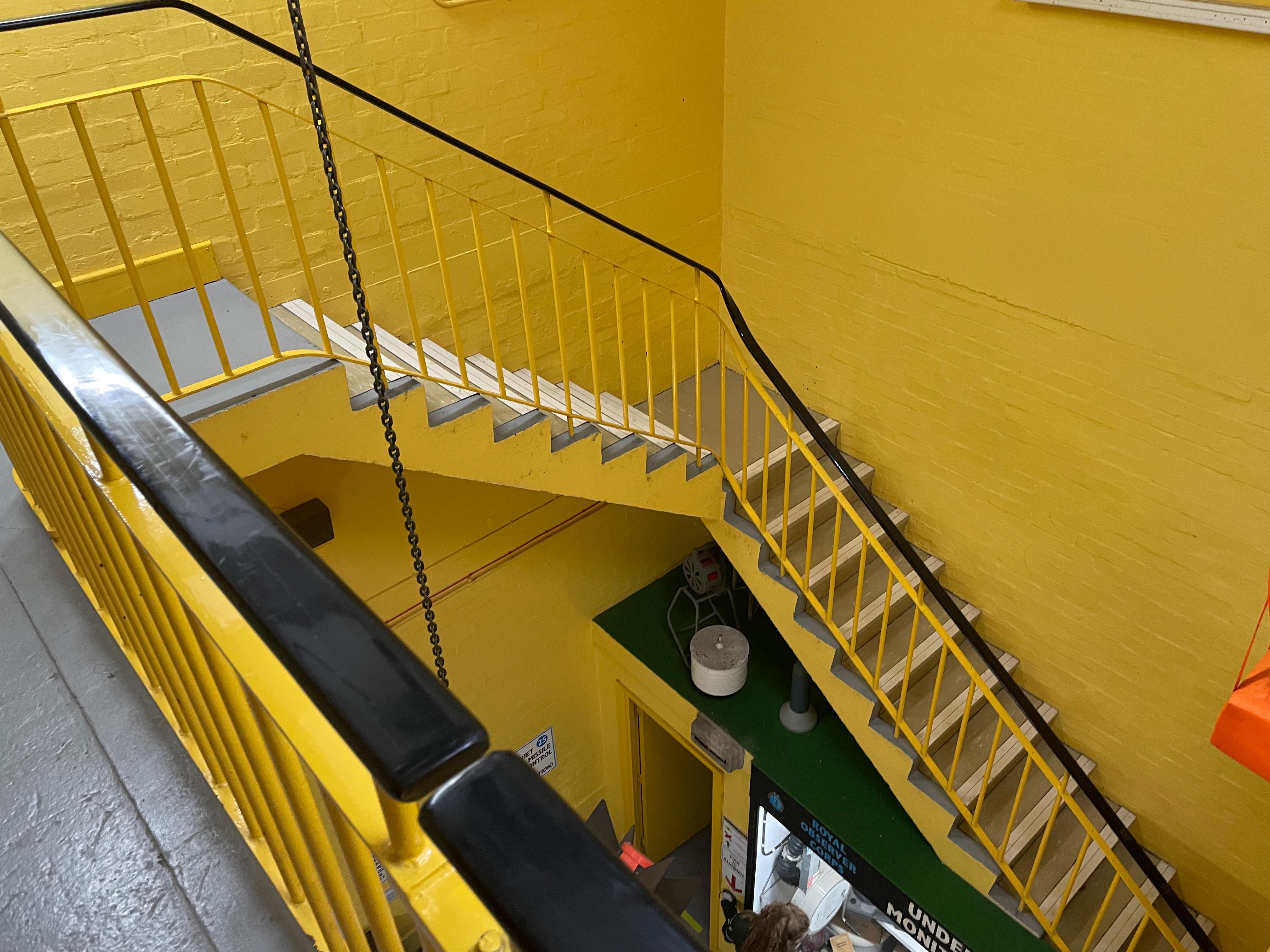
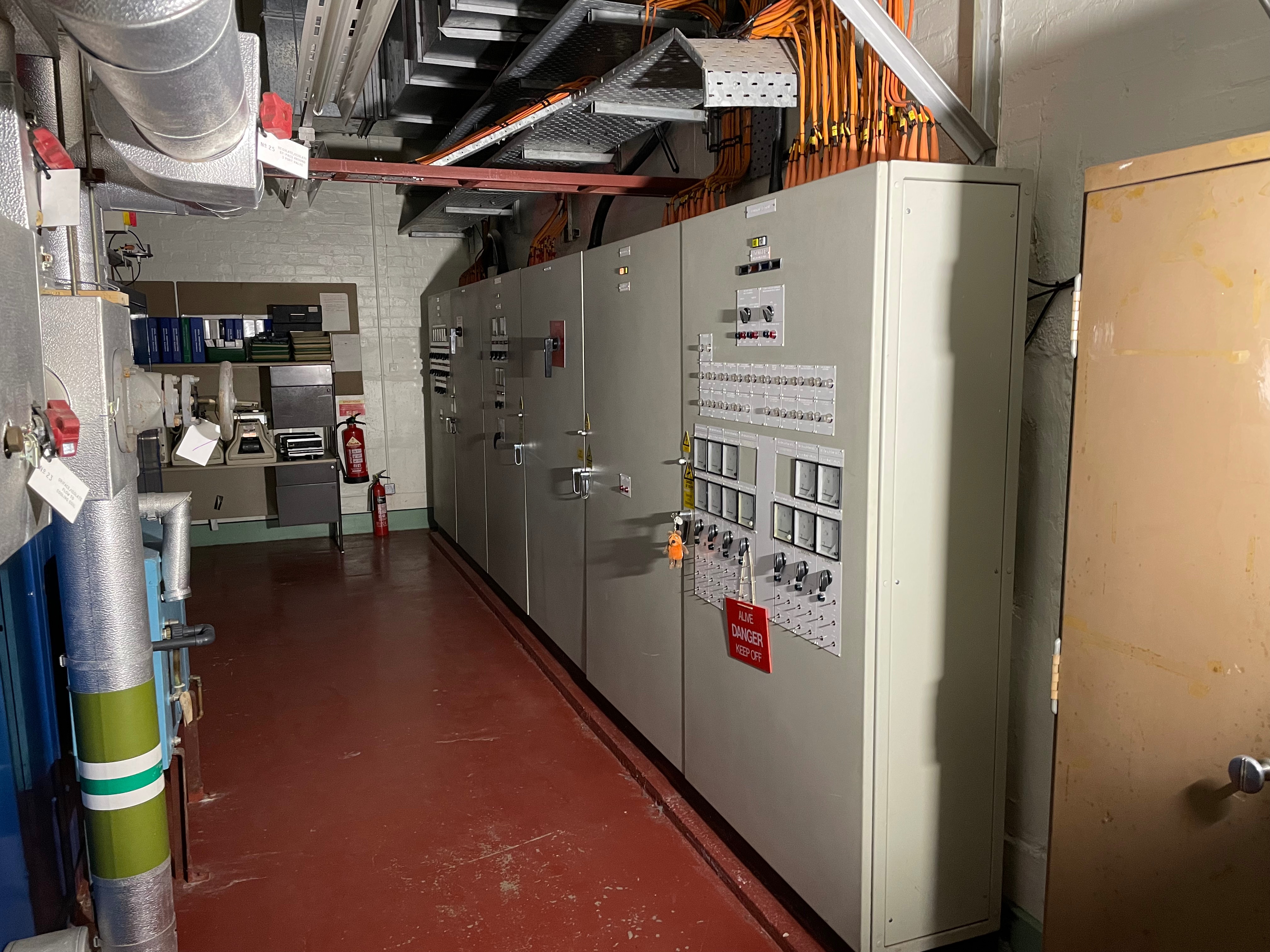
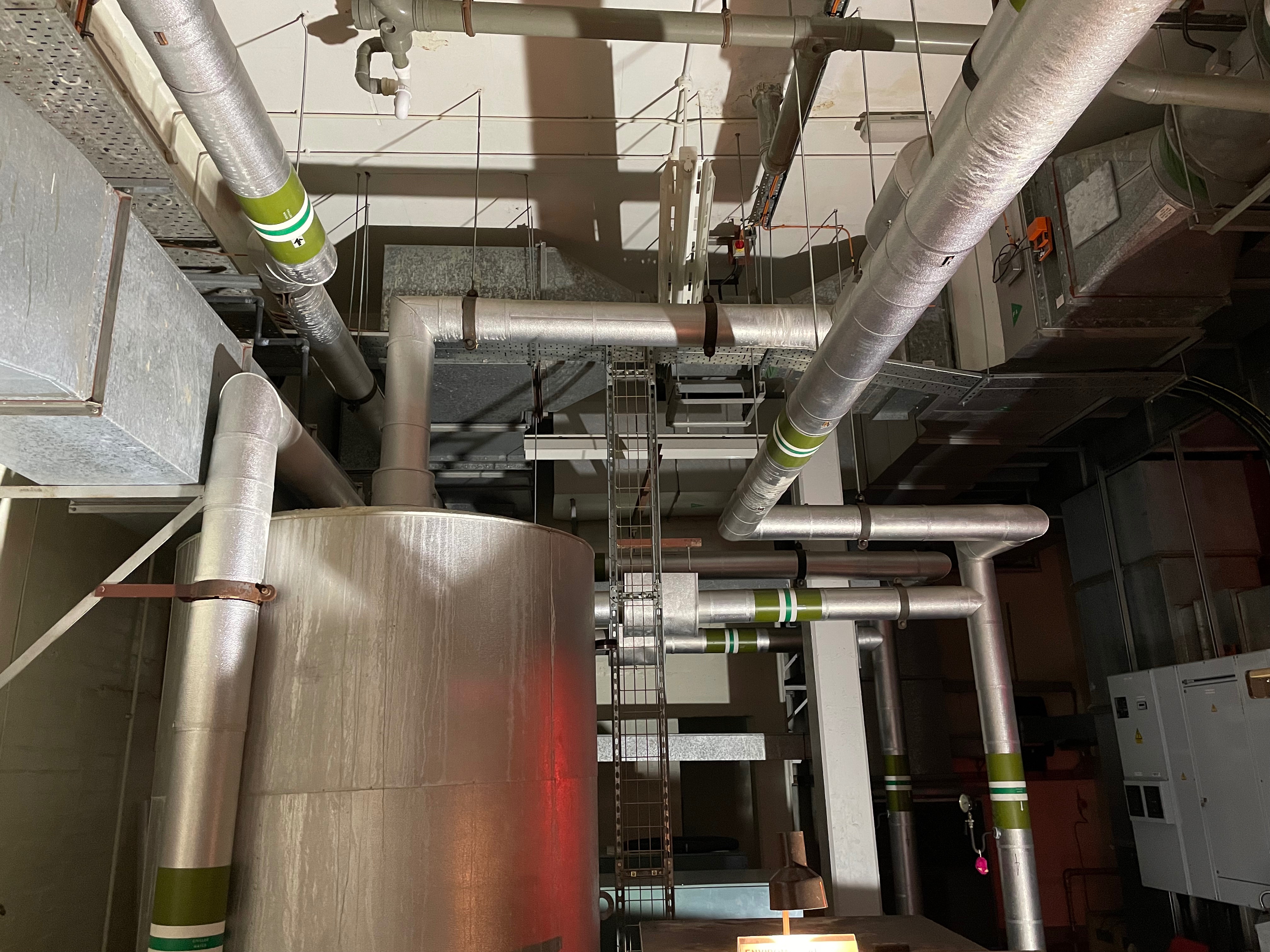
The central corridor splits the lower floor plan into two rough sections; utilities on the right and communications and administration on the left. The utilities section consists of the tank room which holds a large backup water reserve which could be used should the mains water supply fail after an attack. Next door the plant room houses most of the life support systems and the various control panels to operate them. The generators could be controlled manually from here but would burst into automatically life should power from the grid be lost. A large diesel tank was buried outside to fuel the twin generator sets. The bunker contained dedicated ventilation and air-conditioning plant, with protected air intakes and filtration equipment forming part of the life-support system. In a sealed bunker occupied by more than 130 people, controlling temperature, humidity and air quality was essential to keeping the headquarters usable.
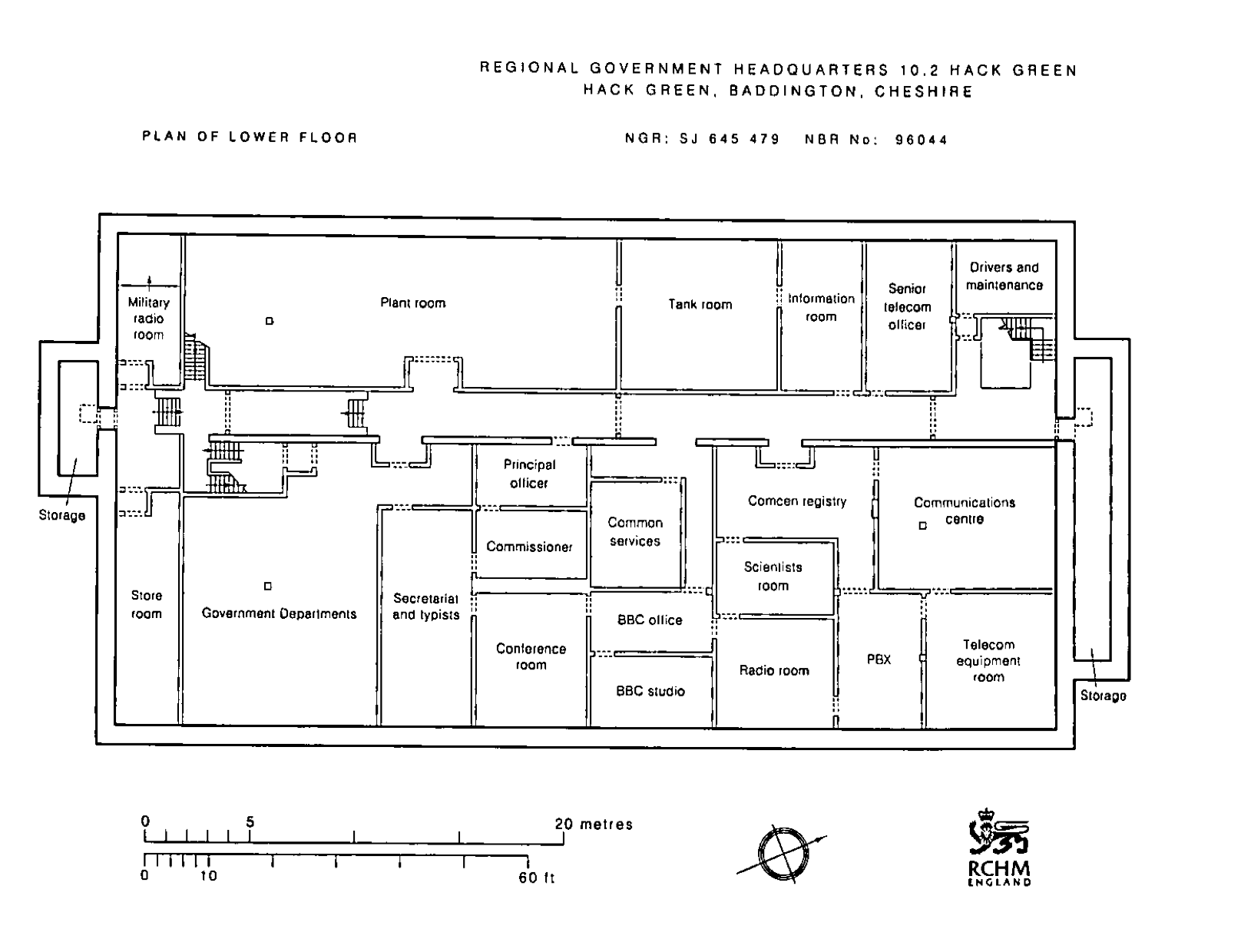
On the left hand side of the corridor we find the communications hub for the bunker. At the time of Hack Green becoming operational, the wider RGHQ network was about to undergo a huge upgrade to the communications equipment much of which dated from the 1960s and early 1970s. It’s likely then that Hack Green would have been fitted with a mixture of the new automatic systems and the old analogue equipment which would be gradually phased out over the next few years. Several communications systems were used to keep Hack Green in contact with the outside world with redundancy built in should equipment failures occur. Alongside the normal public BT phone lines, a private system known as the Emergency Communications Network (ECN) connected all civil defence sites as well as central government and military headquarters. Protected and buried landline circuits formed part of the emergency communications network, with radio providing an alternative if wired connections failed.
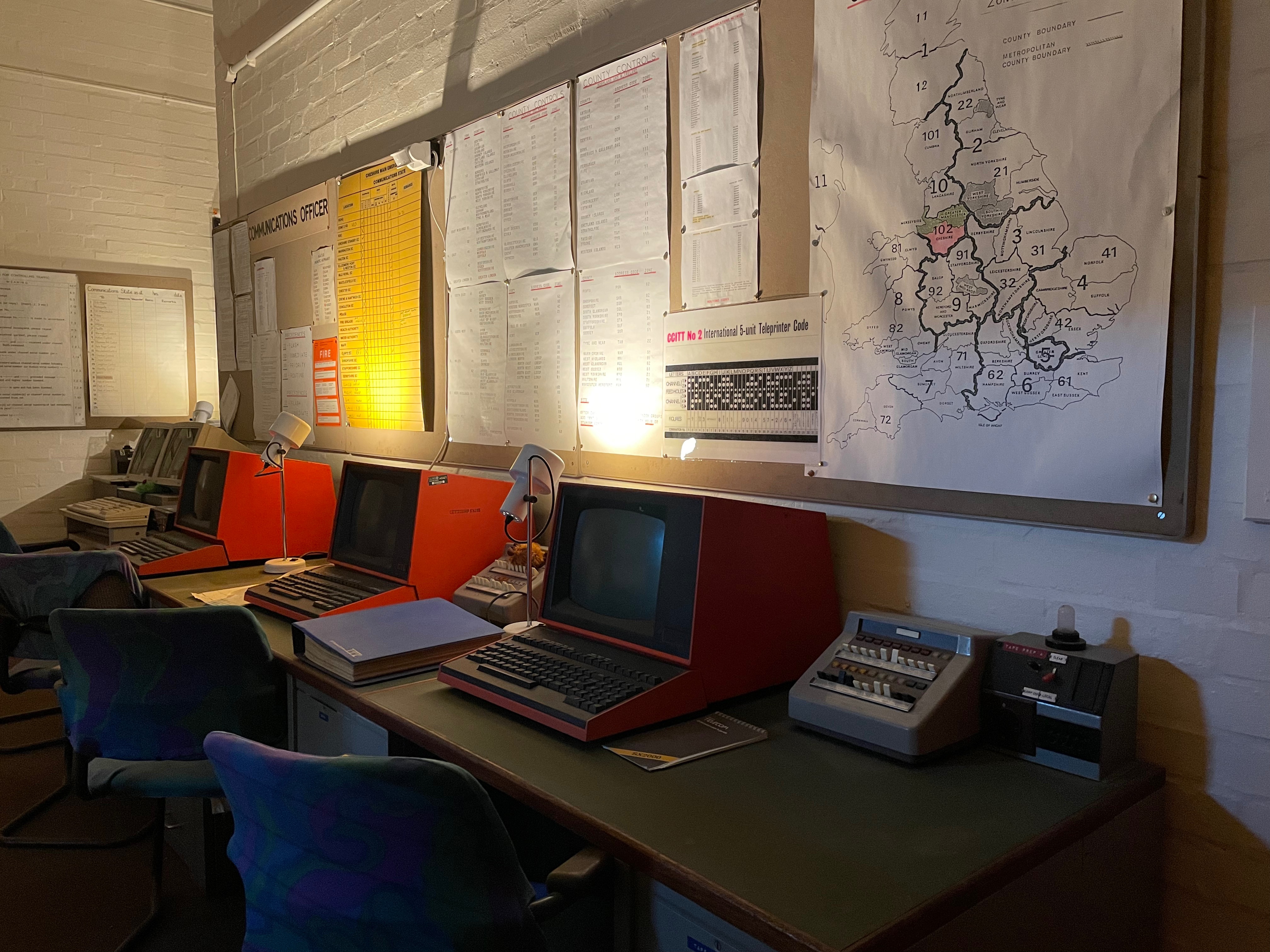
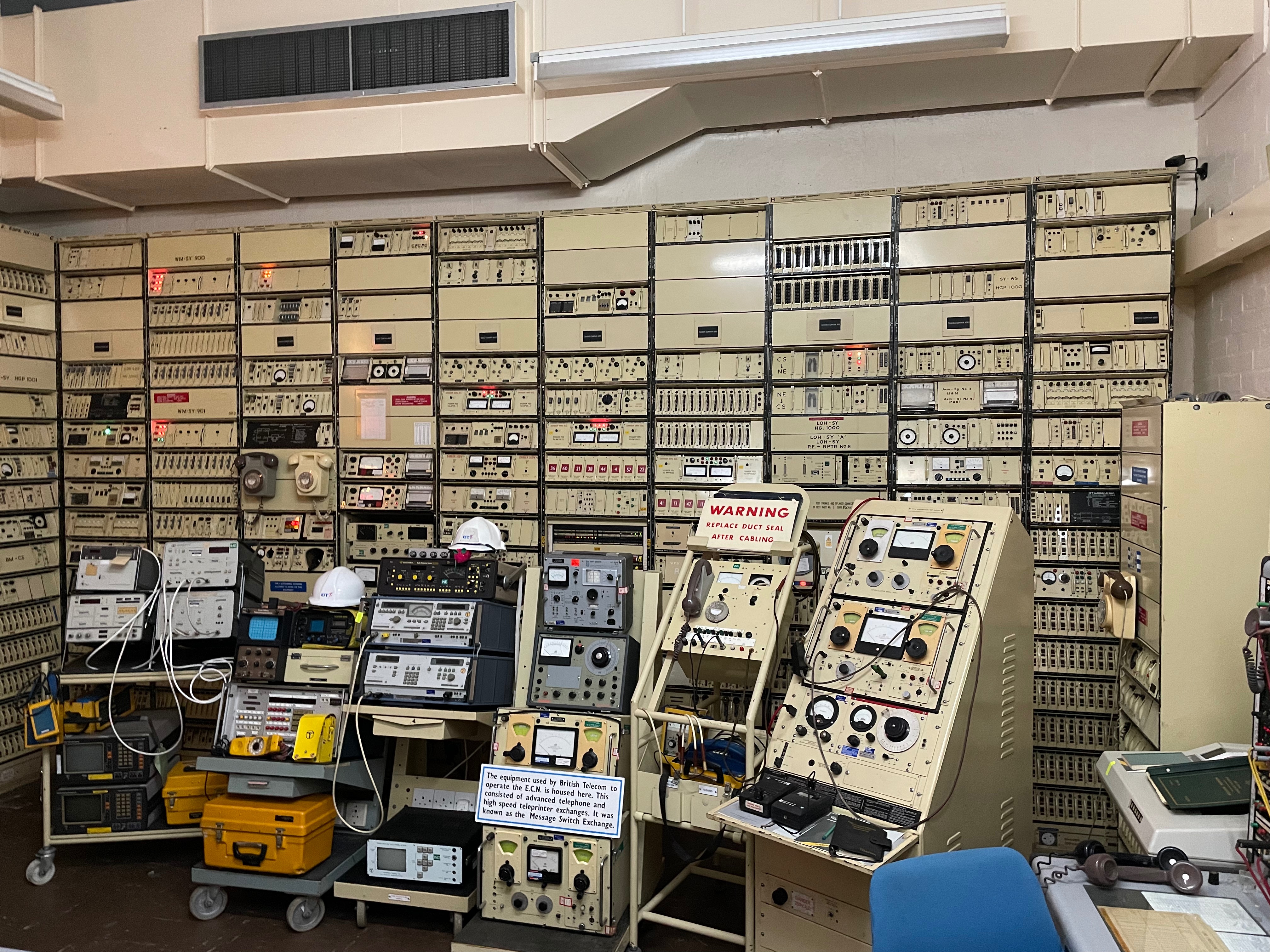
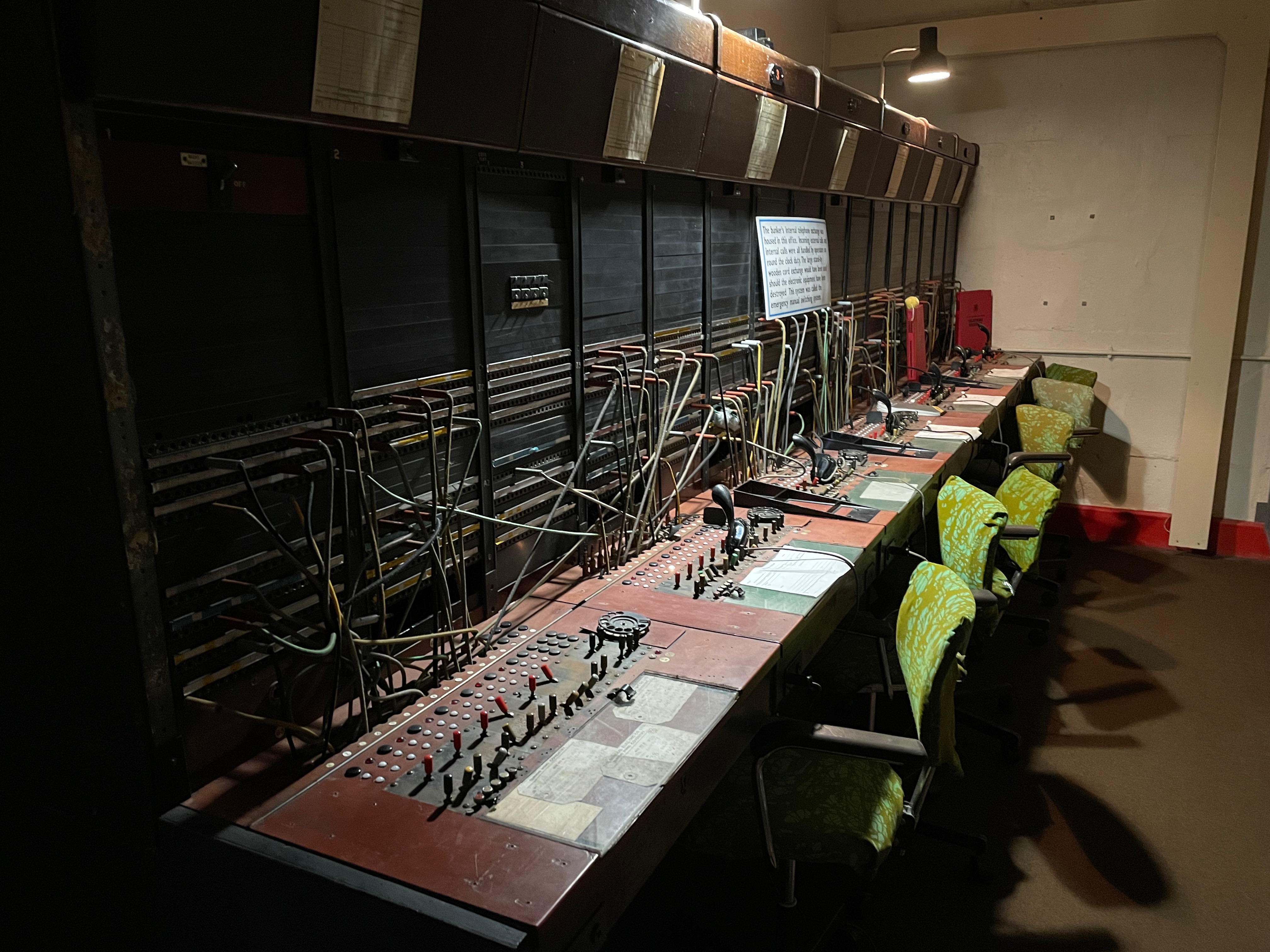
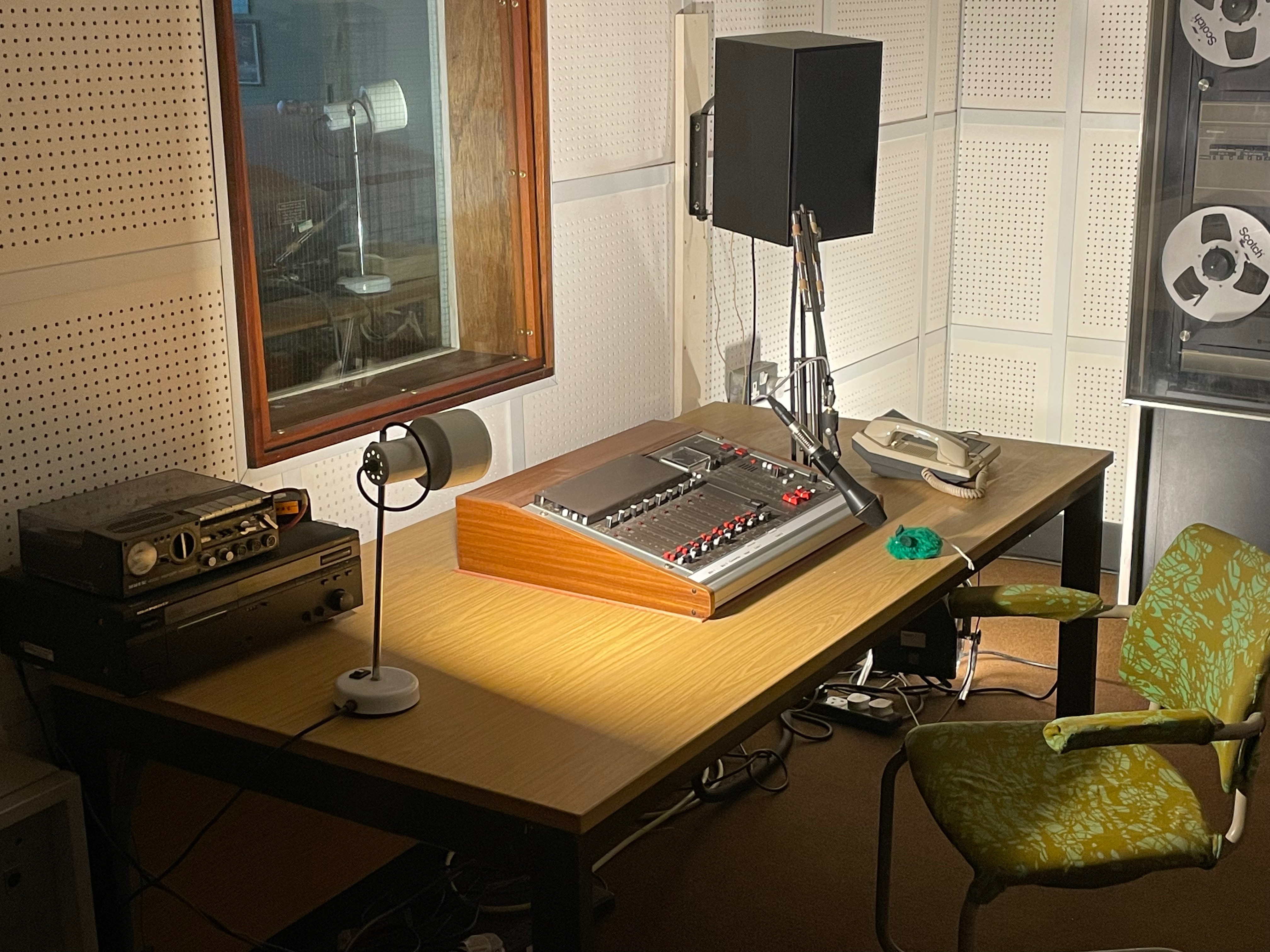
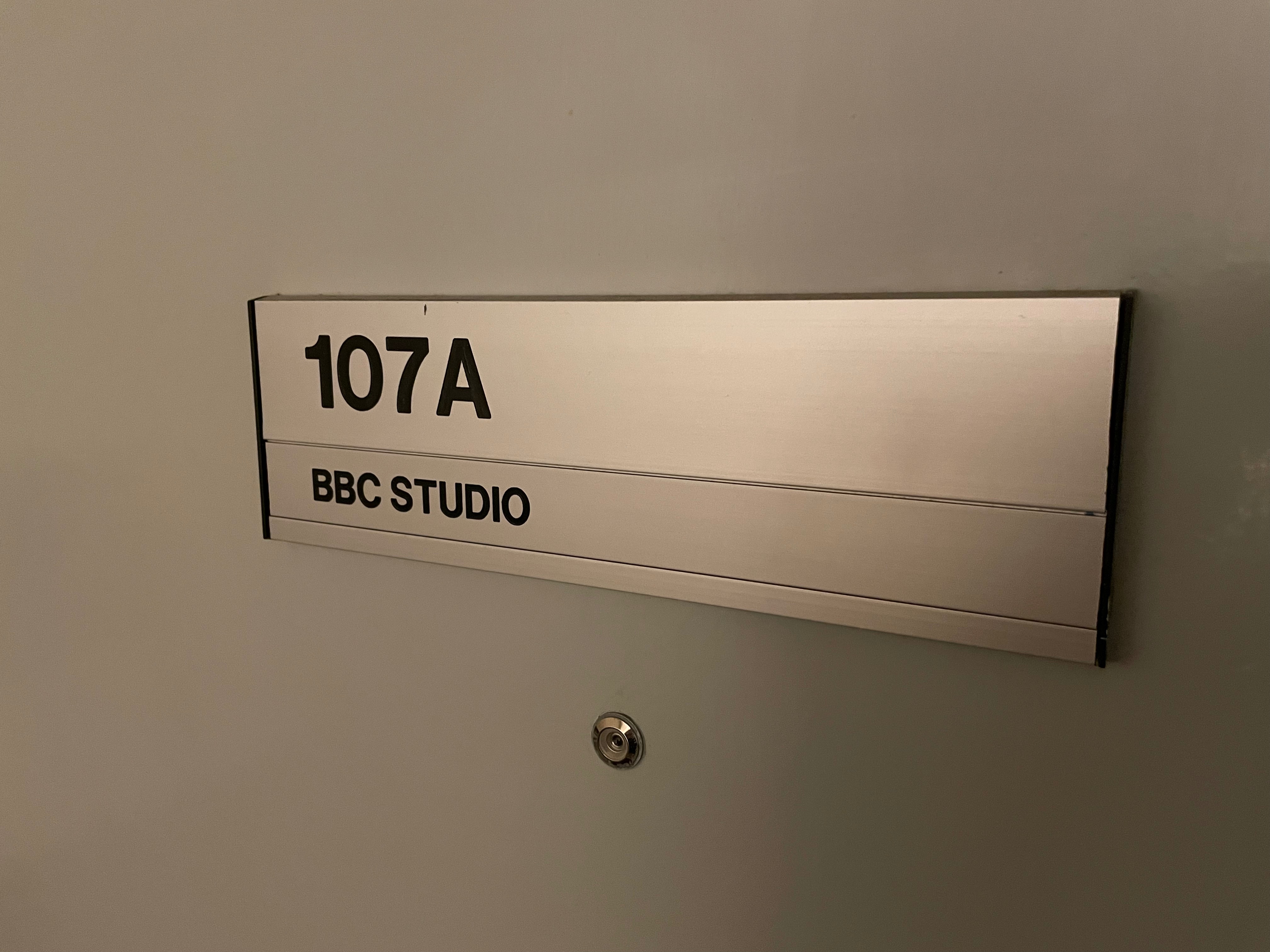
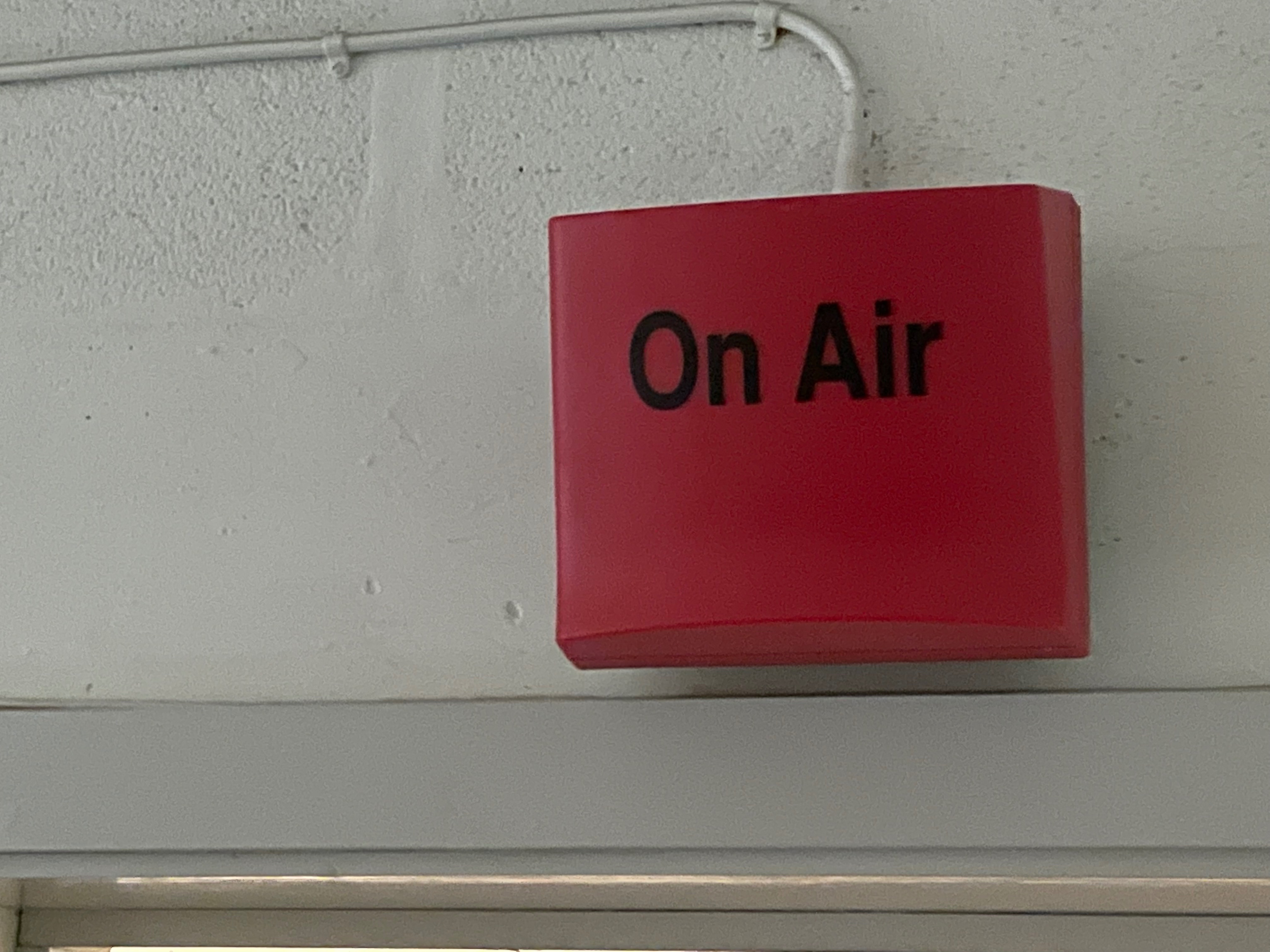
Next to the communications centre was an office and radio studio used by five BBC technicians who were tasked with operating the Wartime Broadcasting Service (WTBS). This bare bones local radio service was intended to be the official means of communication between the commissioner and the surviving population in his region. In the run up to an attack, as the crisis worsened and nuclear war became more and more likely, all TV and radio broadcasts in the UK would be saturated with advice to the general public on what should be done to prepare.
As the attack became imminent and following a secret code word from the government, the WTBS was launched with a long list of radio frequencies announced on the radio which would detail the various radio channels for each region. In Cheshire, Merseyside and Greater Manchester survivors would have been tuned into the signal originating from Hack Green.
Continuing from the BBC office and into the conference room which forms part of a series of interconnected rooms providing the working space for the Commissioner and his core team of civil servants. At the centre is the Regional Commissioners room which he would use as an office and bedroom. Access could be gained to the commissioners room via the main corridor and the Principal Officers’ room, his second in command, or via the Secretarial and Typists room.
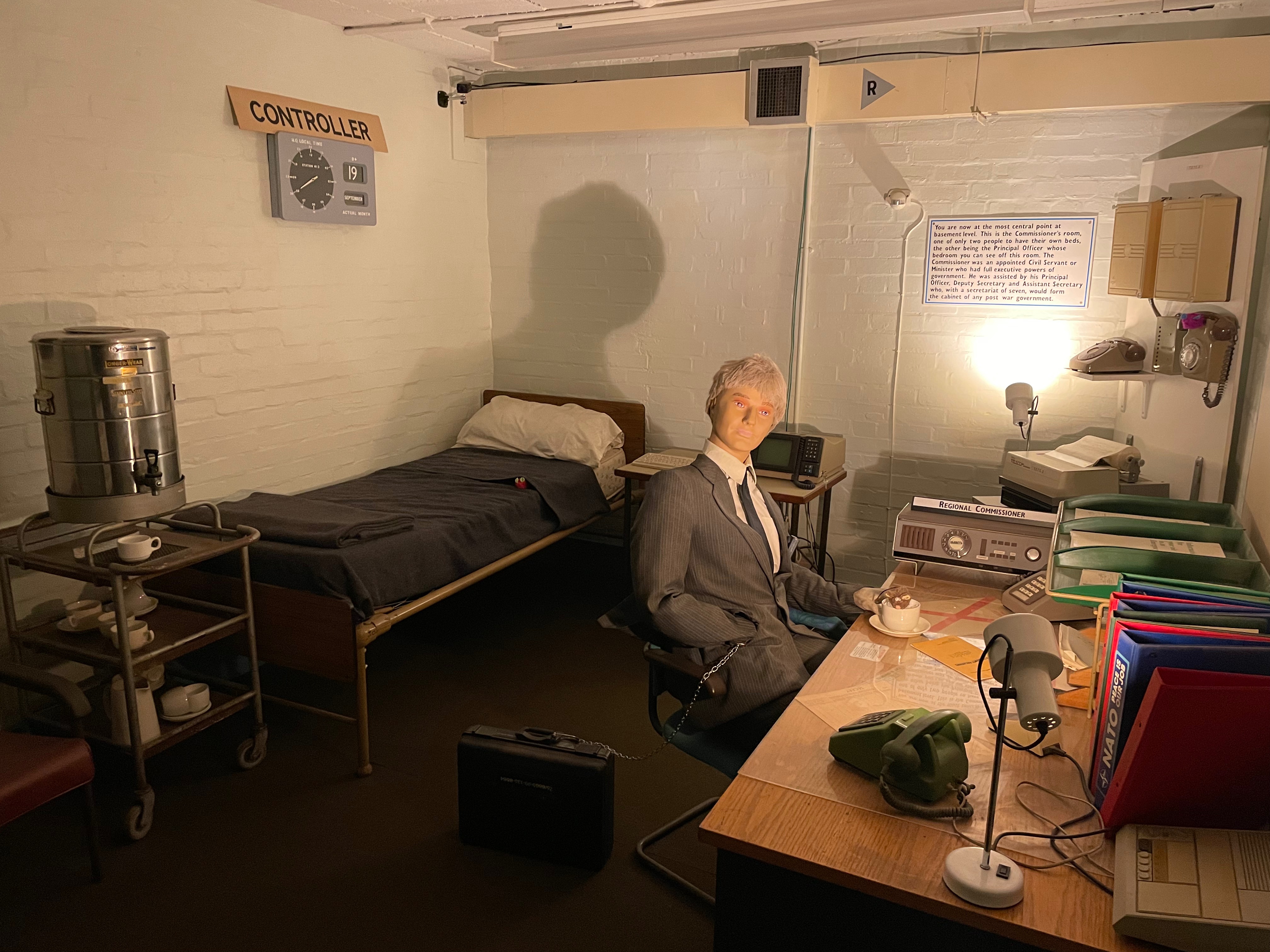
Next to this office suite was the space given over to various government departments. The new mezzanine level is accessed from here via a staircase in the corner of the room. This additional space would also have been used by government departments. As a Whitehall in miniature it would be necessary to have representatives from a wide variety of government functions.
Whitehall in Miniature
We can gain a good insight into the expected role and likely priorities of the RGHQs after an attack by looking at each government department and their staffing allocations:
Department of Employment (Allocation: 1). With such a small allocation the likelihood is that this was purely an advisory role limited to providing details of labour resources such as where workers were available and how scarce manpower could be directed in line with the region’s plans for recovery.
Central Office of Information (Allocation: 2). In peacetime its role was as the government’s publicity office and public information service. At an RGHQ this role would be limited to preparing official information and drafting official messages which would be broadcast by the Wartime Broadcast Service (The BBC) to survivors directly from the radio studio in the bunker.
Department of Trade and Industry (Allocation: 2). DTI representatives would be dealing with the surviving industrial and commercial capacity of the region. This could have been identifying usable factories or important supplies and advising on which industries should have priority for power, fuel, transport or labour.
The Lord Chancellors Department (Allocation: 2). Responsible for the administration of justice and the courts system. An indication that the continuation, or perhaps more likely, the restoration of some form of a legal system was to be an eventual goal of the RGHQ. A legal advisor was also available so that the commissioner could be sure that he was operating within the new wideranging powers granted to him by The Emergency Powers Act.
Department of Health and Social Security (Allocation: 3). DHSS officials would be responsible for coordinating what was left of hospitals and other medical resources for the region as well as collating details of casualties and the needs of displaced people.
The Home Office (Allocation: 3). The RGHQs and the wider civil defence structure was a responsibility of the Home Office and so this would have been an important element of the commissioners’ staff. Apart from their knowledge of the overall machinery of emergency government they would provide a liaison with the police and neighbouring regions.
Department of Energy (Allocation: 6). One of the larger departmental contingents reflecting how vital electricity, gas and oil supplies would have been for the region. DOE officials would have been concerned with questions such as which power stations and grid infrastructure remained operational as well as fuel availability and in directing scarce energy resources towards essential services.
Department of the Environment (Allocation: 7). At the time this department had very broad responsibilities including water, housing, infrastructure and importantly for the RGHQ, local government. It was through local councils at the county and district level that much of the day-to-day work of recovery would be executed. The DOE would have an important role in maintaining contact with local government and coordinating the recovery of essential local services.
Department of Transport (Allocation: 8). The size of this allocation should give you an idea of how important transport was considered to be by the emergency planners. After an attack almost any other recovery activity would be impossible without an accurate idea of which roads and rails were passable, as well as the fuel and vehicle availability to move essential supplies and personnel to where they needed to be.
Ministry of Agriculture, Fisheries and Food (Allocation: 8). The joint largest department in the RGHQ. It makes sense when you think about how fast the availability of food and water would become the most pressing problem following an attack. The MAFF officials would need to establish which stocks of food had survived as well as work out how it would be rationed and who would receive priority when it was distributed. Thinking further ahead to longer term survival it would be necessary to determine which farmland and crops had been contaminated and how agricultural production could begin to recover.
The details of the staffing requirements for Hack Green reveal what the bunker was intended to do. Representatives were drawn from departments responsible for food, energy, transport, health, local government, employment, industry and justice. The largest contingents came from the Ministry of Agriculture, Fisheries and Food and the Department of Transport, each allocated eight staff, followed by Environment with seven and Energy with six. In other words, the immediate concerns of regional government after a nuclear attack were expected to be intensely practical: finding food, restoring power, moving supplies and keeping surviving local authorities functioning.
Stand Down
Officially the locations of RGHQs were a secret although most of the locations were known to the public through the work of The Campaign for Nuclear Disarmament (CND) and other similar groups. Hack Green was no exception. Even before the conversion works were finished to prepare for its new role as a RGHQ, its true purpose for the works were exposed by the local press and some local politicians. This sparked a flurry of interest in what was going on at Hack Green and in government plans for nuclear war more widely.
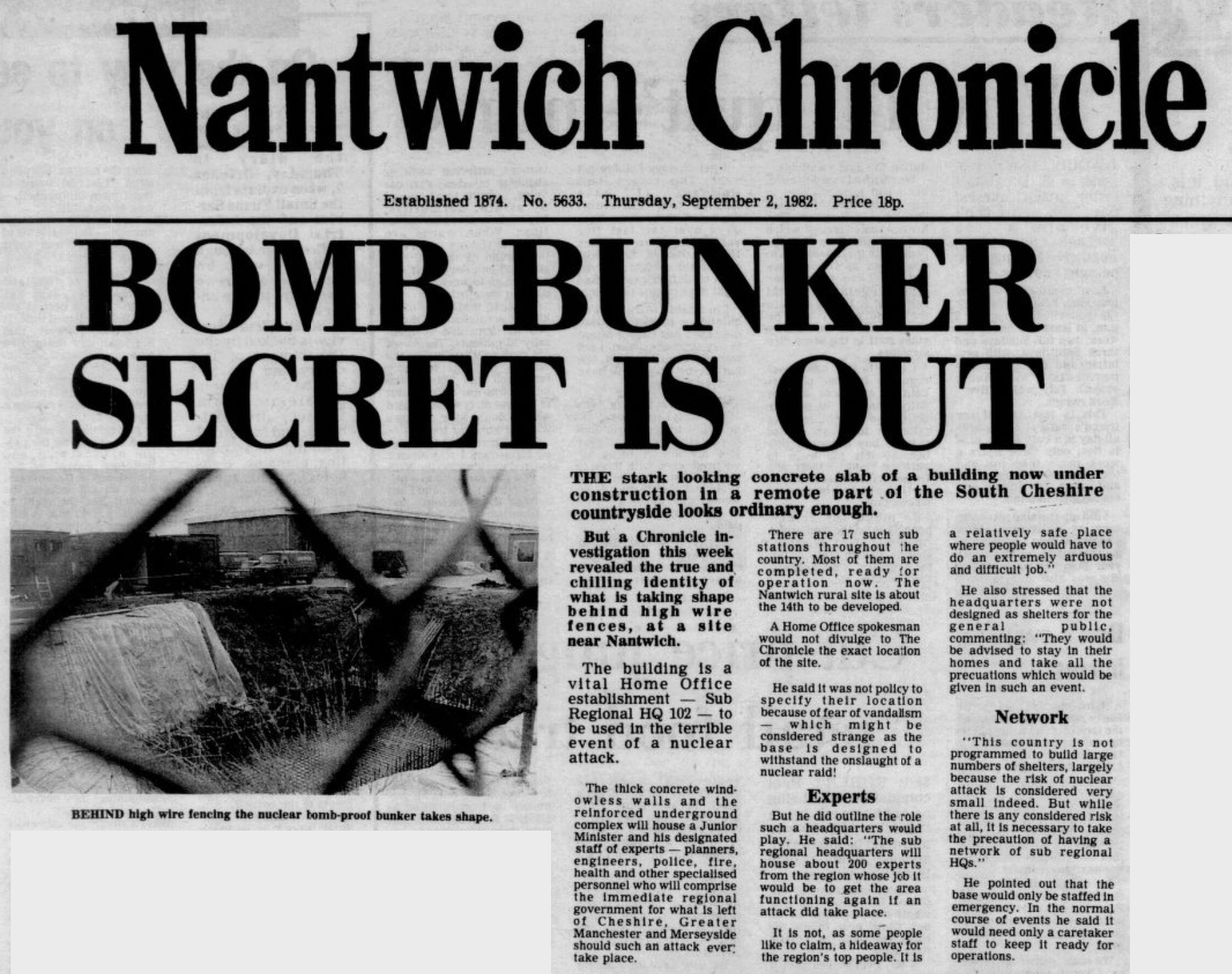
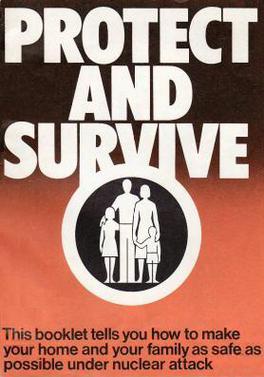
At this time in the early to mid eighties the Conservative Government was overseeing a final hurrah in civil defence, or what they preferred to call ‘Emergency Planning’ in an attempt to move the public discourse away from nuclear war. In the face of public pressure and uncooperative local authorities which were responsible for much of the preparations, they were forced to release the now infamous ‘Protect and Survive’ booklet. The pamphlet had been prepared in the 1970s as part of a wider media blitz which would descend on the public should east and west slide towards nuclear escalation. Although this was never widely distributed, it was made available to buy and Its contents provided ample ammunition for those campaigning for nuclear disarmament.
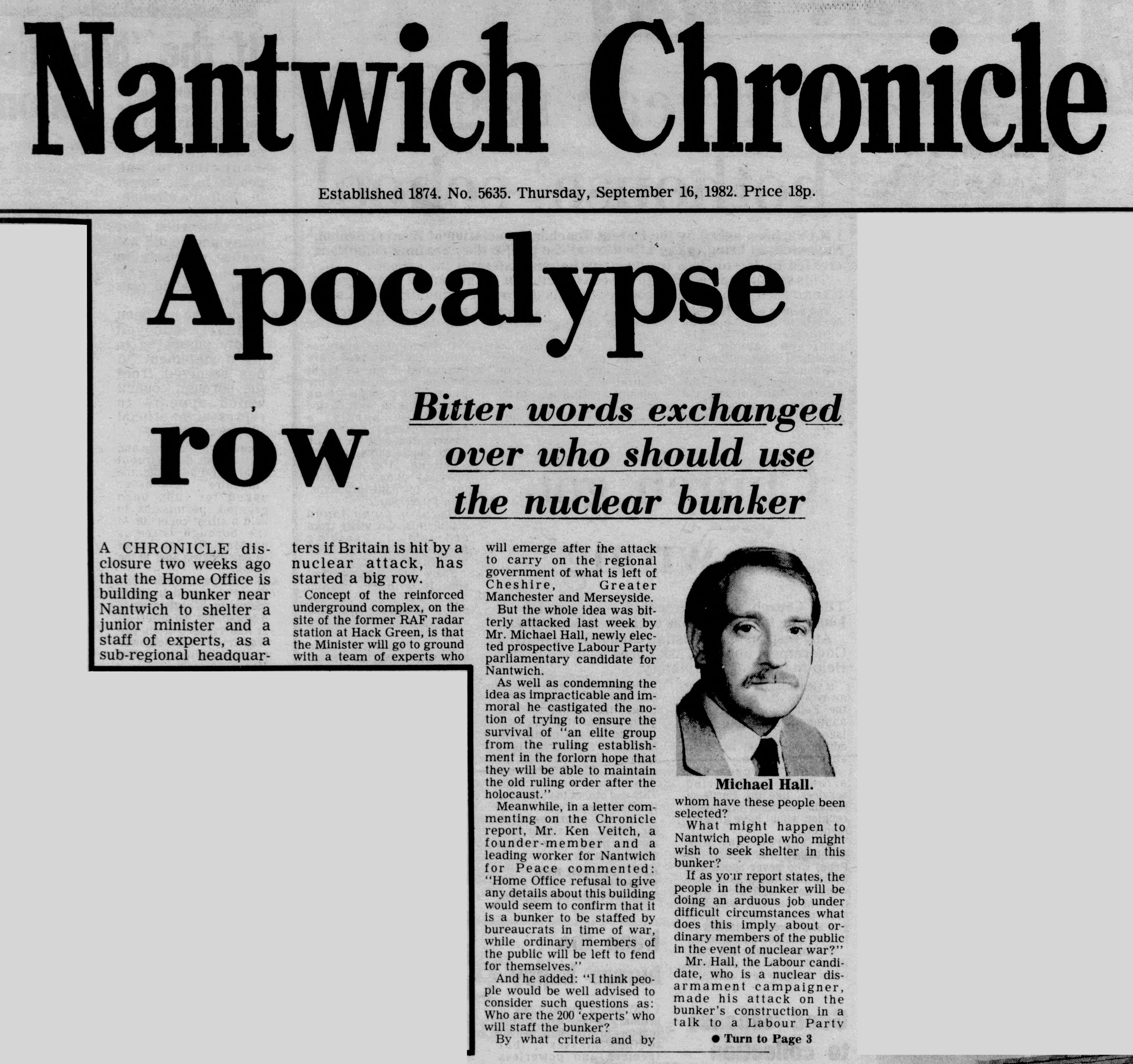
So although we might think today that these bunkers were secret (according to those signs anyway!) it never really was. And if it was printed in the letters page of the Nantwich Chronicle, we can be sure that its location was known in the Kremlin!

This prompts the question – was the expense and effort of building the RGHQ at Hack Green worth it should the unthinkable have happened? I’m sure you will be able to see (perhaps with the benefit of hindsight…) what the pitfalls of these preparations were. To outline them as I see it:
- Could the bunker survive the attack? If the location was known to the Soviets (as discussed above) then surely it would have been a target. We looked earlier at the protection that it would provide to the inhabitants and whilst significant, it would not have survived a direct hit – nothing could. In addition, no relief for survivors was envisaged in the first 14 days. The public were expected to fend for themselves with whatever they had managed to prepare in the panic before the attack came. It seems likely that hunger and fear would cause huge unrest perhaps threatening the officials in protected accommodation such as Hack Green. The police and army would be pushed to the limits trying to guard these facilities as well as other strategically important places like food stores.
- Could the intended staff assemble and function? Would those earmarked to serve in the RGHQ have actually turned up for their duties? At a time of escalating international tension and with blanket coverage of these events and the stark advice to the public being communicated by the Government, many would opt to stay at home with their families. The plans were also incomplete. The other ‘bunker’ for region 10 was Southport as detailed earlier. The basement facility beneath a 1960s government office block was abandoned in the 1980s due to terrible damp and flooding. A replacement was never found and so Hack Green would have been expected to administer the whole of the North West from Cheshire to Cumbria – An enormous task.
- Could their decisions actually be implemented outside? The regional commissioner and his team were essentially bureaucrats. The people that would be actually doing the work that they directed would be ‘out there’ – Nurses, policemen, soldiers etc. They would be as vulnerable to the effects of nuclear weapons as everyone else. What could they have been expected to achieve in a post-strike world?
On the other hand, what was the Government supposed to do to prepare for a possible nuclear war – Nothing? Post war (WW2) Britain had never had the financial headroom to provide a space in a bunker for everyone, the cost of which would surely be in the hundreds of billions. Is the next best thing not to try to provide continuity of government for those that survive in order to rebuild some sort of normal life afterwards? It’s often said that the destruction would be complete and that there would be no one left to govern, but that just isn’t the case. There would be millions of survivors. Lots of people, perhaps you are one of them, might say something like they would grab a bottle of whisky and hope to be the first to go. I would suggest that in reality, facing the prospect of nuclear war, the vast majority of people would try to do what they could to survive – it’s human nature and that can’t be turned off.
In that case, perhaps survivors would be thankful (perhaps thankful is the wrong word!) that some plans, however flawed, were made by the government so that an utterly shattered Britain might begin to make small steps on its long road to recovery.
In the end though, these plans were overtaken by events elsewhere. In the Soviet Union, change was afoot. A new government policy of reform sparked a growing desire for change which it could not control for long. The Soviet Union began to collapse from within. In June 1990 the Berlin Wall was officially demolished and by December 1991 the USSR was dissolved.
The British government along with other Western countries gleefully dismantled many of its military and civil defence programmes, the savings from which became known as ‘the peace dividend’. Hack Green along with many other Home Office owned sites was cleared of its contents and in 1994 it was put up for sale.

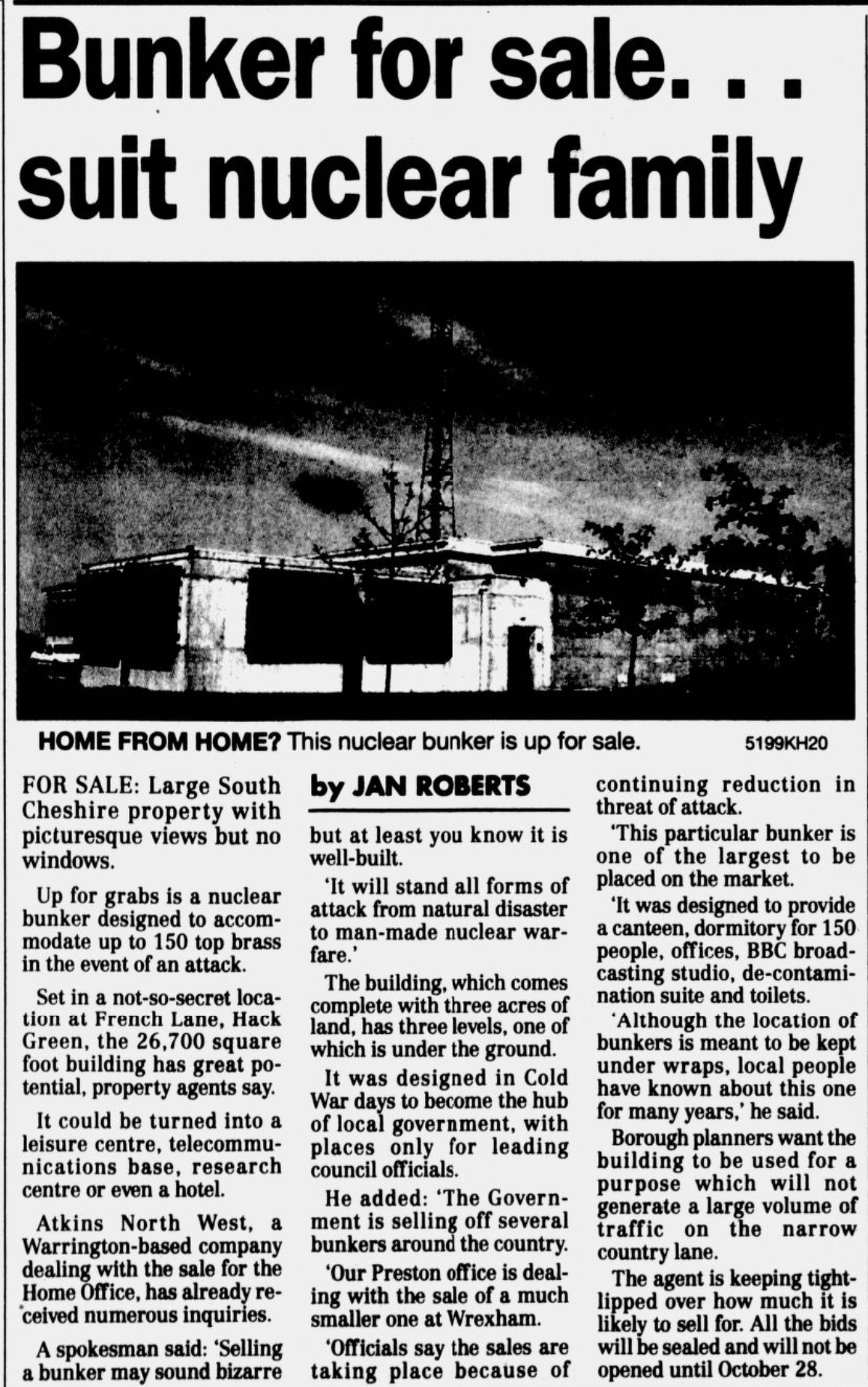
It was purchased by a local man, Rodney Siebert who had worked for the Home Office and had in fact visited Hack Green RGHQ when it was operational. He had plans to start a telecommunications business in the bunker, a purpose for which it was well suited. A secure facility was perfect for storing data and other sensitive equipment. The steel lattice tower would be ideal for the rapidly growing mobile phone network. He also spotted a worrying trend: In its haste to capitalise on the peace dividend, the government was rapidly divesting from its cold war infrastructure. Mr. Siebert was sure that there was historical value to some of these buildings. Like it or not, it was part of our history and he was keen to save what he could.
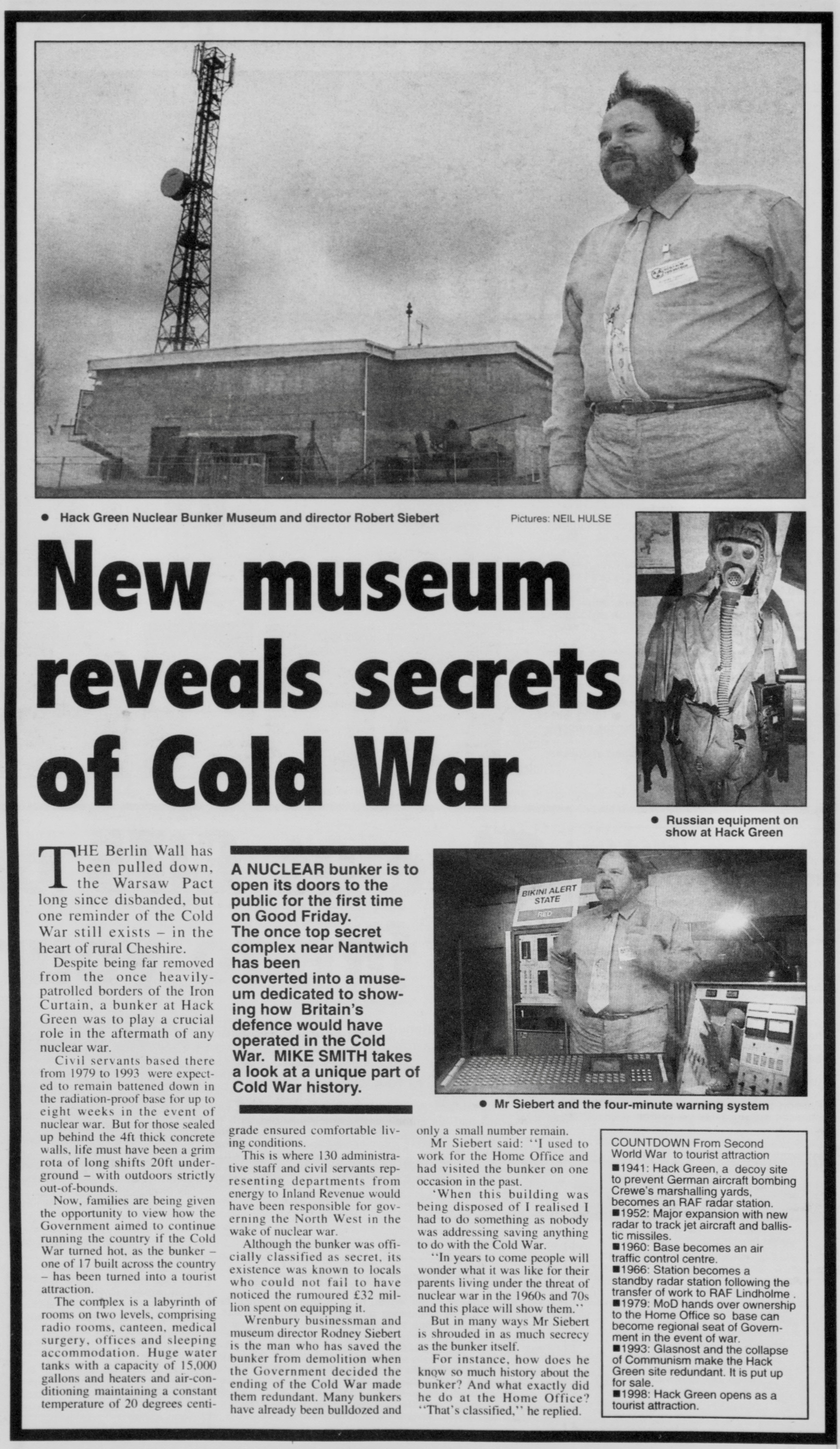
He started to plan for the unused part of the bunker to become a cold war museum. Leaning on old contacts from his time working for the Home Office he was able to gather a large collection of cold war artefacts to showcase in the museum. Finally opening to the public in April 1998, the museum became a quirky new addition to the tourism offering in South Cheshire and the road signs showing the way to the “Secret Bunker’ were themselves to become famous.
One of only three such buildings in the country to be open to the public, the museum at Hack Green has become a nationally important reminder of those dark days when nuclear war seemed inevitable and in some dusty corner of Whitehall, civil servants drew up plans for the end of the world.
This is the fourth and final part of this series examining the defence history of Hack Green. It is a history that charts a rapidly changing world: during the Second World War, Starfish sites were designed to mislead enemy bombers; radar and ROTOR were intended to detect and track them and before long, deterrence had become the principal means of preventing a strategic attack altogether.
By the time Hack Green became RGHQ 10.2, Britain’s security depended on the grim logic of MAD — Mutually Assured Destruction. If both sides knew that nuclear war would guarantee their own destruction, then surely neither would start one… Would they?
Hack Green existed to answer the question that followed:
But what if?
Bibliography
https://www.subbrit.org.uk/sites/southport-dukes-house-srhq
https://en.wikipedia.org/wiki/Regional_seat_of_government
Wayne D Cocroft, 1998. RAF Hack Green Survey Report (Cold War Project). English Heritage.
Wayne D Cocroft, Roger C Thomas, P S Barnwell, 2005. Cold War: Building for nuclear confrontation 1946-1989. English Heritage.