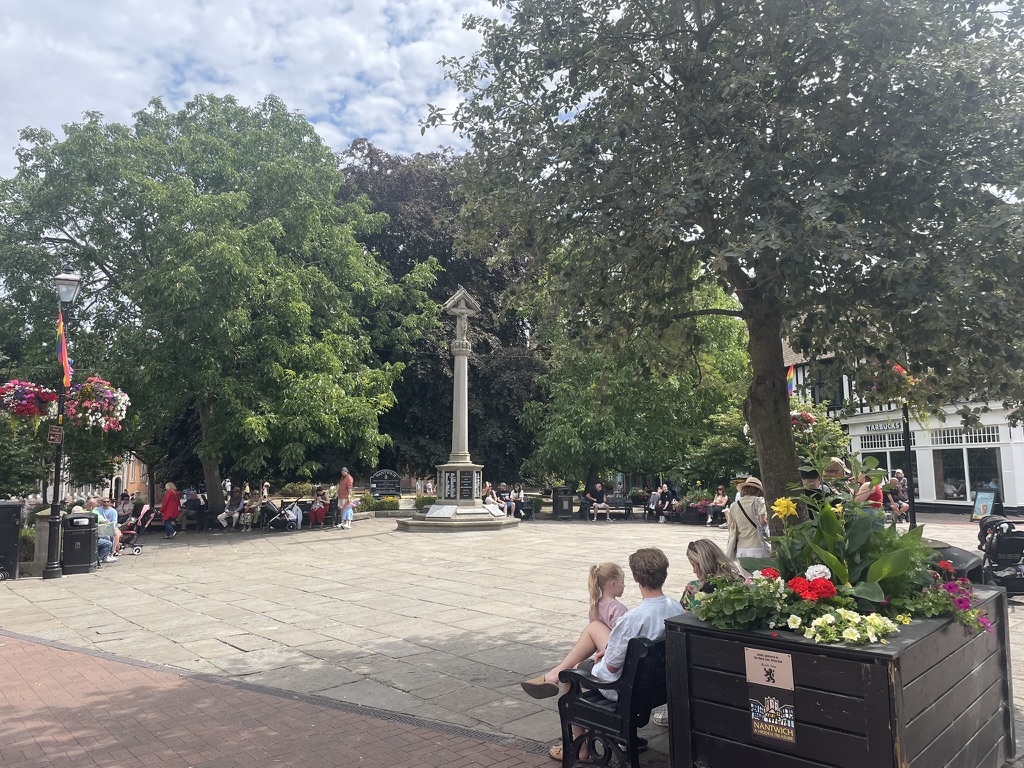
Our square in Nantwich is surely the heart of the town. An open space for meeting friends, sitting down to enjoy a Chatwins sausage roll, visit the markets and much more. The civic year plays out here; the Sealed Knot troops marching past in January, the first farmers market of the year in Spring, The Food Festival in Summer, Remembrance day service in November and the Christmas lights switch on come Winter. This is the centre of it all. A timeless space, enjoyed by Dabbers for decades, centuries even.
But it wasn’t always like this, far from it. This part of town, overlooked by buildings old and new has evolved over time, perhaps more than any other part of Nantwich, constantly reinvented for the needs of Dabbers through the ages. Here we look at a short history of Nantwich town square.
Under the castle walls
Few clues remain of Nantwich Castle but it shaped Nantwich as we know it. It’s not known exactly when the castle was built but records indicate that it was before 1180. Its location was probably chosen to command the slightly higher ground in the area overlooking the strategic ford crossing the River Weaver.
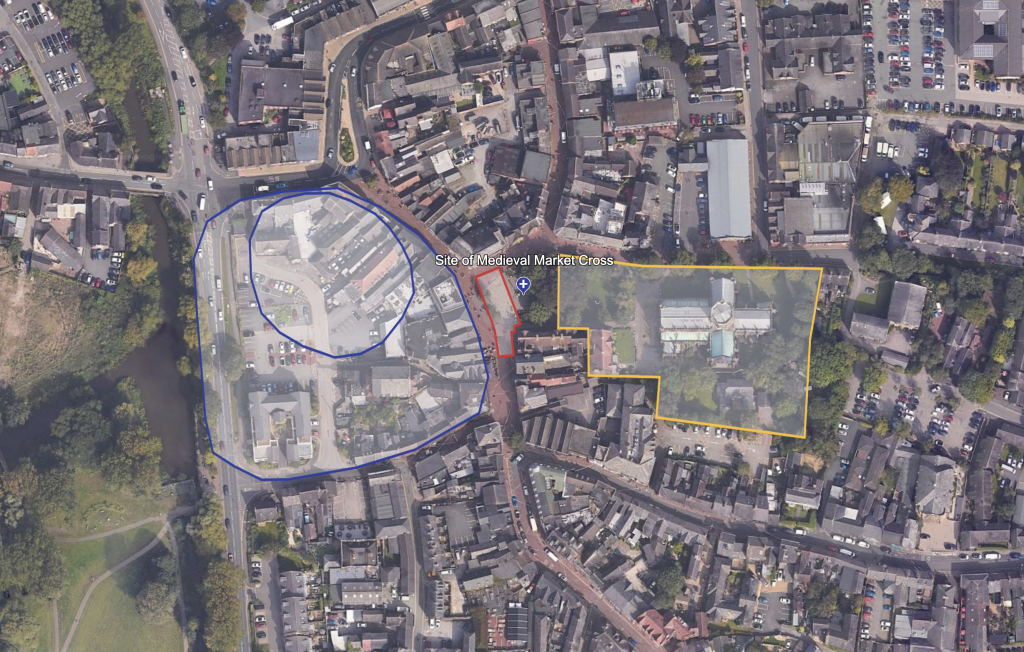
Streets and buildings were laid out around the fortress, its influence still seen in the street plan today. As the focus of Nantwich between the castle, the church and the salt industry, the nearby streets were likely to have been a hive of commerce and activity.
Edward I granted permission in 1283 for a three day fair to be held in Nantwich at Bartholomewtide on 23rd to 25th September each year. This would be a great event in the town’s calendar attracting market traders to ply their wares who would often bring entertainers with them to help drum up business.
In former times vendors, in order to attract buyers, were accompanied by jugglers, minstrels and buffoons ; hence this fair became the great pleasure fair of the year, and often the scene of riot and dissipation.
– Hall 1883
Markets and fairs (The terms were partly interchangeable) were heavily regulated in the middle ages, with the rights to hold them handed out by the Crown to local nobles and clergymen, at a cost of course, who would then levy taxes and charges on the trade that took place. Fairs were usually held annually and associated with a religious festival, St Bartholomew in the case of Nantwich (Seems like this paid off in the long run as St Bartholomew was the patron saint of tanners and leather workers which would become important industries for the town in years to come!). Fairs were the place to buy tools, textiles and other high value non-perishable goods. Markets were more regular, perhaps daily in larger towns and cities or weekly in more rural areas. These were mainly focused on perishable goods for everyday life.
Records exist of a stone cross standing in the market area, now long gone. This was a common way of marking where permission was given for the markets and fairs by the king.
Over time High Street and other nearby streets became the market area for Nantwich, with different spaces allocated for different types of trade. The modern roads Oat Market and Swine Market still retain the names allocated to them by the business that took place there. Other areas included the Beast Market (cattle market) and the Shambles (butchery). A market hall was established in the area where the modern square is today. It was first mentioned in 1579. You can read more about this here.
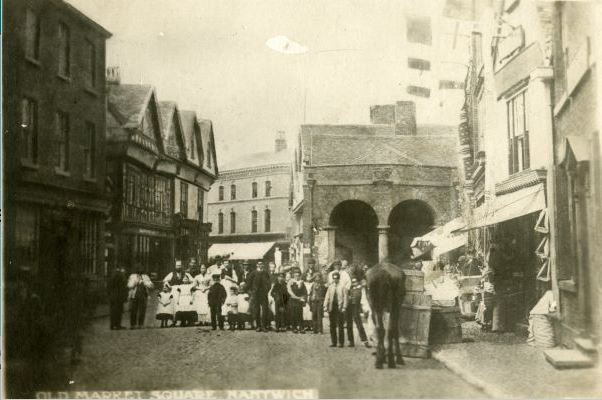
Standing next to the market hall right in the centre of town stood a row of buildings which were the original shambles or meat market. This was later moved to what was thought to be a more suitable place off Oat Market.
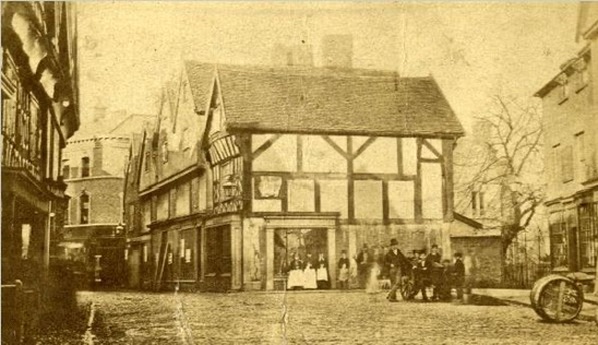
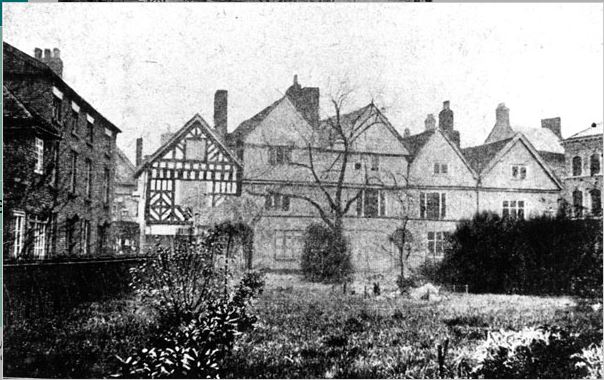
Old people now living remember an open shop that stood in the centre of the town, on the site of handsome premises now occupied by Mr. S. Harlock, where Mr. E. Barrowcliffe, butcher, killed and dressed his meat, before exposing it for sale.
– Hall 1883
Phoenix From the Flames
The Great Fire of Nantwich devastated the town in December 1583. Starting in a brewery and spreading to most of the buildings on the West side of the river, it burned for 20 days, the timber framed buildings providing ample fuel for the inferno. Most of Medieval Nantwich was lost but soon a new Elizabethan town would emerge. Many of the famous timber framed buildings that we see today originate from this period.
In the coming years the buildings which stood on today’s square would fall into disuse and in 1872 were demolished along with the market hall in 1868 to create the open space that we see today. The markets were moved to a new Market Hall around the same time.
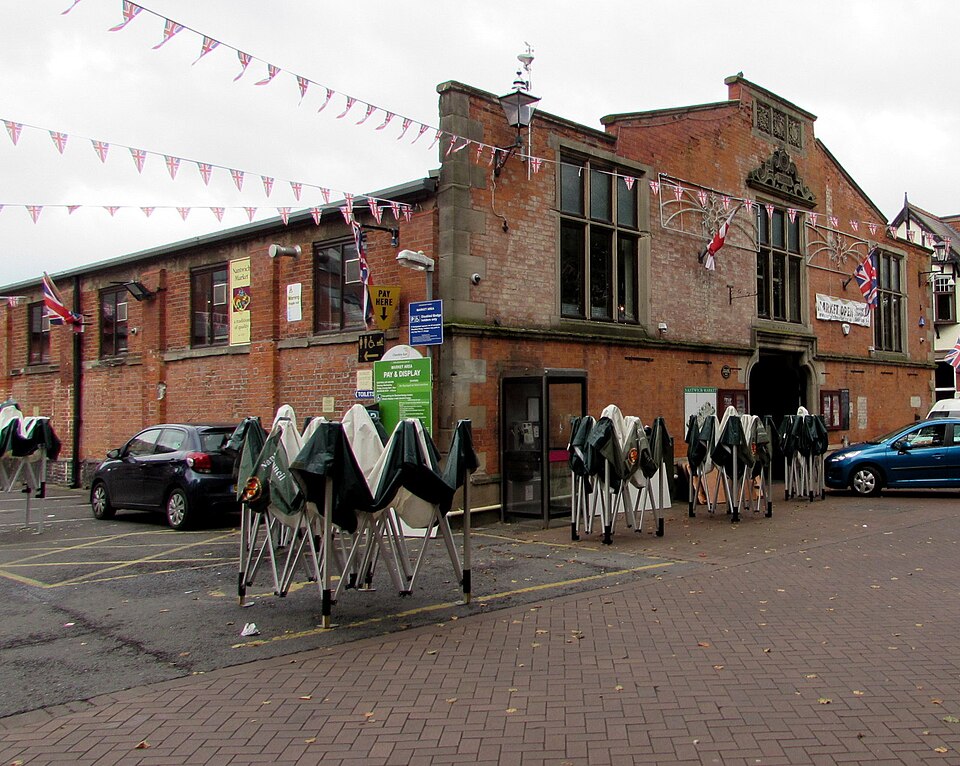
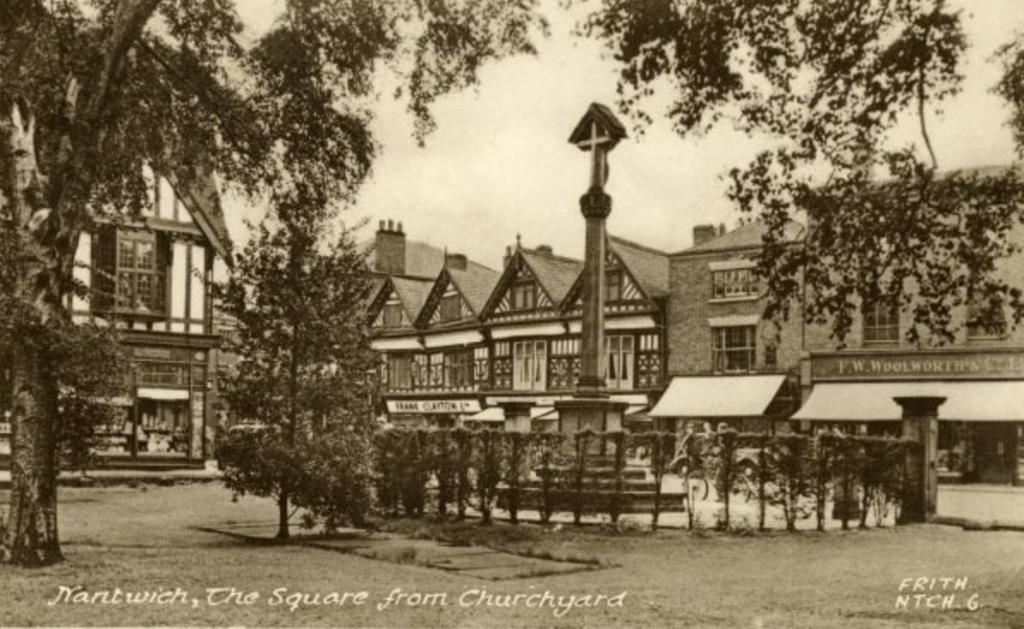
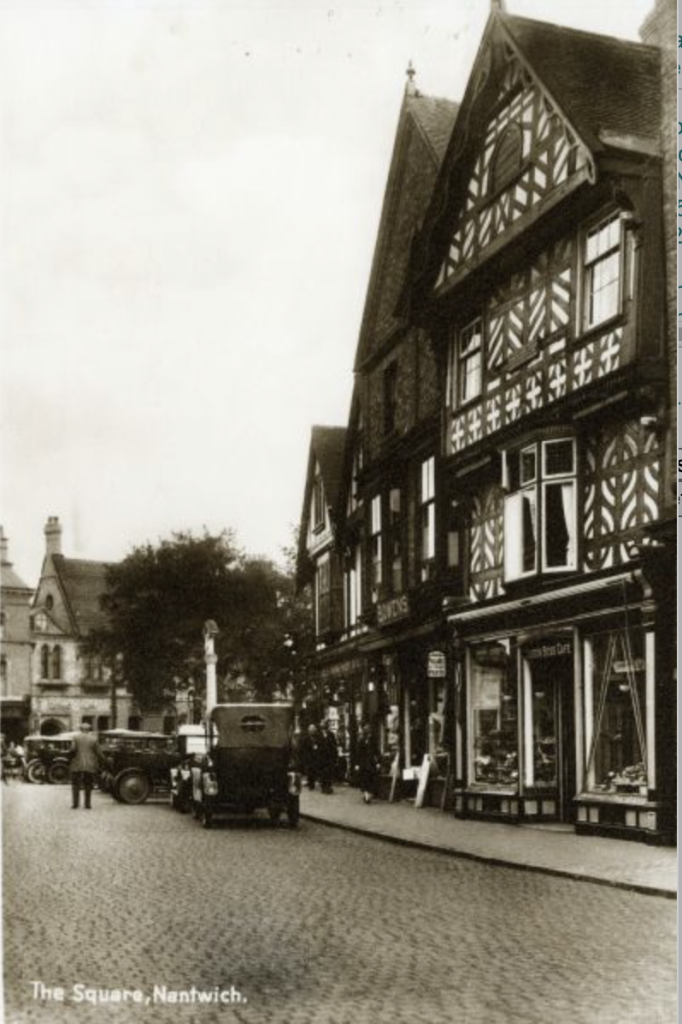
The buildings surrounding the square play an important part in its history, We still see the Elizabethan rebirth of Nantwich in several of the buildings including the Crown Hotel and the Bookshop. Successive generations would make their mark on this part of Nantwich, the Victorians in particular would build several buildings of note.
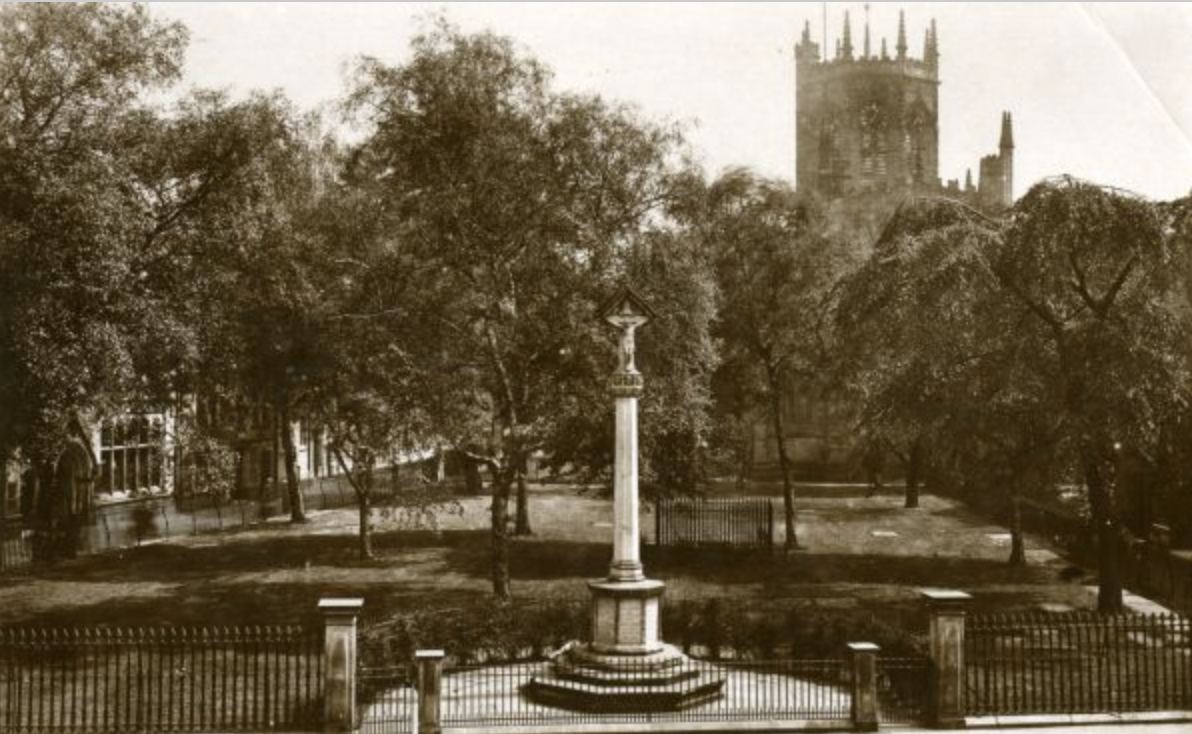
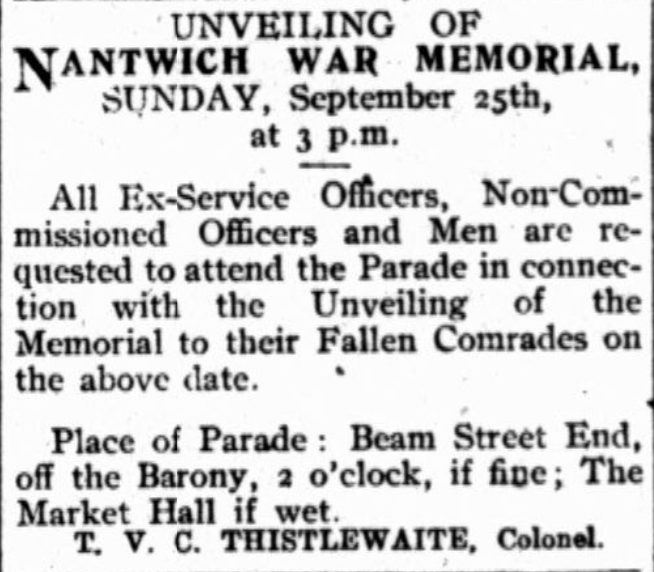
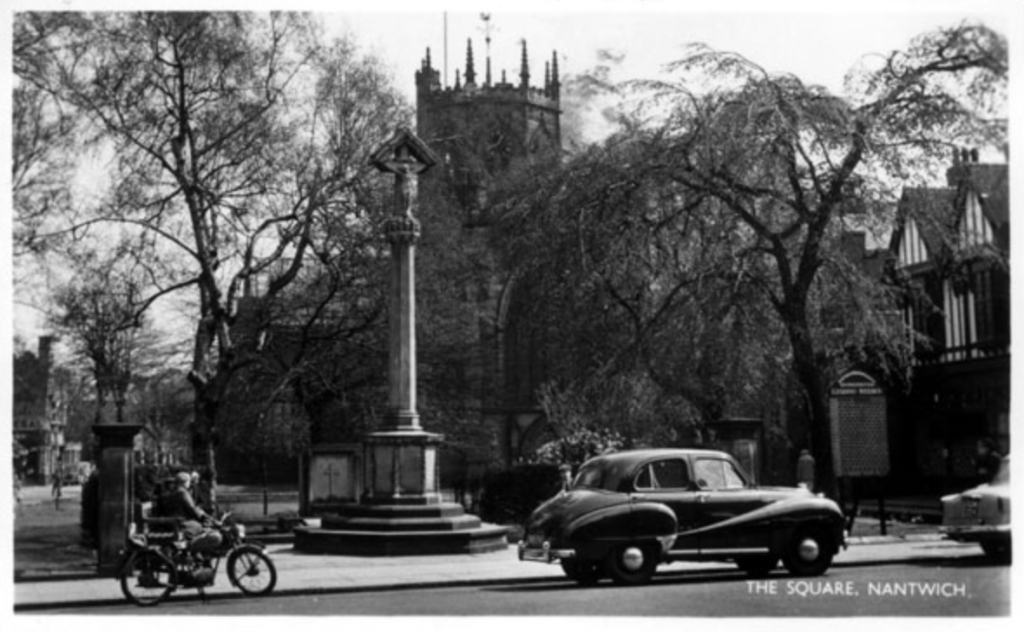
As the main thoroughfare through the town, High Street would remain the focal point for the town’s day to day life. The markets and horse drawn carts would give way to shops, buses and cars in the early 19th through to the 20th century. The Great War would leave a mark on Nantwich both emotionally and physically. Unveiled on 25th September 1921 on the square, the war memorial stands in remembrance of the fallen of Nantwich.
TO THE GLORY OF GOD AND IN HONOURED MEMORY/ OF THE MEN OF NANTWICH/ WHO FELL IN THE GREAT WAR 1914 – 1919
– Inscription, Nantwich War Memorial.
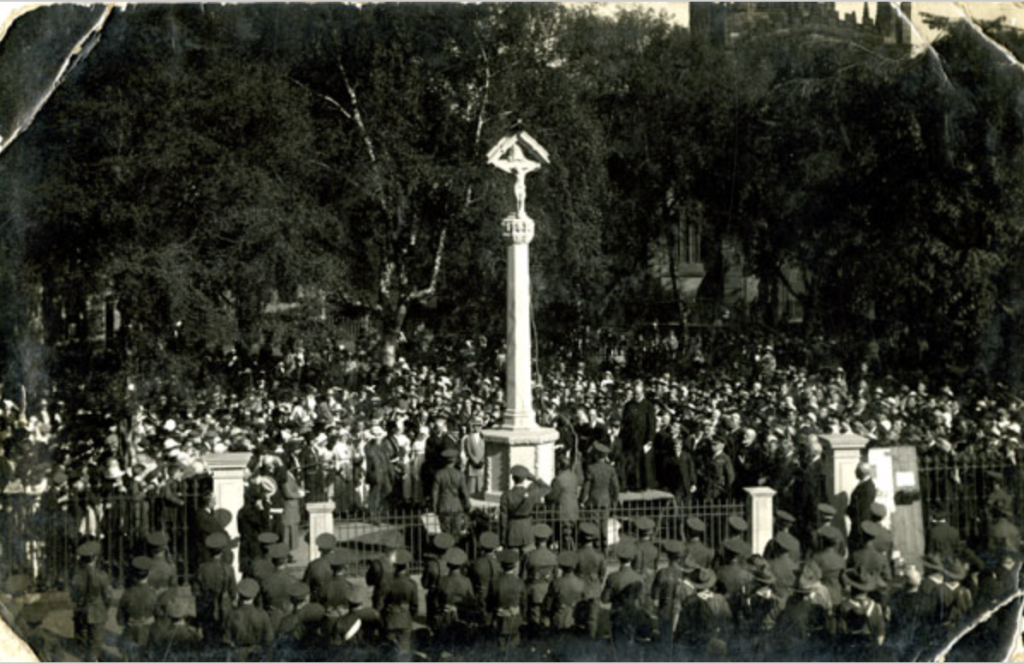
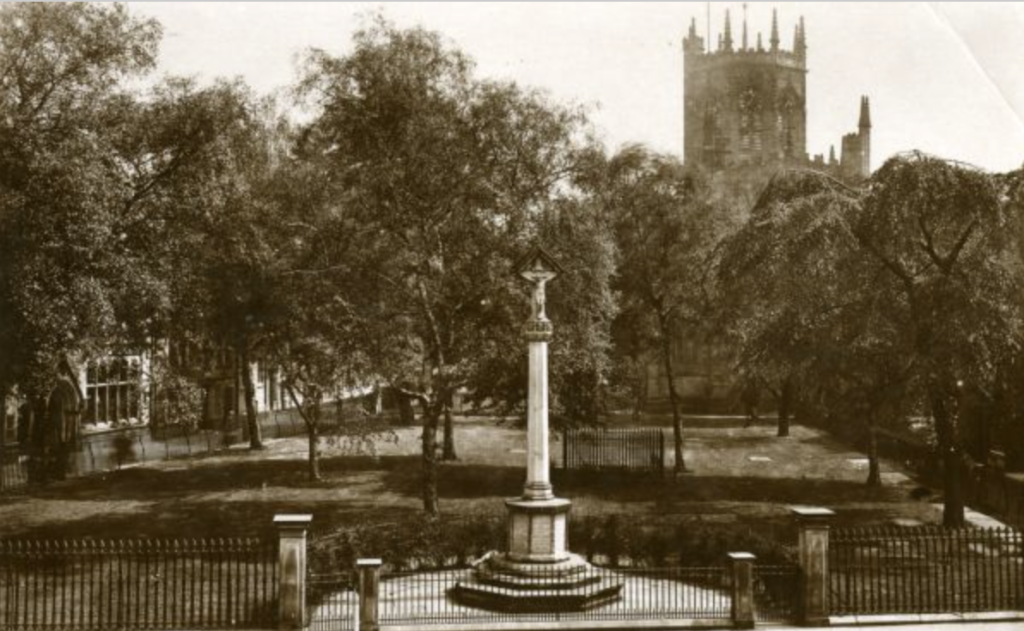
Immortalised in stone and standing on an octagonal base, the rising column displays metal plates listing the names of the 175 men of Nantwich who lost their lives in the Great War. Atop the column is a stone Calvary (depiction of the crucifixion of Christ).
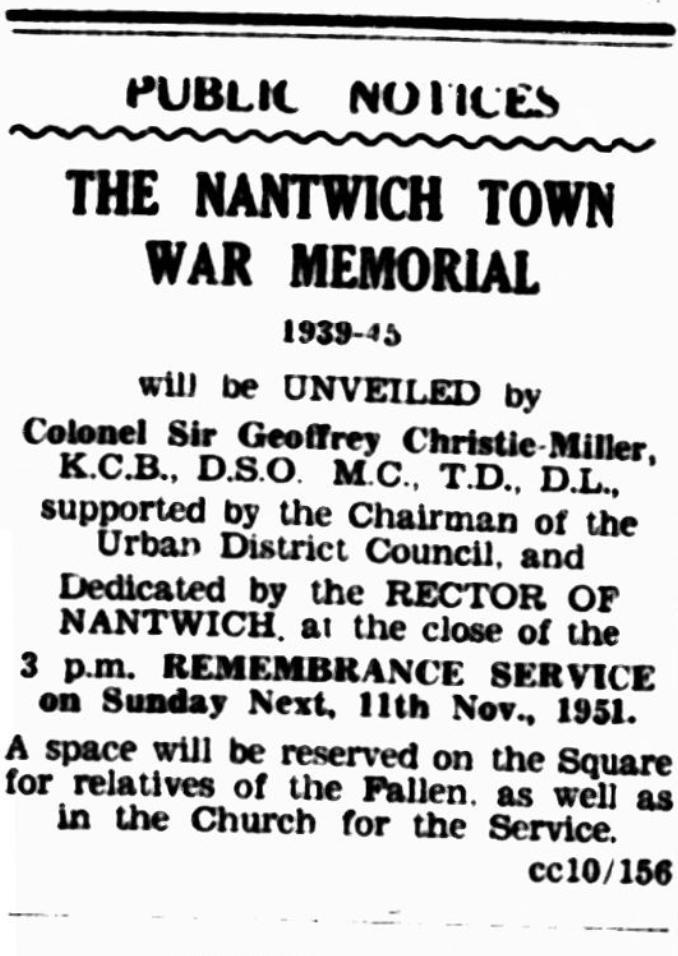
Following the Second World War, 44 further names were added. An additional stone tablet commemorates the life of Second Lieutenant Stanley Henry Parry Boughey VC (9 April 1896 – 4 December 1917). His Victoria Cross (the highest and most prestigious award for gallantry in the face of the enemy that can be awarded to British and Commonwealth forces) citation reads:
For most conspicuous bravery. When the enemy in large numbers had managed to crawl up to within 30 yards of our firing line, and with bombs and automatic rifles were keeping down the fire of our machine guns, he rushed forward alone with bombs right up to the enemy, doing great execution and causing the surrender of a party of 30. As he turned to go back for more bombs he was mortally wounded at the moment when the enemy were surrendering.
— London Gazette, 12 February 1918
A Hot Topic
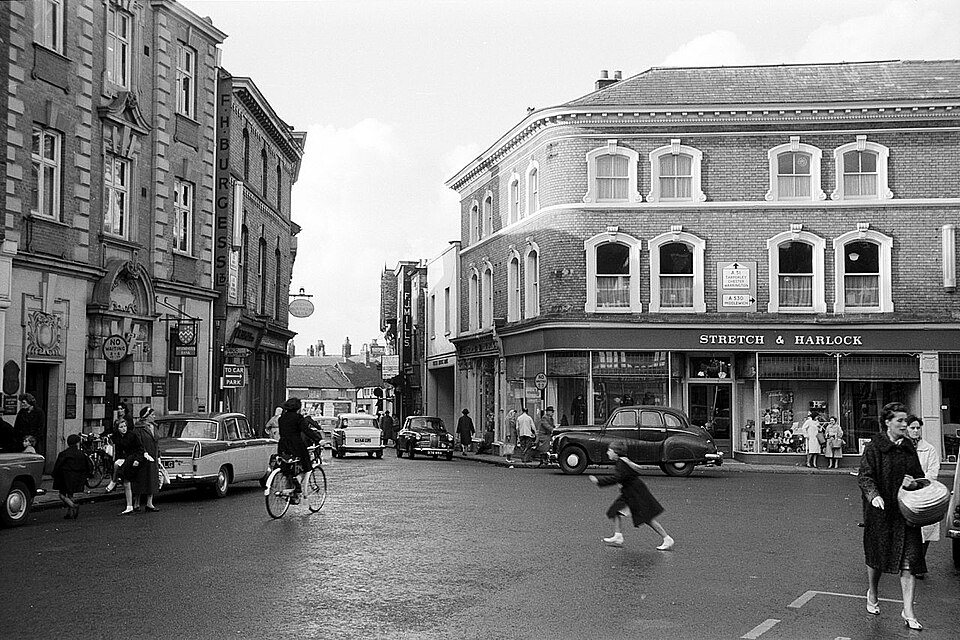
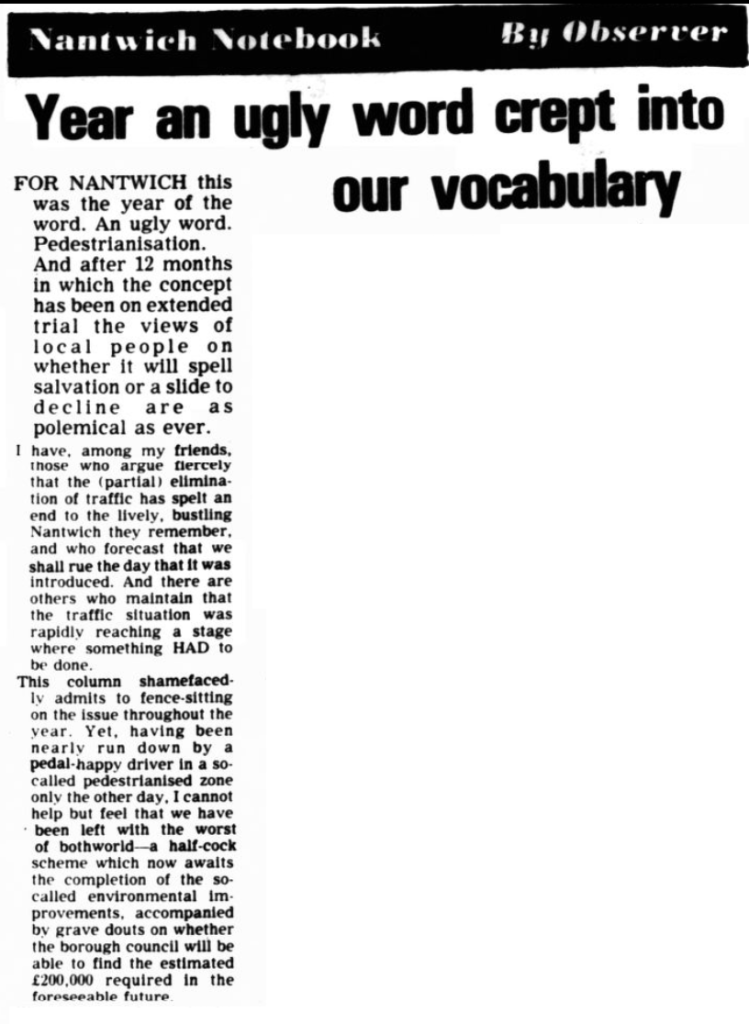
The later part of the 20th Century saw perhaps the biggest changes to the square since the great fire. In the early 1980s large parts of the town centre, including High Street, were pedestrianised. The new Waterlode bypass enabled traffic to be moved out and the space opened up for pedestrians. No doubt this would have been a big issue at the time with those strongly in favour both for and against.
A very interesting video captured and shared by John Hickson – thank you John for this brilliant record of this part of Nantwich history!
This brings us to the present day. The concept of pedestrianisation has surely been settled… Although, even today there are those who would like to see the pedestrian scheme expanded to include other routes in the centre such as Pillory Street and Hospital Street and those who think the free short stay street parking is an important boost to retail business. Perhaps that’s a discussion for another time!
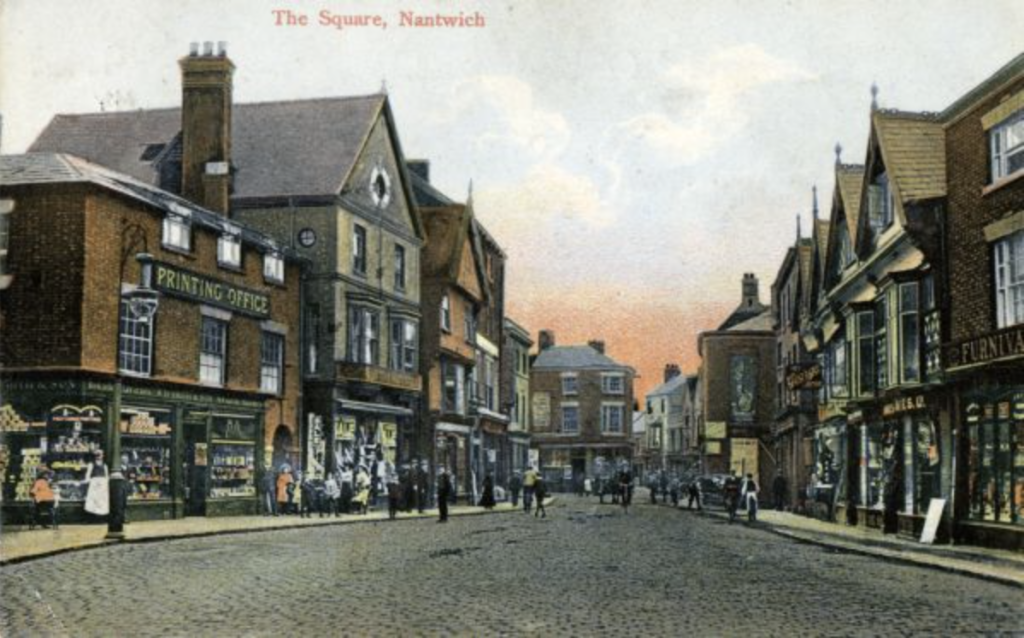
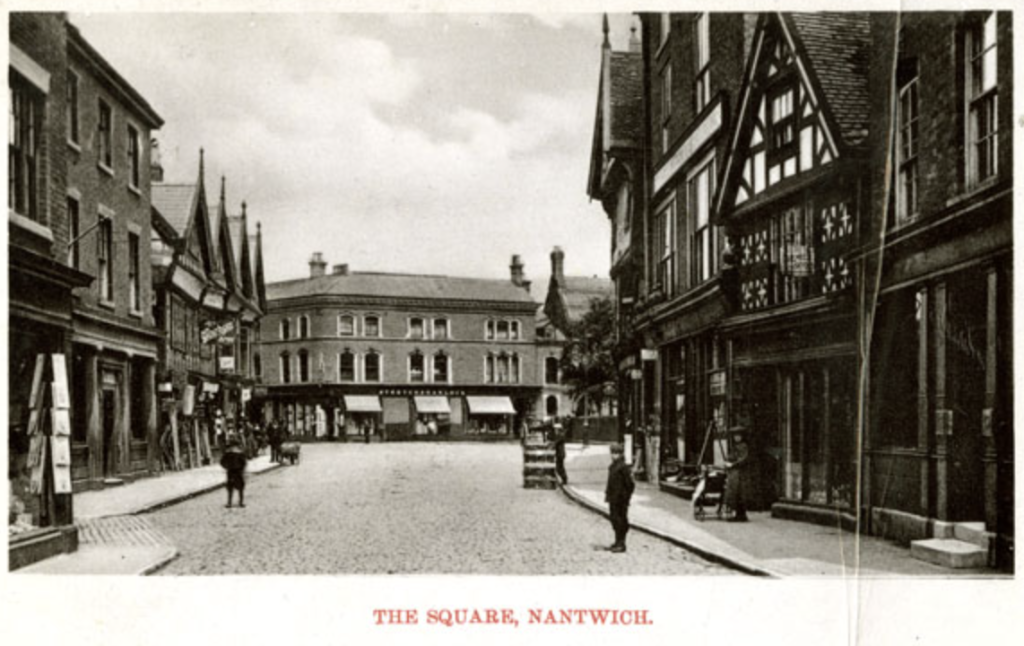
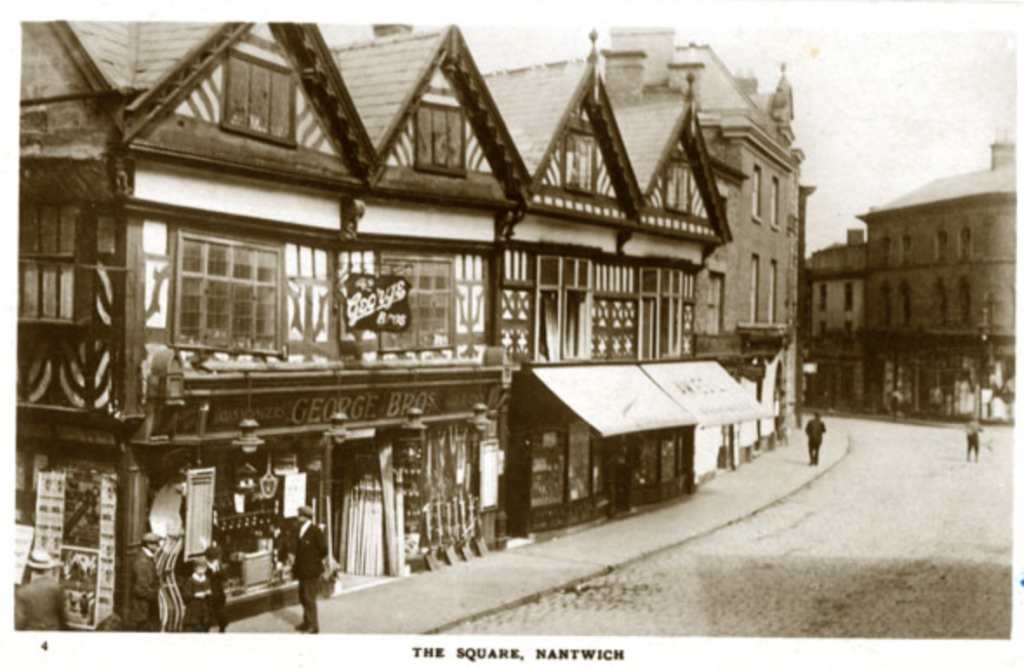
A collection of old postcards of the square:
Bibliography
Nantwich Museum, ‘Our High Street’ – https://nantwichmuseum.org.uk/wp-content/uploads/2025/08/Our-High-Street.pdf
J. Hall, ‘A history of the town and parish of Nantwich, or Wich-Malbank’, in the county palatine of Chester. 1883.
https://en.wikipedia.org/wiki/Charter_fair
https://memorials.iwm.org.uk/memorial/2048
A. Lamberton & Robin Gray – ‘Lost Houses in Nantwich’, 2005.